
Every December 17 we pause to honor the Wright Brothers, two bicycle mechanics from Ohio who looked at gravity and said, “We can probably negotiate with that.”
On that blustery day in 1903 at Kitty Hawk, Orville and Wilbur Wright did something extraordinary: they convinced humanity it did not need to stay on the ground. The airplane was born and with it, one of the most impressive technological achievements of the 20th century.
Also born that day, though no one noticed at the time, was a business model so financially perilous that it would later inspire Warren Buffett to remark: “If a capitalist had been present at Kitty Hawk back in the early 1900s, he should have shot Orville Wright. He would have saved his progeny money.”
That may sound harsh, but history suggests Warren Buffett may have been aiming not at the Wright Brothers themselves, but at the financial spreadsheet sticking out of Orville’s back pocket. A nice, tidy little piece of preventative economics.
When Flying was an Occasion
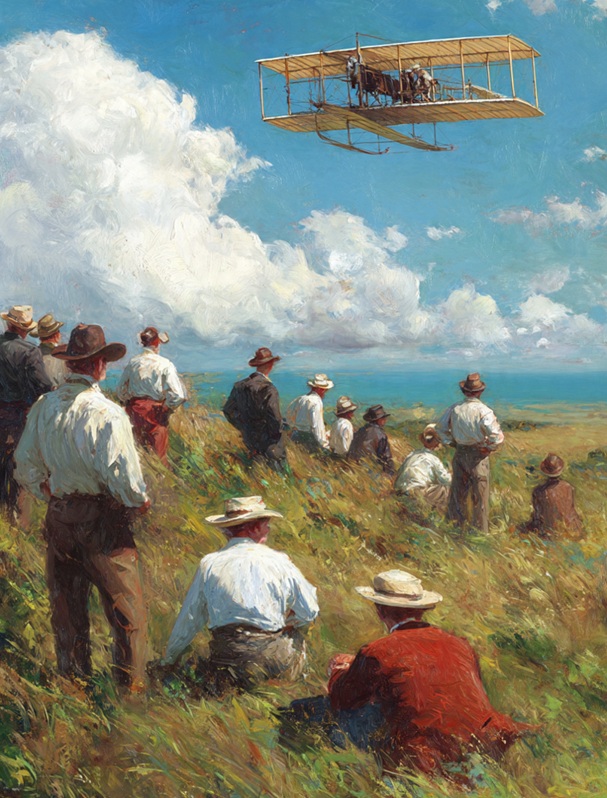
In the early days of commercial aviation, flying was not transportation. It was an event of allure and elegance.
You’d polish your shoes, straighten your tie and maybe bring a small orchestra to serenade the clouds. You dressed for a flight the way you dressed for church, a wedding or meeting your in-laws for the first time. Men wore suits and hats. Women wore gloves, heels and pearls sturdy enough to survive mild turbulence and emotional repression.
The allure was part adventure and part fashion show. Passengers boarded aircraft the way people now board cruise ships: with dignity, anticipation and absolutely no expectation of reclining their seats more than three inches. It was an airborne version of going to church, a serious formal commitment that required your best attire.
The cabin crew looked like they’d stepped out of a fashion magazine. The food came on real plates. The legroom allowed you to cross your legs without apologizing to a stranger. Children were seen, but rarely heard, mostly because they were being parented with a firmness that would now result in a viral video and a congressional hearing.
Flying was glamorous. It was aspirational. It was something you told people about at dinner parties for months afterward.
And then… it happened.
The Miracle and the Curse of Efficiency
As aviation technology improved, something terrible happened: flying became affordable.
Jets got faster, safer and more reliable. Airports multiplied. Deregulation arrived. Airlines discovered they could make money not by selling elegance, but by selling volume.
The industry shifted from “ladies and gentlemen, welcome aboard” to “please step aside if you are not actively boarding”.
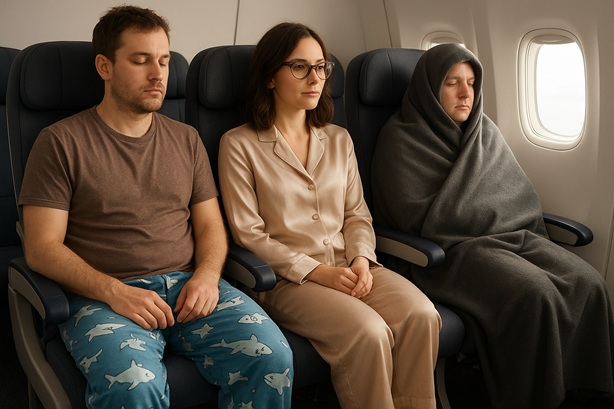
The dress code relaxed. Then dissolved. Now, on any given flight, you may find yourself seated between:
- a man in a ratty t-shirt and pajama pants featuring cartoon sharks
- a woman in a silky shirt and pants, wearing slippers she clearly did not plan to remove
- someone wrapped in a blanket they brought from home, which smells faintly of 1997
The transformation is complete. We have gone from church clothes to couch clothes at 35,000 feet. The romance of the silk scarf has been replaced by the comfort of a fleece onesie.
This is how we define progress.
Airlines: The Fastest Way to Turn Money into Experience
No discussion of aviation would be complete without acknowledging its most enduring mystery: how can something so essential make so little money?
Richard Branson, a man who knows a thing or two about branding, and clearly has a sense of humor about his own career choices, once summarized it perfectly: “If you want to be a millionaire, start with a billion dollars and launch a new airline.”
It’s the simple, brutal arithmetic of the sky. You spend a fortune on metal tubes, fuel, labor and gate fees and then you try to sell a seat for slightly less than the cost of a decent taxi ride.
Airlines operate on margins thinner than the seat cushion on a budget carrier. They buy incredibly expensive machines, burn vast quantities of fuel and sell their product at prices determined by customers who believe $79 is still too much for a cross-country flight.
You’re chasing a few cents of profit per passenger mile, while simultaneously praying that the price of aviation fuel doesn’t decide to get ambitious.
Airlines are hostage to weather, fuel prices, labor negotiations, geopolitical events, mechanical surprises and the emotional state of passengers who have not had coffee. Every airline executive wakes up each morning hoping the planes fly full, the fuel stays cheap and nobody decides to recline during meal service.
The aviation industry is the perfect example of how sometimes the most magnificent technological leaps are the most spectacularly lousy places to put your capital. The planes are beautiful, the physics astonishing, but the economics? Woof.
It is not a business for the faint of heart or the optimistic.
The Hidden Cost of Innovation: Where We are Now
Today’s commercial aviation experience is a marvel of engineering wrapped in mild inconvenience. It is a high‑altitude highway of steel and carbon fiber, crumbling under the weight of its own ambition. Airlines are scrambling to make the “green” flight a reality, investing in electric prototypes and sustainable fuels while still selling you a seat in a metal tube that looks like a giant sardine can.
But at the same time, planes are astonishingly safe. Navigation systems are nearly flawless. Aircraft can cross oceans with precision that would have seemed magical to the Wright Brothers.
And yet, we have:
- boarding groups based on alphabet soup
- seat assignments that feel like moral judgments
- luggage fees that require a calculator
- an unspoken competition over armrests
- cold fast-food meals labeled as “sky deli”
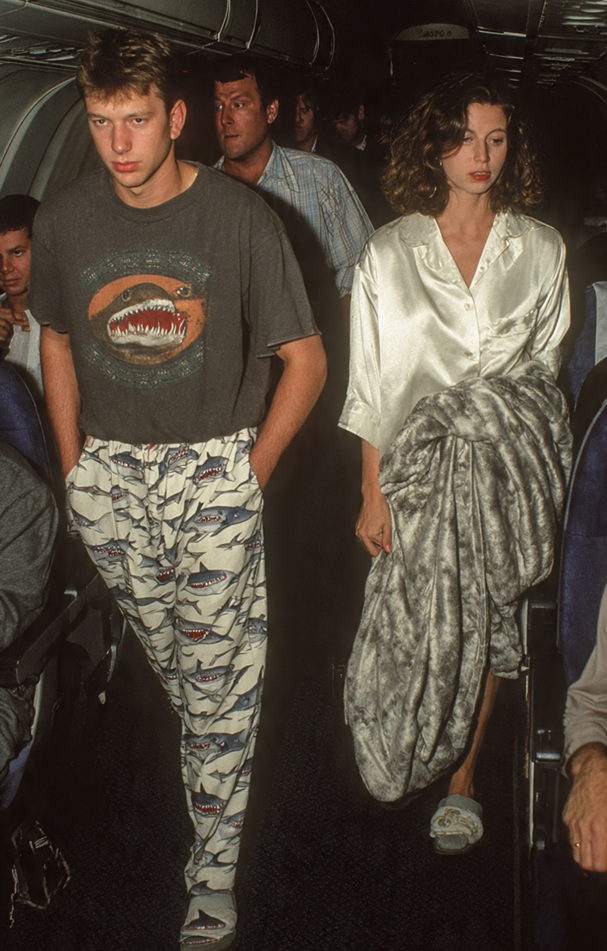
Aviation attire has become less “Downton Abbey” and more “The Walking Dead”, except the shambling masses are wearing yoga pants and slippers. The journey from the ground to the sky used to require dignity. Now, it just requires a tolerance for bad lighting and the willingness to be in public without getting out of your sleepwear. We exchanged tailored tweed for stretch polyester. We traded the glamour of the jet age for the comfort of a portable couch cushion.
The miracle of flight remains. The romance has been optimized out.
The Forecast of Low Clouds and Lower Margins: Where We’re Headed
Aviation is an essential utility that operates on unsustainable economics. It’s the world’s most impressive, yet financially fraught, public bus service. We rely on it to connect continents, conduct global business and get to our beach vacations, but we treat the process like an inconvenience and treat the tickets like a God-given right to be cheap.
The future of aviation is efficient, automated and quietly revolutionary:
- More seats, less space in an AI optimized cabin
- More fuel-efficient aircraft
- Sustainable aviation fuels
- Electric and hybrid propulsion
- Smarter air traffic control
- Autonomous cargo drones
- Possibly supersonic flight returning, this time without the sonic tantrums
What probably will not return is the formalwear. Aviation pajama vending machines may not be out of scope for future passengers. Humanity has made it clear: if given the choice between elegance and elastic waistbands, we choose comfort every time.
And honestly? That might be the most human innovation of all.
A Final Thought on Wright Brothers Day
The Wright Brothers gave us the sky.
Capitalism gave us boarding zones.
And modern society gave us permission to fly dressed like we just rolled off the couch.
Somewhere, Orville Wright is looking down, marveling at jet engines, satellite navigation and the fact that humanity learned to fly, but never quite learned how to board efficiently.
Still, we made it.
We fly.
We grumble.
We snack.
And occasionally, we even clap when we land sideways in a crosswind.
On this Wright Brothers Day, let’s raise a glass of orange juice (the only thing that’s still “in the air” without a license) to the dreamers who thought the sky was the limit, to the investors who learned that sometimes that limit is just a very expensive lesson in capitalism and to the rest of us who will continue to board planes in our co‑coordinated pajamas, hoping the only turbulence we encounter is the one in our coffee.
Happy Wright Brothers Day! Please return your flight attendants to their regular upright position and reflect quietly on how miraculous this all really is.

Discover more from Tales of Many Things
Subscribe to get the latest posts sent to your email.