
Abstract
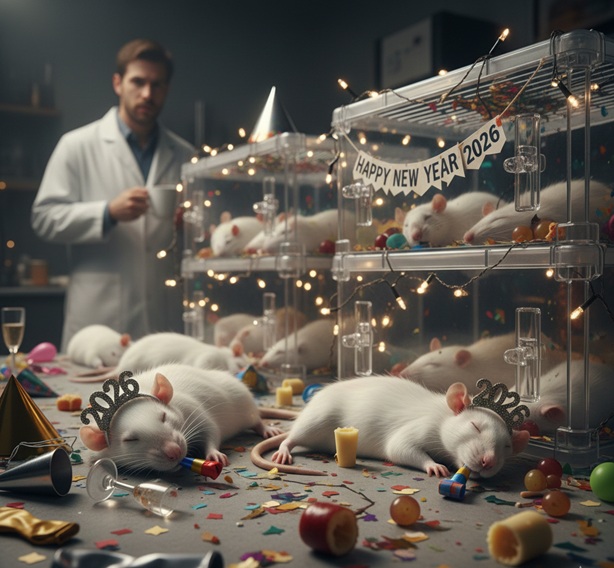
Have you ever felt like you’ve reached the point of Waking Inefficiency Overhead (WIO)? That moment when another 70-hour week proves that being awake is actually reducing your output?
2026 is here and after a year of unsustainable, high-intensity work, I decided that the only way to genuinely meet the annual goal-setting ritual was to turn the corporate jargon against itself.
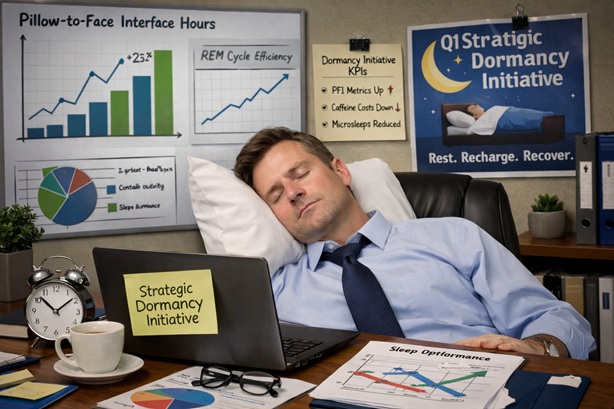
This post details my Q1 Strategic Dormancy Initiative (SDI), an aggressive, metrics-driven framework designed to optimize the most overlooked component of my career: sleep. By reframing rest not as a personal failure, but as a high-yield investment in Cognitive Recovery Cycles, I have officially set a 2026 corporate goal: a 25% increase in pillow-to-face interface hours.
Join me as I attempt to have my employer mandate a nap.
The Problem
2025 was a busy year for me.
And by “busy”, I mean 50+ hour weeks were normal, breaking 60 wasn’t unusual and my timesheet wandered north of 70 hours on multiple occasions like it was exploring new territory.
This kind of pace does things to you.
It’s draining. You go home just long enough to sleep, assuming you sleep, and then you’re back at work. It’s hard on your family. It’s hard on your brain. And while employers love to talk about work-life balance, actually finding it can feel like one of those optional side quests that never unlocks.
Then the calendar flipped.
It’s 2026 — Happy New Year!
This means it’s time for the annual corporate tradition: Goal Setting Season.
You know the ritual: We gather. We reflect. We pretend last year went according to plan. And then we create new goals using words like leverage, optimize and synergy, as though the right verb will finally make exhaustion a growth strategy.
This year, I decided to try something different. I submitted a goal that addresses my primary performance bottleneck: being awake.
So far, it has passed the initial review without being axed.
The Q1 Strategic Dormancy Initiative
We must fight fire with fire. If the corporate world demands aggressive metrics, I will apply aggressive metrics to my unconscious state.
My new goal statement is designed to speak directly to the C-suite:
Goal Statement: To aggressively optimize biological downtime by implementing a “Horizontal Recovery Framework”, targeting a 25% increase in pillow-to-face interface hours to mitigate the diminishing returns of consciousness.
Yes.
This is a goal about sleeping more.
But it’s a professional goal.
Let’s unravel the strategy using the corporate world’s most sacred template: the S.M.A.R.T. Breakdown, because if you’re going to do something ridiculous, you should do it methodically.
The S.M.A.R.T. Breakdown of Slumber
| Metric | The Jargon | The Reality |
| Specific | Transition from a “high-stress wakefulness” model to a “proactive slumber” strategy. I will replace low-value activities (like staring at spreadsheets or doomscrolling) with high-value Rapid Eye Movement (REM) cycles. | I’m just going to stop checking email after 8 PM and actually sleep. |
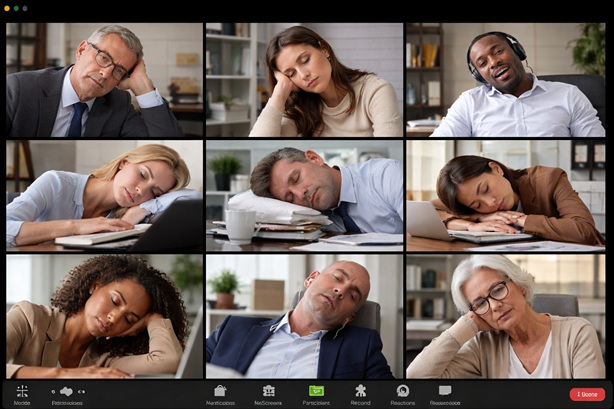
| Measurable | Success will be quantified by a 15% reduction in “accidental microsleeps” during Zoom calls and a measurable decrease in the number of cups of coffee required to maintain basic motor functions. | If I stop blinking one eye at a time during the Monday morning stand-up, it’s a win. And my local barista needs a rest, too. |
| Attainable | By delegating my current workload to “My Future Self” (who will be much more capable after a nap), I create immediate bandwidth for an extra 90 minutes of daily unconsciousness. | I’ve strategically scheduled an hour of “deep focus time” which, let’s be honest, will be a power nap. |
| Relevant | Modern productivity culture proves that being awake is the primary cause of burnout. Therefore, being asleep is the only scalable solution for 100% stress reduction and peak “passive productivity”. | If I’m not conscious, I can’t be overwhelmed. The math is flawless. This is the only way I will make it to Q2. |
| Time-Bound | This pilot program will run through the end of Q1, after which I will evaluate if I am refreshed enough to consider waking up for Q2. | I reserve the right to extend the initiative if “My Future Self” reports insufficient neuroplasticity. |
Key Performance Indicators (KPIs) for the Dormancy Initiative
To ensure the “Horizontal Recovery Framework” remains a high-value, auditable program, we have established several rigorous KPIs. These metrics move beyond simple “hours slept” and focus on the systemic impacts of adequate rest on the enterprise.
| KPI Title | Metric/Method of Measurement | Target (Q1) | Audit Note |
| Pillow-Face Interface (PFI) Duration | Total documented minutes of uninterrupted head-to-pillow contact, tracked via proprietary non-wearable movement sensor (my phone remains silent and face-down). | 540 Min/Night (Average) | Crucial for validating the primary investment area. |
| Alertness Debt Avoidance (ADA) | Percentage reduction in mid-sentence pauses, accidental mute-button presses and typing errors made before 10:00 AM. | 20% Reduction | Crucial for validating the investment required for pre-gaming focus. |
| Cognitive Resource Utilization (CRU) | Correlation between the number of times I use the phrase “Let me circle back on that” vs. the number of times I actually do circle back on it. | 1.0 (Perfect Correlation) | The ultimate metric for ensuring mental capacity matches expressed commitment. |
| Low-Value Activity Ingestion (LVAI) Index | Time spent “doomscrolling” news feeds after 8 PM versus time spent staring silently at the ceiling contemplating existential dread (measured in minutes). | > 3:1 Ratio (Contemplation to Scrolling) | High contemplation scores indicate successful redirection of mental energy away from external noise. |
| Caffeine Dependency Delta (CDD) | Decrease in the average daily monetary spend at the company café/espresso machine. | 25% Reduction | A direct, hard-dollar measure of energy self-sufficiency and reduced dependency on external stimulants. |
As with any serious initiative, we may have over-engineered the metrics.
Justification of Success
The goal is not merely to sleep, but to create a demonstrable reduction in “Waking Inefficiency Overhead” (WIO). By reporting on these metrics, we prove that strategic dormancy is not an expense, but a high-yield investment in the company’s most undervalued asset: the non-fatigued cognitive function of its human capital.
If the numbers look bad in April, we’ll simply reclassify the goal as a “Foundational Research Project into Non-Conscious Workflow Optimization” and extend it into Q2. That is the true spirit of the SMART goal measured against real science.
Executive Summary (The “Professional” Version)
When presenting this to my manager, I kept the language tight, focused and utterly devoid of anything resembling genuine human emotion:
“In Q1, I am prioritizing Cognitive Recovery Cycles to ensure peak neuroplasticity. By front-loading my rest requirements, I am effectively ‘pre-gaming’ my focus to ensure that when I am awake, I am operating at a level of intensity that makes regular employees look like they’re standing still.”
I have said nothing untrue.
The Unspoken Goal
I know what they want. They want me to maximize output. I know what I need. I need to maximize rest.
This Q1 Strategic Dormancy Initiative is not about laziness. It’s about advanced risk mitigation. It’s about preventing the catastrophic failure of the primary asset (me) by investing in the core infrastructure (my brain).
If I can achieve peak passive productivity, then maybe, just maybe, I can sneak in a little work-life balance before the 70-hour weeks of Q2 inevitably begin. A rested brain turns out to be more present in meetings … and at home.
The fascinating thing about goal-setting culture is that it rewards ambition, stretch and sacrifice, right up until the point where your brain starts filing formal complaints.
This year, my boldest professional aspiration isn’t to do more. It’s to recover enough that “more” doesn’t feel like a threat.
And if the system accepts that goal without comment?
Well.
That tells you everything you need to know about the system.
Discover more from Tales of Many Things
Subscribe to get the latest posts sent to your email.