
It is early February 2026 and while the rest of the world is arguing over point spreads and whether the halftime show is “too much” or “not enough”, a different kind of draft is taking place in the glass towers of Manhattan, Bentonville and Silicon Valley.
In the NFL, late January and early February is the time for the “Black Monday” fallout. Losing teams clear out the lockers of coaches who failed to deliver a ring, replacing them with fresh faces who promise a “new culture” before inevitably being fired themselves in thirty-six months. It’s a clean cyclical ritual of hope, deficit and unemployment.
But as we settle into the first week of February, it’s clear that the business of business has adopted the same ruthless playbook, a fresh hope that maybe, just maybe, this year will be different. Leaner. Faster. Less likely to blow a 10 point lead with five minutes left.
This ritual of the coaching massacre isn’t just an NFL thing. It’s a metaphor, an uncanny mirror into the business world we live in today. Because at the end of the day, whether you’re turning quarterbacks into analysts or CEOs into LinkedIn announcements, it all comes down to the same blunt metric: did you make money or did you not?
And if the answer even smells like failure? The scalpel comes out.
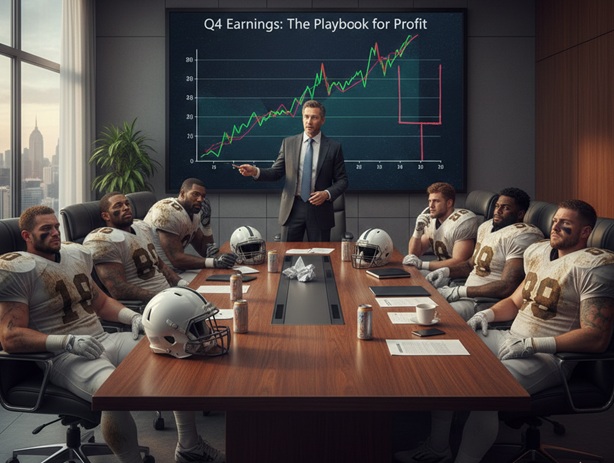
New Season: The Executive Edition
The axemen have been working overtime this week. We aren’t just seeing shifts in strategy. We are seeing a wholesale replacement of the palace guard. The goal? To be leaner, faster and, above all, more profitable. If there is even a whiff of underperformance or strategic misalignment, the execution is swift.
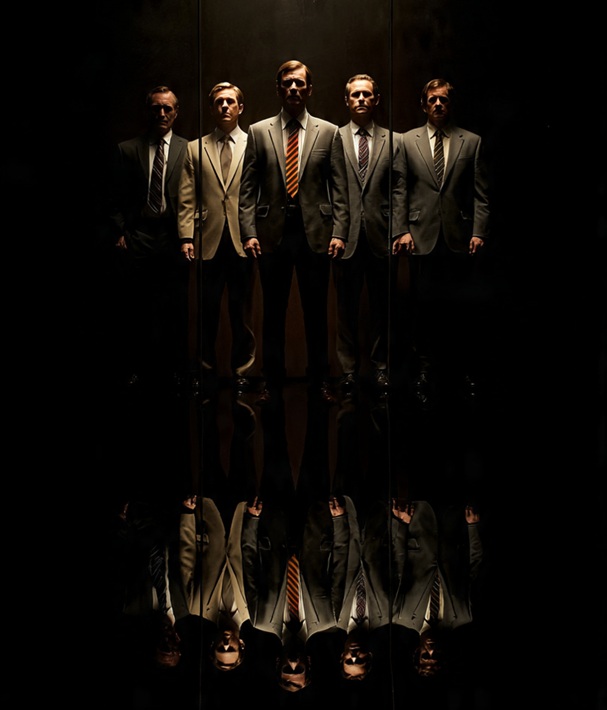
This week alone, we’ve seen a remarkable parade of new “Head Coaches” taking over the biggest corporate sidelines in the world:
- Disney: Josh D’Amaro has finally taken the scepter from Bob Iger (for real this time, we think), ending a succession drama that had more seasons than Grey’s Anatomy.
- Target: Michael Fiddelke took the helm on February 1, immediately signaling a restructuring that involves cutting 1,800 positions.
- Walmart: John Furner stepped in as CEO of the world’s largest retailer, succeeding the long-tenured Doug McMillon.
- PayPal: Enrique Lores, formerly of HP, was drafted to fix the payments giant after the board decided the current pace of change wasn’t fast enough.
- Brookfield: Connor Teskey was just named CEO of the flagship asset management arm, proving that even in stable finance, the youth movement is in full swing.
…and that’s just the tip of the executive iceberg, at a $1.4 trillion market cap of corporate musical chairs. The median CEO tenure has now dropped below five years. In 2026, the “five-year plan” has been replaced by the “five-minute plan”.
If this sounds like a swap meet of CEOs, that’s because it is. But it’s also something deeper, a symptom of modern corporate culture where leadership is both the savior and the sacrificial lamb.

Business is a Battlefield
Make no mistake, business today isn’t a chess match. It’s a mixed martial arts bout where anything goes and the gloves come off every quarter. In the corporate world of 2026, there is no participation trophy. The mantra isn’t grow sustainably or build great products. It’s beat expectations.
And if you miss? Well, don’t bother sticking around to explain your strategy with buzzwords and whiteboards. There’s always someone else with a scrappier resume and a sharper haircut ready to take your place.
Business today is a battlefield where the only consistent rule is Up or Out. We live in an era of “The Strategic Reset”, a polite euphemism for “we fired everyone who remembered how the coffee machine worked because their salary didn’t fit the new AI-driven margin model”.
Just this week, the Washington Post (owned by Amazon alum Jeff Bezos) announced major layoffs and the complete shuttering of its sports section. The irony of a billionaire owned paper cutting its sports desk during Super Bowl week is a level of gallows humor even I can’t invent.
The competition isn’t just between people anymore. It’s between entities trying to outrun their own shadows. Companies are shedding middle management like excess weight before a weigh-in. The goal is agility, but the reality is often a skeleton crew trying to pilot a freighter through a hurricane.
This isn’t merely competitive. It’s Darwinian. “Up or Out” is masked in corporate speak as results driven strategy, but let’s be honest, it’s ruthless. You can be effective, even great and still be replaced, not because you failed, but because someone somewhere promised more.
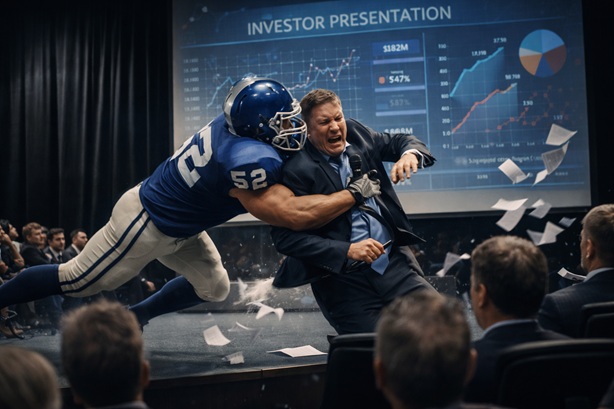
Why Are We Like This?
What does it say about our society that we treat human leadership like a disposable razor?
Part of it is human nature, our ceaseless hunger for more. More growth. More innovation. More profit. But unlike hunters chasing prey across the plains, today’s business leaders chase share price, market share and quarterly growth curves until the graphs blur into a puzzle maze.
Another part? Our cultural myths. We lionize the disruptors, the mavericks, the bold leaders who “changed everything”. We elevate them to mythic status. Until we don’t. Then we blame them, quietly unwrap severance packages and post new press releases with cheerful pictures of their successors.
We’ve become addicted to the “Quarterly Fix”. If the stock price dips, we don’t look at the five year horizon. We look for a throat to cut. We demand that our CEOs be part celebrity, part oracle and part algorithm. And when they inevitably fail to satisfy all three, we march them to the chopping block and cheer for the next visionary who promises us a 4% bump in dividends.
We act like disruptive innovation is a noble pursuit, but the truth is messier. We’re addicted to the thrill of the pivot, the promise of the rebound and the hope that the next CEO will be the one who finally cracks the code.
We have exported the “Super Bowl or Bust” mentality to every sector of our lives. From retail to healthcare, if you aren’t disrupting the market, you are the one being disrupted.
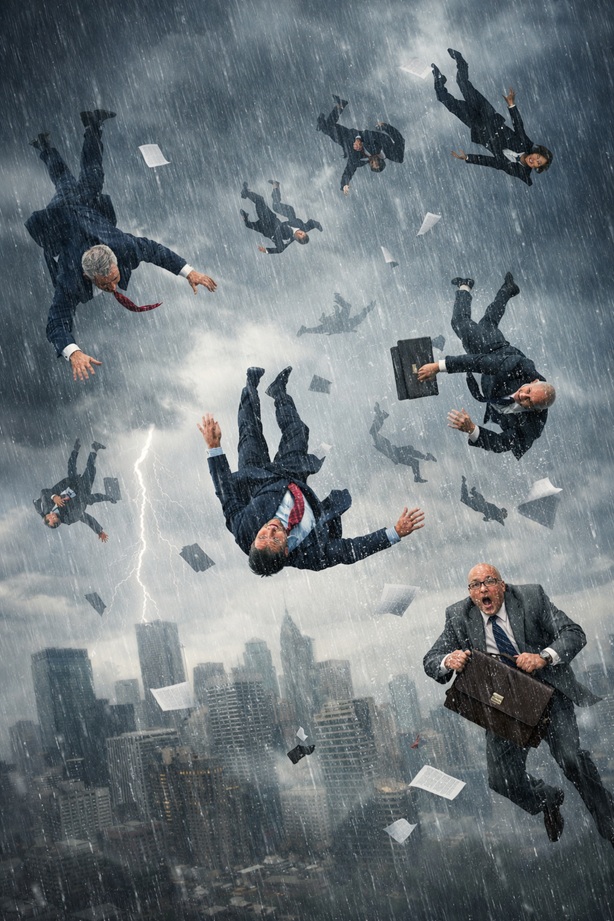
The Competitive Bottom Line
In this marketplace of sharks and rookies, what truly matters isn’t loyalty, tenure or even competence. It’s perception. It’s momentum. It’s the illusion of control in a world that doesn’t actually respond well to control.
Quarterly earnings reports have become prophecies. Stock price fluctuations are read like entrails. Boards of directors issue ultimatums like firing squads and investors cheer when leadership changes because maybe this time it will stick. Because maybe this time it will be different.
We celebrate resilience, but the ecosystem we’ve built punishes endurance. The strongest don’t survive. The most marketable do. Much like in Imperial Rome, the mere perception of failure has become a blood sport.

The Price of the Pivot
In the marketplace of sharks and rookies, we have confused motion with progress. We treat “The Pivot” like a sacred rite of passage, but constant pivoting is just another word for running in circles.
The data tells a story the axemen would rather ignore: churn is a tax on excellence. While boards chase the high of a new hire, the most successful entities are often the ones that refuse to play the game. Look at the “old” Walmart under Doug McMillon. While the retail sector was panicking, firing and resetting every eighteen months, McMillon, a Walmart lifer, spent over a decade methodically building an omnichannel empire. He didn’t just survive the Amazon Apocalypse. He outpaced it, taking Walmart to a historic $1 trillion market cap just this week.
That wasn’t the result of a pivot-of-the-month strategy. It was the result of Strategic Integrity, the rare courage to ignore a bad quarter to win a better decade.
Contrast that with the mercenary CEO model: the high-priced fixers who parachute in with a three year contract and a mandate for efficiency. They cut the bone to save the skin, boost the stock price long enough to cash their options and leave behind a skeleton crew to figure out why the new culture feels like a haunted house.
The reality? Frequent leadership changes aren’t a sign of a results-driven board. They’re often a sign of a board that doesn’t actually have a plan. When you fire the coach every season, you don’t build a championship team. You just build a very expensive revolving door.
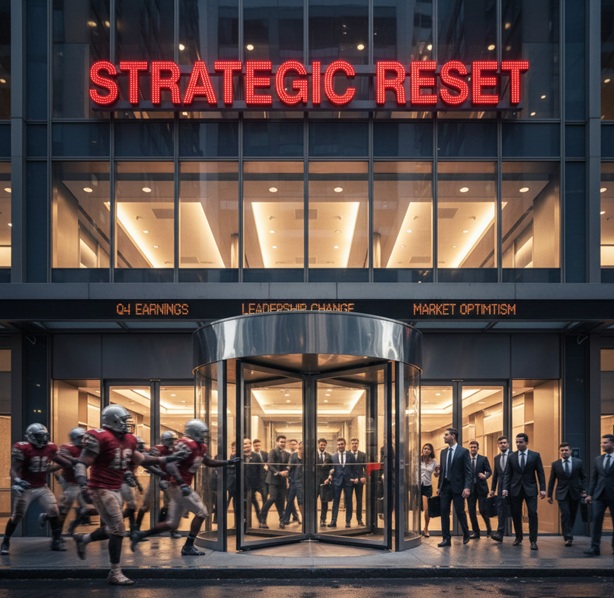
A Future of High Velocity and Low Friction
If current trends continue, we’re heading toward a corporate culture that resembles The Hunger Games with PowerPoint slides. Executives will be judged every quarter on metrics as arbitrary and cruel as judges on a dance competition show. When results dip, not because of poor leadership, but because markets are messy and unpredictable, out comes the ceremonial guillotine.
As we look toward the rest of 2026, the trend is clear: the tenure of the Corporate Titan is shrinking. The median CEO stay is now shorter than most car loans.
The future of business looks remarkably like a permanent Super Bowl. It is high-velocity, high-stakes and completely devoid of sentimentality. We will see more “interim” titles, more “consultant” roles and a permanent class of elite “fixers” who jump from one burning ship to the next.
In this environment, loyalty is a vintage concept, like fax machines or landlines. The only thing that survives is the bottom line. So, grab your popcorn and watch the headsmen do their work.
But here’s my hopeful spin, because someone’s got to be the optimist: real leadership can’t be replaced by churn.
Authentic value, ethical decision-making, sustainable strategy, genuine investment in people and products will ultimately outlast the feverish hunt for a quick fix. Companies that recognize this will flourish. Not because they’re fast, but because they’re steadfast. Not because they can pivot the hardest, but because they can persist with integrity, even when the scoreboard doesn’t immediately reflect their worth.
Maybe that’s the lesson buried under all the severance pay and stock photos of smiling new CEOs: business doesn’t need more winners. It needs more wise leadership.
And who knows? Maybe the next Super Bowl winner won’t fire their coach. Maybe they’ll just finally figure out how to play offense and defense at the same time. It’s the greatest show on earth. Just make sure you aren’t the one standing on the trapdoor when the music stops.
Discover more from Tales of Many Things
Subscribe to get the latest posts sent to your email.