
The Deception of the Freeze-Thaw Cycle
February is prime time for the snow–melt–freeze cycle. It is the month when the sun starts to stay out just long enough to suggest warmth, but the shadows still hold the power of a deep freeze. The sun softens the trail during the day and the moment it slips behind a ridge or tree line, everything locks back up.
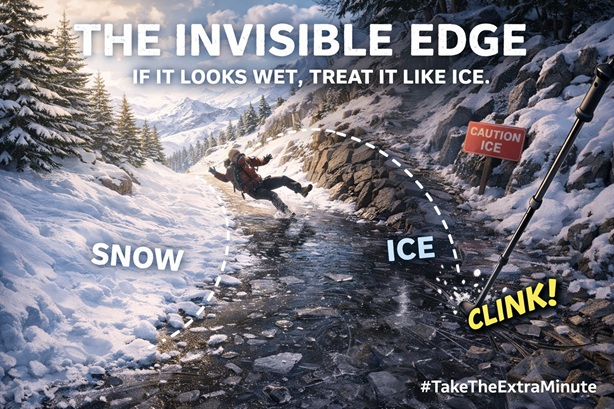
This creates The Invisible Edge, the moment where a trail transitions from manageable snow or dry rock to a glass-like sheet of black ice.
Sometimes the danger isn’t what you see.
It’s what you’re already standing on.
Black ice isn’t just a highway problem.
It’s a backcountry problem, everywhere.
If it looks wet, treat it like ice. Transition zones, moving from sun to shade, are where most ankles and oil pans meet their end.
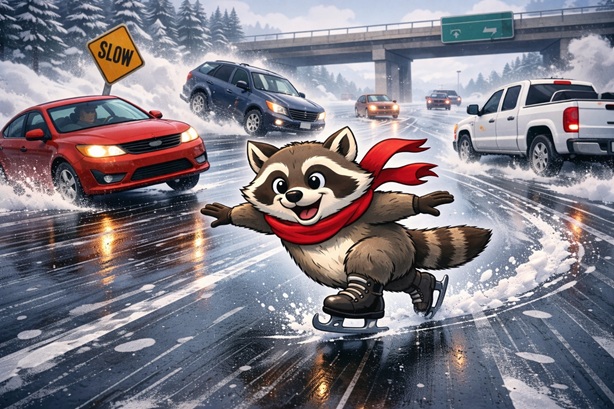
Why Black Ice Is a Different Beast
Black ice isn’t just a highway hazard. It is a backcountry assassin. Unlike snow, which is highly visible and predictable, black ice is transparent. It adopts the color of the rock or asphalt beneath it, making it look like a harmless puddle or a damp patch of stone.
Black ice is deceptive by design. It doesn’t announce itself like snow. It hides.
| Feature | Snow | Black Ice (Verglas) |
| Visibility | Highly visible. Easy to track and spot. | Transparent. Looks like wet or dark rock. |
| Traction | Snowshoes or standard boots often grip. | Requires sharp metal like crampons or microspikes. |
| Risk | Slows you down (post-holing). | Causes instant, high-velocity slides. |
| The “Tell” | Crunches underfoot. | Absolute silence, until the slide begins. |
| Consequences | Fatigue | Falls, injuries, long rescues |
A two-foot slip on snow is annoying.
A two-foot slip on black ice can end the hike. Or worse.

Real Incidents: The Cost of Underestimation
While rescue reports often list “slips and falls”, these recent high-profile cases reveal the lethal reality of the Invisible Edge.
Mount Washington, NH — February 2024
The “Microspike” Ordeal
A hiker transitioned from snowshoes to microspikes after entering alpine terrain. Conditions quickly turned into steep, hard ice that microspikes couldn’t penetrate.
- He lost his footing.
- Slid into a ravine.
- Endured 11 hours in sub-zero temperatures with 90 mile per hour winds.
Lesson: Microspikes can provide a false sense of security. On hard alpine ice, they are not enough.
Franconia Ridge, NH — February 2025
The Falling Waters Trap
A group of hikers encountered severe icing on a steep trail where flowing water froze into a literal river of ice.
- Too icy to continue.
- Too dangerous to ascend.
- Whiteout conditions rolled in.
Lesson: When ice takes over, “going back” can be more dangerous than stopping and calling for help.
Adirondack High Peaks, NY
Anatomy of a Fall
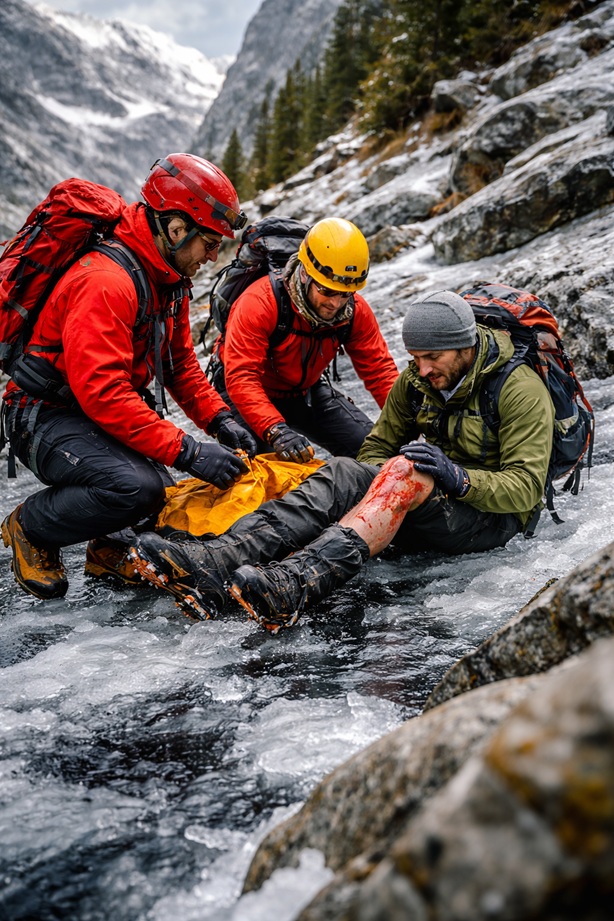
Forest Rangers regularly respond to lower-leg injuries caused by nearly invisible ice on popular peaks.
- One case involved a hiker breaking through a shallow, iced-over brook.
- Wet feet led to repeated slips.
- A simple fall turned into an immobilizing injury in freezing conditions.
Lesson: Black ice doesn’t need height to hurt you. It just needs momentum.
Chasm Lake, Rocky Mountain National Park, CO – July 2025
The Alpine Threat
A 66-year-old hiker fell on steep, icy scree slopes below Longs Peak.
- Shaded scree slopes can hide icy danger.
- Transition from dry dirt to slick rock can happen quickly.
- High alpine terrain calls for additional care during all seasons.
Lesson: Alpine ice can easily persist into the summer, waiting for inattentive hikers to pass.
The Rocky Mountain Reality
In 2024 and 2025, icy conditions across the Rockies have contributed to multiple fatal and near-fatal incidents:
- Rocky Mountain National Park: Shaded ice in the glacier cut gorges persists all day and well past the winter season.
- Wasatch Range, UT: Mid-winter slopes become rock-hard and unforgiving.
- Colorado Front Range: Freeze–thaw cycles make trailheads and “easy” paths into injury hotspots.
In these regions, accidents spike late in the day, when melting snow refreezes the instant the trail enters shade.
If it looks wet and the temperature is near freezing, it’s ice.
How to Stay Upright (and Not Need a Rescue)
The “Tap Test”
If a rock looks wet and the temperature is near freezing, don’t trust your eyes. Tap the surface with your trekking pole.
- A “Clink”: It’s ice. Stop and don traction. Proceed with extreme caution.
- A “Thud”: It’s rock.
Upgrade Your Traction
Understand your limits.
- Microspikes are for flat, moderate trails or rolling terrain.
- Crampons and an Ice Axe are the only tools that hold up on the steep, black ice covered slopes found in the alpine zone.
Respect Transition Zones
Sun to shade. Snow to rock. Forest to alpine. These are the danger points. They seek a moment of neglect, diverted attention, overconfidence. Then they strike. Some predators are inanimate and equally dangerous as the live ones.
Anticipate the Shadow
Sunlit trails refreeze the top layer of melt as soon as a shadow hits the ground. If you are hiking into a north-facing slope or a deep ravine, expect the transition. Turn around early. Pride doesn’t improve traction.
Remember: If it’s dangerous for you, it’s dangerous for search and rescue as well. Take the extra minute to assess the surface. Take the extra minute to put on your spikes. Take the extra minute to prevent a tragedy.

The Weight of the Extra Minute
Whether you’re behind the wheel or on the ridgeline, the physics of black ice doesn’t change. Most winter rescues don’t start with recklessness. They start with one normal step onto something that looked fine until it wasn’t.
In the backcountry, your decisions carry weight, not just for you, but for everyone who shares the mountain. When we ignore the “wet” look of a rock or push into a shaded ravine without checking our gear, we aren’t just gambling with our own safety. We are placing a bet with the lives of the volunteers and professionals who will have to navigate that same treacherous ice to find us.
Nature doesn’t have a reset button and black ice doesn’t offer second chances. It is silent, it is invisible and it is absolute. It doesn’t announce itself. And once gravity takes over, there’s rarely time to fix the decision that came before it. By taking the extra minute to assess the surface, to tap the rock or to swap your spikes for crampons, you are honoring the mountain and respecting the craft of survival.
When you pause to reassess, when you stop at the edge of the shade, tap the rock, put traction on or choose to turn around. You’re not just protecting yourself. You’re protecting your partners, your friends and your family, who expect you to return home safely. And you’re protecting the rescuers who would have to follow your tracks into the same invisible danger, often in worse conditions and after dark.
The mountains will still be there tomorrow.
The trail doesn’t care if you summit today.
But the choice to slow down can be the difference between a story you tell later and a rescue that never should have happened.
See the invisible edge, before it sees you.
#TakeTheExtraMinute.
Pause. Assess. Adjust.
Prevent a rescue before it starts.
Don’t let the beauty of a bluebird day blind you to the black ice beneath your feet. Stay sharp, stay grounded and remember, we’d much rather see you at the trailhead than in the field.
Discover more from Tales of Many Things
Subscribe to get the latest posts sent to your email.