
If you’ve lived long enough to read headlines, you’ve probably experienced nutritional whiplash.
You wake up, pour a cup of coffee, and open your phone only to see a headline screaming that caffeine is the secret to eternal youth. You take a sip, feeling like a genius. By lunch, a new study has dropped: “Coffee: The Delicious Silent Killer”. Suddenly, your mug feels like a ticking time bomb.
It’s the same with wine. One week, a glass of red is a “surgical strike” against oxidants, the next, you’re told that even looking at a grape might shave six months off your life expectancy. It’s enough to make you want to give up on science entirely and just live on air, except there’s probably a study saying oxygen causes premature aging. (Spoiler: It actually does, it’s called oxidation, but let’s not go there today.)
What matters is that one week you’re a hero for your habits. The next week you’re apparently eroding your lifespan one sip at a time.
So what’s going on? Is science confused? Is it unreliable? Or are we just bad at reading it?

The Great Meat Paradox of 2026
Recently, the science headline machine reached a fever pitch. Within the same month, two major outlets dropped what looked like a “Quantum Conflict”.
- The Grim Reaper Version: Science Daily reported that a common amino acid found in protein-rich foods (Tyrosine) is linked to a shorter lifespan in men.
- The Fountain of Youth Version: Science Alert reported that meat-eaters are actually more likely to live to 100.
Wait. So if I eat the steak, I die early? But if I eat the steak, I hit triple digits? That’s clear like a champagne flute of mud. At first glance, this feels like nutritional civil war.
Talking to nutritional scientists can feel like talking to two economists: one predicts a market explosion while the other guarantees a deep recession. You know that a year from now, neither one will look like a genius because the market will spite them both and stay flat.
So, how do we reconcile the two extremes? Is meat a metabolic poison or a biological miracle?
Here’s the twist: these two stories aren’t actually contradicting each other. They’re looking at the same biology in two different ways — life stage and specific amino acids.
Let’s break it down.
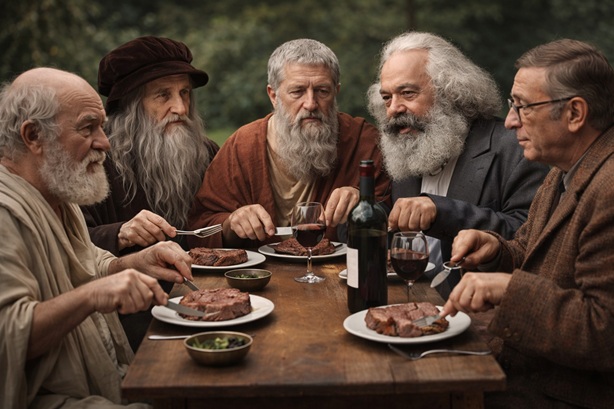
The Lens Matters: Two Different Battles
The “nonsense” starts to make sense the moment you stop looking at the headline and start looking at the Life Stage. These two studies aren’t actually fighting. They are looking at the same biology through two different lenses.
That detail matters.
- Meat as “Structural Insurance” (The 80+ Crowd)
The study claiming meat eaters live to 100 focused on people who had already hit their 80th birthday. The benefit wasn’t magical bovine longevity powers. It was frailty prevention.
Once people hit their 80s, they lose muscle mass rapidly, a condition called sarcopenia. Muscle loss leads to weakness, falls, infections and general physical collapse. At that stage of life, being slightly overweight and muscular is often protective. If you become underweight and fragile, a simple fall or a bout of the flu become terminal events.
The Reconciliation: Meat isn’t a magic longevity pill. It’s high quality protein, B12 and Iron that act as “structural insurance”. Meat prevents the malnutrition that kills people in their 80s and 90s. In the fourth quarter of the game, you need the muscle to stay on the field. In other words, it helps older adults avoid becoming underweight, fragile and malnourished. Meat is not a youth elixir. It’s scaffolding.
- Meat as “Metabolic Overdrive” (The 30–60 Crowd)
The other study looked at a massive group of 270,000 people and focused on a biomarker called tyrosine.
Tyrosine is an amino acid found in protein rich foods, including meat, that serves as the raw material for dopamine and adrenaline, often sold as a focus or performance supplement. In your 30s, 40s and even 50s, your body is already a high-performance engine. If you flood the system with too much “growth and focus” fuel, you can push the engine into red-line territory.
Higher blood levels of tyrosine were associated with a slightly shorter lifespan in men, roughly shaving off about a year. Not decades. Not doom. But statistically measurable. “Man loses 12 months of life” doesn’t sell ads. “MEAT KILLS MEN” does.
The Reconciliation: Tyrosine is a precursor to dopamine and adrenaline, neurotransmitters involved in motivation, focus and stress responses. Chronically elevated levels of tyrosine are associated with pathways involved in insulin resistance and metabolic stress. In plain English, it’s more biological “revving”.
It’s like keeping your car in second gear while going 80 MPH on the highway. You’ll get there fast, but you’re wearing out the parts.
If you’re 45, healthy and not frail, your system doesn’t need structural rescue. It needs metabolic balance. For men in middle age, high protein intake can create a “wired and stressed” biological state. This doesn’t mean protein is poison. It means that constant excess stimulation in a body that doesn’t need rebuilding may carry long-term tradeoffs. Over decades, that kind of constant stimulation may age tissues a bit faster.
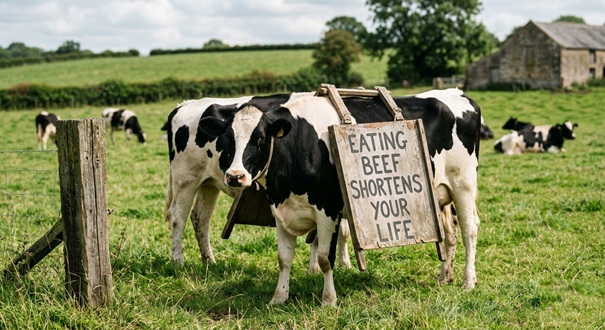
So… Which Is It?: The “Catch” Summarized
If you want the common sense cheat sheet, here it is:
- Eat meat for “Structure”: If you are elderly, recovering from an injury or struggling with frailty, meat is a vital tool to keep your “house” from falling down. It will do more good than harm.
- Limit meat for “Metabolism”: If you are a man in his prime, keep the intake moderate. You don’t need to be in metabolic “overdrive” 24/7. Very high protein intake may push metabolic systems harder than necessary.
Meat helps you survive the end of life by preventing frailty, but too much of it might accelerate the middle of life by overstimulating metabolic and neurotransmitter pathways.
The Meat of the Story: Why Headlines Make It Sound Absurd
Science isn’t broken. It’s just nuanced and headlines are built for clicks, not nuance.
They compress:
- Population differences
- Age groups
- Biomarkers
- Dose effects
- Relative vs absolute risk
…into 12 words.
Imagine summarizing climate science as “Sunlight causes cancer”. Technically true in certain contexts. Misleading without them. The same thing happens in nutrition science.
The problem is that “Meat is helpful for 85-year-olds with sarcopenia, but potentially stressful for 40-year-olds with high insulin” is a terrible, boring headline. It’s much easier to just say “Meat Kills” or “Meat Saves”. And that drives clicks.
Science isn’t confused. It’s incremental. But we tend to read it like prophecy instead of probability.
Next time you see a dramatic claim, ask:
- Who was studied? (Age? Sex? Health status?)
- What was actually measured? (Diet? Blood markers? Self-report?)
- How big was the effect? (A year? A decade?)
- Is this about deficiency, excess or balance?
Many “conflicts” disappear once you realize they’re studying the same system from different angles. The same engine behaves very differently at 25 MPH than it does at 125 MPH.
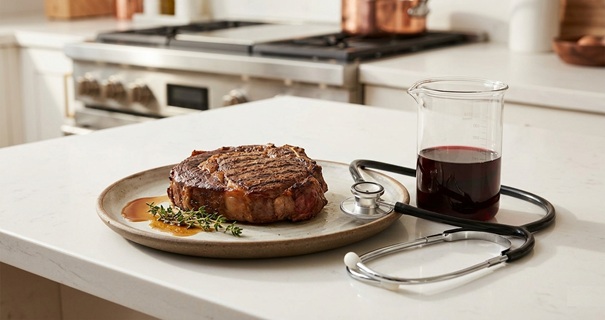
The Bigger Lesson
Biology is dynamic.
What protects you at 85 might stress you at 45.
What harms you in excess might help in moderation.
What’s dangerous by the barrel may be harmless by the cup.
Which brings us back to coffee and wine.
Yes, it’s okay to have a cup of coffee while reading about coffee studies.
Yes, a glass of wine while reading about wine research is allowed.
Just maybe don’t drink either by the barrel while waiting for the next headline to overturn today’s wisdom. Science isn’t a courtroom handing down final verdicts. It’s a long conversation where each study adds a sentence.
The next time you see a contradictory study, don’t throw your hands up in frustration. Take a breath. Look at who they studied, what age they were and what “catch” is hidden in the fine print.
And in the meantime? Go ahead and have that cup of coffee or that glass of wine while you ponder the mysteries of the universe.
The problem isn’t that science changes. The problem is that we read the headline and skip the paragraph.
No coffee beans or grapes were harmed in the writing of this article.

Discover more from Tales of Many Things
Subscribe to get the latest posts sent to your email.