Crossing the Edge

In addition to my day job, I also volunteer on search and rescue.  Generally, that means I don’t sleep during the day or during the night, but chronic insomnia aside, search and rescue can be very demanding (and rewarding) when it comes to skills and those skills must be practiced and refreshed all the time.  This weekend, like most weekends, my team held a training session, this one for vertical skills.

When it comes to vertical rescue, one of the most deceptively challenging and undeniably critical skills is edge transition. It sounds simple enough: getting a rescuer (and eventually a patient) safely over the edge of a cliff, building or ravine. But for those of us who volunteer our time on search and rescue teams, edge transition is less about simplicity and more about precision, control and a healthy respect for gravity.

Edge transition is that crucial moment where rope meets reality and your body shifts from standing on solid ground to hanging on rope, or vice versa. It’s the moment the laws of physics introduce themselves with authority and your gear, your anchor systems and your team better be squared away, because there is zero margin for error.

Volunteer search and rescue teams often face challenging environments and vertical rescues are among the most complex and hazardous operations. Teams may be called out in the middle of the night, in rain or snow, on unfamiliar terrain and with limited personnel.

We don’t get to pick the mission. We train in our free time, we pay for our own gear and we practice as often as life lets us. But when it’s real, it’s real — cold weather, jagged rock, loose gravel, wind howling through your helmet vents type of real.


Why Edge Transitions are so Tricky

Training on the edge.

Training on the edge.

Edge transition refers to the process of transitioning a patient or team member from a vertical environment, such as a cliff face or a building, to a horizontal environment, such as the top of said cliff face of building. This transition requires careful planning, precise communication and skilled execution to ensure the safety of both the patient and the rescue team.

If you’re wondering exactly where the challenge is, anchor a rope to your sofa and run it across your dining room table, then try to climb up on the table without touching the floor. That candy bowl or flower vase will do absolutely nothing to aid you in getting you from being under the table to being on top of it.  Let’s break it down:

  • Abrupt Terrain: The edge is rarely smooth. It’s a jumble of jagged rock, cactus, roots, scree or slippery mud. Sometimes it’s just unconsolidated compressed rock and dirt, making things really dicey.  Stability is laughable.  We get called because the conditions are bad. No one needs to be rescued from a safe environment.
  • Limited Visibility: In many cases, the area beyond the edge is obscured by vegetation or darkness, making it difficult to assess the terrain and plan the transition. In fact, most of the time you don’t even know about the vegetation, because it’s obscured by the darkness below, giving you and opportunity to rappel into a massive tree or a thicket you need a chainsaw to get through.
  • Rope Angles: You’re lucky to find an anchor for the rope that’s decently placed. That’s not how things go normally. Most of the time your rope ends up being vectored away from where you need to be. And the rope tends to rub right at the edge. Without edge protection (and sometimes even with it), there’s wear and tear and additional risk to manage.
  • Communication challenges: Effective communication is crucial during edge transition, but the ambient noise, wind and other environmental factors can make it difficult for team members to communicate clearly. Communications failures are the greatest cause of accidents.
  • Patient Factors: Eventually, we’re not just sending down rescuers, we’re bringing up a patient. In a perfect world it’s just one, not a mass casualty incident. The patient might be panicked, injured or unconscious and sometimes they weigh more than any two rescuers on the mission. Edge transition for a litter team is a ballet of brute strength, coordination and forced calm.
  • Exposure: Once a rescuer commits to an edge transition, they are exposed to the risk of falling or being pulled off the edge by the weight of the victim. It becomes a game of numbers. How strong is the rope? Can the anchor withstand the forces we put on it? Any angle, redirect and knot add to the complexity, compromising safety.
  • Mental Game: Let’s face it, going over the edge is psychological. Even with triple-checked gear and redundant systems, the human brain still shouts, “THIS IS A BAD IDEA!”, especially when you’re fighting the elements thrown at you by nature.  Mother nature is not forgiving and you know that when going over the edge.


Safety Systems and Teamwork

Edge transitions are not solo events. Every rescuer over the edge has a team behind them, managing belays, tending lines, calling commands. High directionals like a TerrAdaptor or a Vortex or even a simple A-frame might be used to angle the rope away from the edge and reduce friction. Edge tenders, the rescuers on rope beneath the edge, keep an eye on the line and the patient’s team, making sure nothing snags or twists. Communication is everything.

Even then, Murphy’s Law loves an edge. A sudden gust of wind, a dislodged rock, a miscommunication, all can turn routine into chaos. That’s why search and rescue teams drill edge transitions over and over. In snow. In heat. In places no sane person would hang from willingly.


Volunteer SAR: Passion, Not Pay

Let’s not forget, we are volunteers. Teachers, plumbers, accountants, IT techs, students, retired military, all united by a desire to help and often willing to dangle from cliffs at 3:00 AM because someone else’s life depends on it.

And when that edge transition goes right, when a rescuer slides down smoothly, when the ropes hum with tension and the team clicks like gears in a watch, it’s poetry. It’s controlled risk, made beautiful through teamwork, skill and courage.


Final Thoughts

Edge transitions are where search and rescue meets science, psychology and sometimes just plain stubbornness. For the teams that do this work, mastering this moment isn’t optional. It’s survival. It’s service. And it’s something we train for not because it’s easy, but because the alternative is unthinkable.

So the next time you see a rescue on the news, remember, somewhere just out of frame, there’s a volunteer hanging off a rope, trusting a team, conquering the edge.  The vast majority of search and rescue in the United States is a vigilant effort by unpaid volunteers.

Are you curious about search and rescue?  Visit the National Association for Search and Rescue and Google for a team in your area.

Conquering the edge.


Conquering the edge.

Posted in Search and Rescue | Tagged , , , , | Leave a comment

Tariffs and the Tightrope: How Small Businesses Are Struggling to Stay Afloat

I had lunch this week with a friend who’s been running a retail store for over two decades.

Two decades. That’s a big deal in any industry, but especially in retail, where the landscape changes as often as the seasons and where every new economic policy can feel like a fresh storm rolling in.

Like so many conversations these days, ours drifted to the subject of tariffs. Not surprising. He’s weathered countless storms – economic downturns, shifting consumer trends and the rise of online shopping, but now he’s facing a new threat: tariffs. When a 145% tariff on goods from China is looming overhead, small business owners don’t have the luxury of ignoring it. They’re not running billion-dollar enterprises with layers of legal protection and resource rich logistics departments. They’re placing their own bets, with their own money, on what’s going to be in demand, what’s going to ship on time and what people can actually afford to buy.

“It’s like a slow-motion death by a thousand cuts,” he lamented. “Many of the products I carry are made in China and these 145% tariffs? That’s not just a price hike, it’s a price explosion.”

He explained that if an item previously cost $10 to import, the tariff now adds $14.50 to the cost. This isn’t just a number on a spreadsheet. It’s real-world impact. “Consumers are already feeling the pinch,” he said, “and discretionary spending is taking a hit. Who’s going to pay three times as much for a t-shirt?”

The problem isn’t just the immediate cost increase. It’s the uncertainty. With tariffs fluctuating like a yo-yo, it’s impossible to plan for the future. “I can’t order inventory with any confidence,” he told me. “Will the tariff be raised again tomorrow? Will it be lifted entirely next week? It’s a gamble and it’s a gamble I can’t afford to lose.”


The Weight of Survival

Statistics paint a grim picture for small business longevity:

  • About one-third of all new businesses fail within three years.
  • Roughly half don’t make it past five.
  • Three out of four are gone by year ten.

So surviving twenty years? That’s not luck. That’s hard-earned, nose-to-the-grindstone endurance. It’s knowing your customer base, adapting to market changes and keeping your costs in check without sacrificing too much margin. But what happens when the rules of the game change so drastically, it’s like starting over?


The Triple Threat: Tariffs, Costs, and Customers

My friend’s store, like many, relies on products that are made in whole or in part in China. That’s not because he’s trying to save a few cents. It’s because, in many industries, China is the only source. It’s where manufacturing has gravitated for decades, offering scale, infrastructure and cost-effectiveness that’s hard to replicate elsewhere.

But with a 145% tariff, an item that used to cost $10 now costs over $24.50, before licensing and shipping and handling, before building in a profit. And by the time it’s on the shelf, it may be retailing at $40 or more, easily quadrupling the original price.

That math doesn’t just hurt the store owner. It hurts the customer. And when customers are already stretched thin, deciding whether to pay rent or to fill their gas tank or buy groceries, the idea of spending extra money on anything that isn’t essential becomes a non-starter.

Tariffs don’t just shift economics, they shift behavior. They make people pause before buying. They make businesses pause before ordering. And they make the future feel uncertain, even for the most seasoned of shopkeepers.


Can’t We Just Manufacture It Here?

It’s a fair question: if tariffs are so bad, why not just manufacture more things in the United States?

“Bringing manufacturing back to the U.S. is a dream, but it’s not a realistic overnight solution,” my friend explained. “Building factories, training workers and establishing reliable supply chains takes time and immense investment. And even then, can we compete with the established manufacturing powerhouses overseas?”

The short answer is that we can’t flip a switch.  There is no switch.

A longer answer is that rebuilding domestic manufacturing for many product categories means years of investment in machinery, in training, in supply chains. Even if a business could afford to pay triple to have something made stateside, the infrastructure does not even exist yet. We gave that up years ago when offshoring was the economic trend.

And let’s not forget that costs in the U.S. are higher. Not just labor, but energy, materials, real estate and regulatory compliance. For industries that run on razor-thin margins, this isn’t just a patriotic challenge. It’s a financial impossibility.


The Squeeze is Real

Tariffs don’t just hit goods. They hit confidence. They shake the sense of control that small business owners work so hard to maintain. And when your business is your livelihood, your identity and your future all rolled into one, those shocks hit deep.

We’re seeing more small retailers quietly shuttering their shops, not because they mismanaged their business, but because they were priced out of the market by policy. Others are hanging on, hoping things will stabilize before they run out of money or steam.


A Final Word

Small businesses are the soul of local economies. They’re the corner shops, the quirky boutiques, the family-owned stores that remember your name and what you bought last Christmas. They adapt. They innovate. But even the most agile among them can only bend so far before they break.

As the tariff war escalates, let’s not forget that it’s not just numbers on a spreadsheet. It’s people. Business owners. Employees. Communities. And unless we create space for them to adapt, we may lose a whole generation of entrepreneurs to something they had no say in, because when the cost of doing business becomes higher than the reward, the only sensible decision may be to close the doors and that’s a loss for all of us.

Small business - the backbone of America

Small business – the backbone of America

Posted in Economy | Tagged , , , , | Leave a comment

The Dire Wolf’s Return

If you’ve watched Game of Thrones, you probably picture dire wolves as majestic, massive canine companions with a supernatural sense of loyalty.  As much as this version of the dire wolf is compelling, real dire wolves (Aenocyon dirus) don’t quite live up to HBO’s fantasy version.  They were, however, incredible creatures in their own right and thanks to advances in genetic technology, we are getting an opportunity to witness their return from extinction.  Yes, science has delivered on what fantasy only promised: a second chance for a species long gone.


What Was the Dire Wolf?

The dire wolf roamed North and South America during the Pleistocene Epoch, about 250,000 to 10,000 years ago.  Despite their name and pop-culture fame, they weren’t fantasy beasts.  They were real flesh-and-blood predators, roughly the size of today’s largest gray wolves, but much stockier and with powerful bone-crunching jaws.

Let’s clear something up: the dire wolf wasn’t just a beefed-up version of the modern gray wolf.  In fact, recent genetic studies have shown that dire wolves were not particularly close relatives of gray wolves at all.  They diverged from a common ancestor more than five million years ago, placing them on a different evolutionary branch entirely.  Think of them as a sibling species that went to a different high school and got really deep into athletics.  Dire wolves are distinct from their gray wolf cousins, despite sharing 99.5% of their DNA.


What Killed the Dire Wolf?

Blame the Ice Age afterparty, what is known as the Quaternary extinction event.  As the Pleistocene ended, the climate warmed, the glaciers melted and the megafauna buffet closed down.  Dire wolves specialized in hunting large prey like mammoths, giant ground sloths, mastodons and prehistoric bison.  When those big game targets started disappearing, likely due to a combination of climate change and pressure from early human hunters, the dire wolf found itself outcompeted by more adaptable predators like the gray wolf and the coyote.  Unlike their adaptable cousins, dire wolves couldn’t pivot to new food sources quickly enough.  Evolution’s version of “adapt or die” proved literal.


What’s in a Name?

You might assume the term “dire wolf” came from ancient legend or some Old Norse prophecy.  In reality, it was more of a Victorian flair for the dramatic.  The Greek and Latin hybrid name Aenocyon dirus translates loosely to “terrible wolf”, reflecting its fearsome reputation as an apex predator.  (I will discuss the lack of sanctity in mixing Greek and Latin roots in a later blog.)

Discovered primarily through fossil finds in the La Brea Tar Pits in California, the dire wolf earned its name thanks to its fearsome skeletal structure — big teeth, big bones, big bite.  This thing didn’t chase rabbits.  It was the apex predator of its time.  If you saw one, you were definitely not the apex.  In fact, you were probably the target of one.


Fact vs. Fantasy

Despite what television has told you, dire wolves weren’t house-trainable war companions or oversized snow puppies.  They didn’t tower over humans and they couldn’t be summoned with a whistle and a dramatic musical cue.  They were wild animals, powerful, social and, like modern wolves, probably ran in packs.  But they weren’t magical.

Still, there’s something magical about the idea of bringing back an animal that has not set foot on our world in over ten millennia.


Why Bring Back the Dire Wolf?

The de-extinction movement — think CRISPR, gene editing, cloning — is gaining momentum and while the woolly mammoth often steals the spotlight, the dire wolf is a compelling candidate, easily within science’s reach.  Its ecological niche was unique.  Unlike modern wolves, it didn’t interbreed with coyotes or dogs, meaning its genetic line ended cleanly with no watered-down descendants lingering today.

The dire wolf’s de-extinction raises questions about our responsibility to restore lost species and ecosystems.  While there are concerns about disrupting modern ecosystems, this breakthrough also offers hope for reversing biodiversity loss.

Reintroducing the dire wolf could offer valuable insights into ecosystems, predator-prey dynamics and even human history.  Plus, the process of de-extinction itself forces us to grapple with complex ethical questions: Should we bring back extinct species?  What responsibilities come with that?  What habitats do we return them to and who gets to decide?  But as we welcome the dire wolf’s return, we must consider the implications of playing with nature.  Can we truly bring back an extinct species or are we creating hybrids that will fail to thrive in a modern world?  The answer lies in ongoing research and debate.

There’s also a certain poetic justice in restoring a creature humans may have helped drive to extinction.  It’s like reopening a chapter in a book we thought was finished and maybe rewriting the ending.

However, there are also some potential risks associated with de-extinction.  For example, it is possible that resurrected species long gone could introduce new diseases or compete with existing species for resources?  Additionally, it is important to consider the ethical implications of bringing back an extinct species.  Can it fit in with the modern world?  Is there a niche an extinct species could safely occupy?

The dire wolves, Romulus and Remus, courtesy of Colossal Biosciences.

The dire wolves, Romulus and Remus, courtesy of Colossal Biosciences.

A Howl into the Future

The dire wolf wasn’t myth, magic or a CGI creation.  It was a real predator that walked the Americas for hundreds of thousands of years.  Its extinction marked the end of a distinct evolutionary path, one that we might now be able to explore once more.

So yes, the dire wolf is rising again, not from the crypts of Winterfell, but from the labs of molecular biologists.  And while we might not ride them into battle, understanding them could help us better understand extinction, ecosystems and our own role in the natural world.

After all, science doesn’t always have to be dry.  Sometimes, it howls. 🐺


Addendum July 22, 2025:

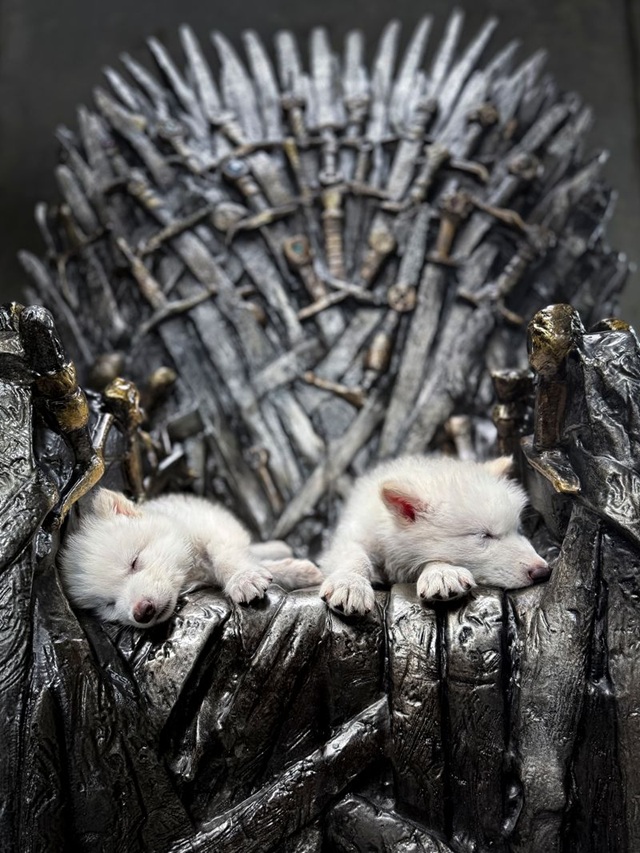
I asked Colossal Biosciences for some official images of Romulus and Remus and they generously provided an entire portfolio to chose from.  And just to prove that scientists have a sense of humor, they included the following gem.

Dire wolves Romulus and Remous on the Iron Throne, courtesy of Colossal Biosciences.

Dire wolves Romulus and Remous on the Iron Throne, courtesy of Colossal Biosciences.

As a scientist myself, I am very much excited about the future of this technology.


Posted in Science | Tagged , , , | Leave a comment

When Intent Goes Astray

The Unspoken Perils of Misunderstood Graphics

We’ve all heard the phrase “a picture is worth a thousand words”, but sometimes, the wrong picture can leave you wishing for just a few words of clarification.  Graphics are a powerful tool, able to convey complex messages at a glance, but when intent and interpretation don’t align, things can go hilariously off-track.


Lost in Translation (or Illustration)

We live in a world flooded with images. From social media feeds to street signs, news graphics to product packaging, visuals are everywhere and they grab our attention far faster than text.  But what happens when a graphic sends the wrong message?  When a serious warning turns into a running joke?

This past weekend, I stumbled across a perfect example.


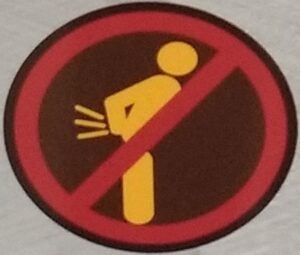
The “No Farting” Sign

No Farting

No Farting

The graphic in question featured a person hunched forward in a circle, with motion lines radiating from their rear, slashed through with a bold red line.  From a distance, it looked very much like a sign banning flatulence.  Let’s be honest, our brains like to connect dots quickly… and this one practically spelled out: No Farting Allowed.

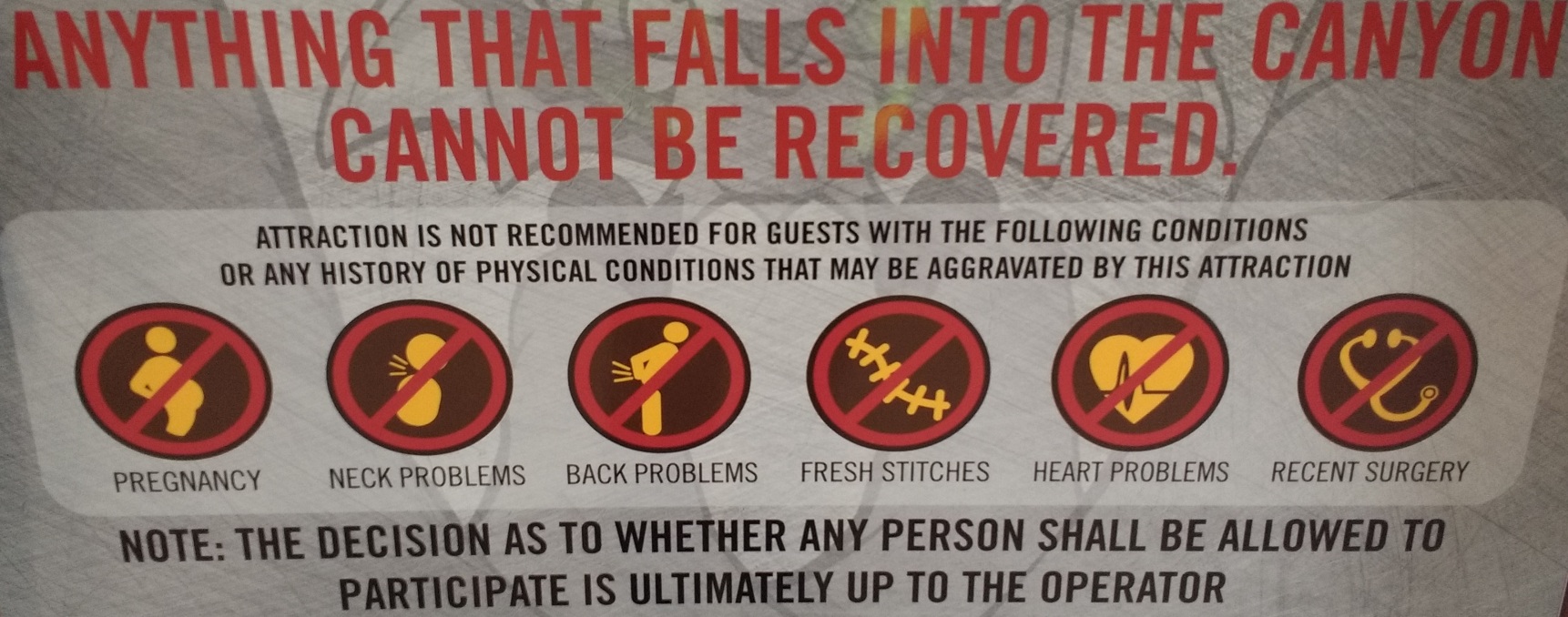
Of course, the actual intent was far less hilarious, a warning for people with back pain to avoid a jarring amusement ride, but without any context, especially in a fast-moving line of distracted people, the message was lost and a completely different idea was conveyed.


The Power (and Peril) of Context

The effectiveness of a graphic depends on more than just clean lines and bold colors.  It relies on context, clarity and a keen awareness of how people will actually interpret what they see.

This comical misfire underscores a larger truth: visual communication is nuanced.  What feels obvious to the designer may be baffling — or unintentionally funny — to the viewer.


Design Smarter, Not Just Prettier

To avoid mixed signals and accidental comedy, consider these best practices for graphic design:

  • Know your purpose and audience: Define what you’re trying to say and to whom.
  • Keep it simple, but not too simple: Aim for clarity over cleverness.
  • Provide context when needed: A small caption or icon explanation can go a long way.
  • Watch for cultural or visual assumptions: What makes sense to one group may confuse another.
  • Test your design: Show it to someone outside your bubble.  If they laugh, wince or look confused, it’s back to the drawing board.


Final Thoughts (and Warning Signs)

Graphics are essential to modern communication, but they aren’t immune to misinterpretation. Whether it’s workplace presentations, public signage or amusement park warnings, clarity should always take priority over cleverness.  Because if your graphic needs another graphic to explain it… well, that’s a red flag.

So next time you’re designing a visual message, take a second look.  Better yet, ask someone else to take a first look.  Their honest reaction might save you from an unintentional joke, or worse, a very confusing safety message.

By taking the time to consider these questions, you can ensure that your visual communication is effective and avoids unintended consequences.  Or you might accidentally ban flatulence on an amusement ride, which while not a bad idea, may not provide sufficient warning to real dangers, when one is needed.

In Context

Posted in Humor | Tagged , , | Leave a comment

On Opinions, Laughter and Observing Life

Sometimes, there’s an urge to comment on the world around us.  I’ll say it up front, my goal is never to offend.  I understand that people have different sensitivities, and no matter where I land on the opinion spectrum, someone will always find something to disagree with.  That said, I’m well aware of the conversational third rails: sex, politics, and religion.  Which technically leaves me with the weather.  And while I’ll certainly talk about the weather when it matters, I won’t stop there.

Yes, I’ll touch on other topics, sometimes the ones we “shouldn’t” talk about.  I won’t pick sides.  I won’t preach.  But I will observe, reflect and occasionally be a bit irreverent.  Hopefully, I’ll also make it a little fun along the way.

Earlier this week, CNN ran a story on laughter.  According to them, children laugh around 400 times a day.  Adults?  Just 15.  Laughter, it turns out, is good for our health.  It reduces stress by lowering cortisol and boosts our mood through increased serotonin.  Basically, it works like a natural antidepressant.  It sounds great in theory, but life gets busy and those simple joys slip away from us.

I’m no comedian and I won’t pretend to be one.  I won’t focus on humor here.  I know exactly one clown joke and maybe I’ll share it one day, if the topic ever comes up.  Humor isn’t the focus of this blog, but you’ll still find it here.  I can’t help that.

What I truly enjoy is observing the world.  Sometimes, things happen that are so strange or unexpected, they just stick with you, demanding to be shared.  Those are the moments I’ll write about most often.  My intention isn’t to criticize, but to explore, to question and to understand.  As a scientist, observation is one of my strongest tools.  Understanding?  That part takes work.  Sometimes, it never comes.

If this blog has a purpose, it’s to help me think through writing.  Not about science necessarily, but about life.  Because more than anything else, I am a student of life.

Observe

Observe

Posted in Uncategorized | Tagged , , , | Leave a comment