The Sirens of the Drive-Thru: America’s Fast Food Odyssey

Back in ancient Greece, sailors were said to be lured off course by the Sirens’ song, an enchanting melody so irresistible that men would throw themselves into the sea just to get closer.

Fast forward to modern-day America. Our sirens don’t perch on rocky shores, crooning deadly ballads. They perch on every street corner, glowing neon, crooning: “Two all-beef patties, special sauce, lettuce, cheese…”

The American eater, it is said, remains undefeated. But at what cost?
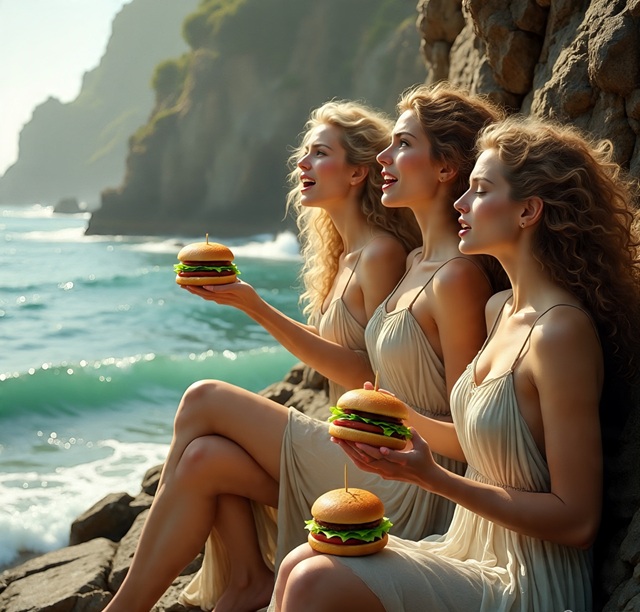
The tempting call of the fast food sirens.

The tempting call of the fast food sirens.

The Call of the Combo Meal

It’s not exactly a state secret: fast food isn’t good for you. Calories, salt, trans fats and enough sugar to keep a hummingbird buzzing well into next week. One meal won’t kill you, but a steady diet of double-bacon monstrosities will turn your body into a science experiment you didn’t sign up for.

Need proof? Look no further than Morgan Spurlock, who in Super Size Me (2004) ate only McDonald’s for 30 days for every meal. His health drastically deteriorated and he was warned by doctors to stop the experiment. He gained weight, experienced depression and liver dysfunction and proved that a habit of fast food meals certainly will do you in.

The Three Ages of Fast Food Love

  1. Childhood – The Honeymoon Phase
    A Happy Meal is the pinnacle of human achievement. Your parents, exhausted, declare it a “treat”. The toy is treasure. The fries are magic. Life is good and you look forward to those nights your parents are too exhausted to cook. You even suggest that getting some takeout will let them get some rest. Like a budding used car salesman, you learn to manipulate the people to believe that nuggets are a form of self-care, that a cheeseburger is an act of mercy and that nothing says “family bonding” quite like eating in silence while staring at the toy prize that comes with the meal.
  2. Teenage Years – Jedi Training
    Fast food becomes the cornerstone of your social calendar. Pre-game fuel, post-game snack, late-night survival kit. You convince yourself that fast food is brain fuel before your tests. You know the exact number of onion rings that fit in a cupholder and the proper wrist technique for stabilizing a collapsing taco. Truly, the Force is strong with you.
  3. Adulthood – The Co-Dependent Relationship
    The drive-thru is no longer adventure. It’s necessity. You’re late for work, the kids are howling and the idea of chopping an onion makes you want to cry harder than the onion itself. You order “the usual” and the cashier finishes your sentence. That’s not customer service. It’s a long-term relationship. You and the cashier have a partnership built on efficiency and the mutual understanding that you’re both just trying to get through the day.

Why We Can’t Quit

  • Speed: Burgers in minutes, faster than you can boil water.
  • Price: A cheeseburger cheaper than an apple. (That’s not a metaphor. That’s America.)
  • Marketing: Clowns, jingles, toys. Fast food companies recruit younger than the military.

It’s no wonder Americans treat fast food like a patriotic duty.

The Cost of Answering the Call

Too much fast food is like dating someone who looks great in selfies, but empties your bank account. Fun in the moment, but long-term? Not sustainable.

Fast food is a recipe for disaster. Diets high in processed meat, salt and sugar are strongly linked to serious health problems, including obesity, diabetes and heart disease. Science backs it up: one study even suggested that fast food may contribute to more than one in ten preventable deaths. Yikes!

Escaping the Sirens’ Song

Odysseus tied himself to the mast to survive the Sirens. You don’t need rope, but you do need a plan:

  • Eat vegetables that aren’t deep-fried.
  • Drink water instead of the gallon-sized soda bucket.
  • Save the double-bacon monster burger for a treat, not Tuesday lunch.
  • Rely on your crew (friends, family, coworkers) to keep you accountable.

The Takeaway

The Sirens of antiquity lured sailors to their doom with songs of longing. Today’s Sirens lure us with milkshakes, fries and promises of “limited-time offers”.

So next time you hear the call of the glowing arches at midnight, remember: a salad may not come with a plastic toy, but it also won’t make your arteries file a restraining order.

Sail wisely, my friends, past the combo meals and onward to healthier shores.

Sirens tempting Odysseus with fast food, with all due reverence to the original 1867 painting Ulysse et Les Sirènes by Léon Belly
Sirens tempting Odysseus with fast food, with all due reverence to the original 1867 painting Ulysse et Les Sirènes by Léon Belly

Posted in Science | Tagged , , , , , , , , , , , | Leave a comment

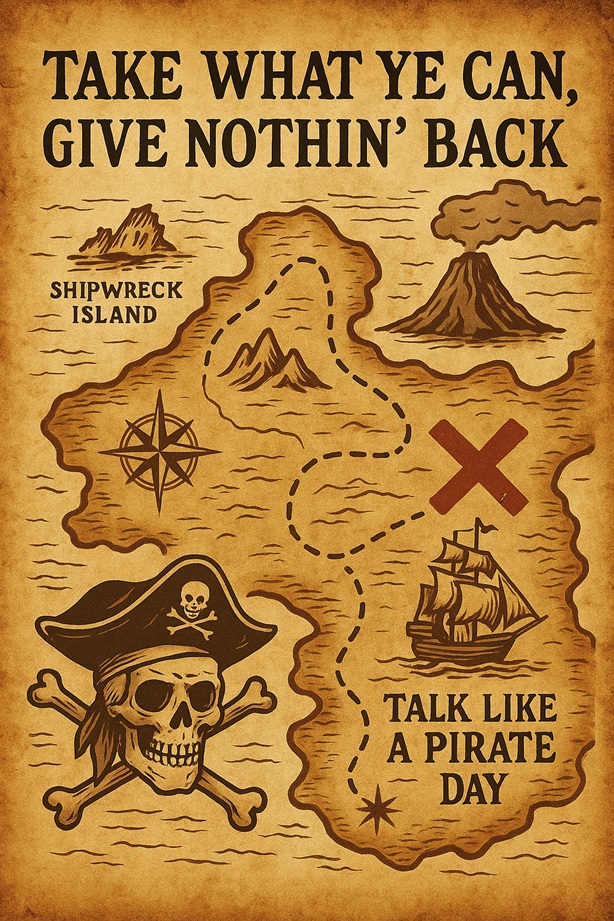
Shiver Me Timbers, It Be Talk Like a Pirate Day! And Our Motto? Well…

Ahoy, ye landlubbers and salty dogs! Today be the one day o’ the year when we cast off the shackles o’ proper English and embrace the glorious tongue o’ the buccaneer! So hoist the Jolly Roger (metaphorically, unless ye got one handy), grab yer grog (or yer lukewarm soda, we ain’t judgin’) and let’s delve into the truly enriching lifestyle and profound philosophy o’ the pirate!
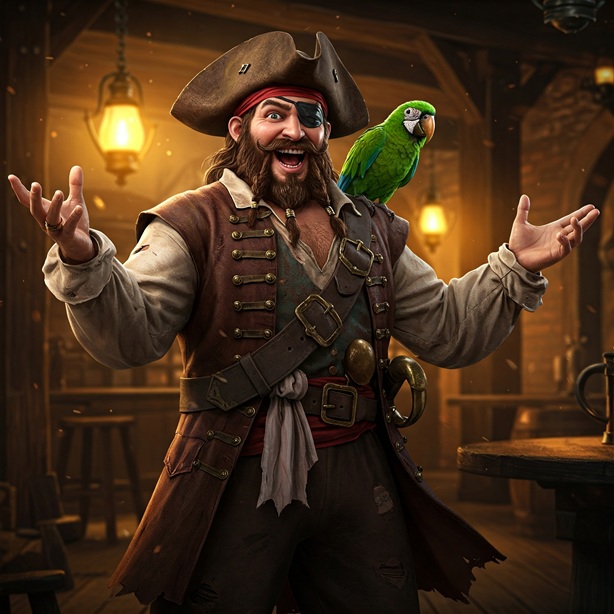


Now, many a romantic tale paints us as swashbucklin’ heroes, fightin’ for freedom and buried treasure. And while the treasure part ain’t entirely wrong, the “freedom fighter” bit… well, let’s just say our definition o’ freedom usually involved not havin’ to answer to anyone with more cannons than us.

Now, let’s hoist the sails and talk serious pirate philosophy — the timeless wisdom of salt-soaked philosophers like Cap’n Jack Sparrow, who once declared the Sparrow family motto:

“Take what ye can, give nothin’ back.”

Is it selfish? Perhaps.
Is it efficient? Absolutely.
Is it morally bankrupt? Maybe, but look, we pirates didn’t sign HR’s Code of Ethics. We pirates, bein’ practical folk, just call it good business!

Think about it, savvy? We’re the ultimate disruptors o’ the maritime supply chain. We identify a valuable asset (shiny gold, rum, the occasional bewildered nobleman) and we facilitate its… redistribution to our own coffers. It’s a bold economic model, really. One where the “invisible hand” is usually wearin’ a rather conspicuous cutlass.

And the “give nothin’ back” part? Well, that’s just sound fiscal policy! Why dilute yer hard-earned loot with unnecessary generosity? Unless, o’ course, “givin’ back” involves a hearty round o’ celebratory cannon fire… in the general direction o’ yer former benefactor. That’s just good manners, see? Letting ’em know ye appreciated their… contribution.

Our lifestyle, too, is one o’ pure, unadulterated freedom! Sleep in ’til noon (or whenever the lookout yells “Sail ho!”), eat whatever scurvy-ridden biscuit hasn’t grown legs yet and settle disputes with a good ol’ fashioned sword fight (winner gets the last swig o’ grog). What’s not to love? Sure, the hygiene might be questionable and the career advancement opportunities are somewhat limited (usually endin’ with a hangman’s noose), but the autonomy! The sheer, unbridled joy o’ causin’ mild to moderate panic in coastal towns!

Though ye gotta have a plan.

  • Negotiatin’, Ye Say? Bah! Why parley like a lily-livered merchant when ye can just bellow, “Prepare to be boarded, ye scurvy dogs!” (Aye, a fair word o’ warnin’: this here tactic be more fruitful on the high seas than in them stuffy boardrooms, savvy?)
  • Life Goals, Eh? Blimey! Forget yer fancy five-year charts! Pirates don’t plot, they plunder! If yer career’s got a treasure map, mark me words, ye’re already halfway to the captain’s cabin, or the brig, dependin’ on yer aim with a cutlass.
  • Fancy Duds, Ye Ask? Arrr! Them tricorn hats be makin’ a comeback, I tell ye! Likely as a kraken in a bathtub. But look ye here, matey: confidence be ninety percent o’ yer style. Strut like ye just commandeered a galleon and they’ll think yer rags are royal velvet!
  • Settlin’ Disputes, Ye Want? Shiver Me Timbers! We pirates settle our squabbles with a good ol’ sword duel! Them landlubberin’ HR types frown on such spirited displays, so maybe try a lively game o’ rock-paper-scissors. Show ’em yer inner swashbuckler!
  • Retirement, Ye Dream Of? Heave Ho! Buried treasure! Aye, ’tis not insured by no fancy government FDIC, but at least it comes with a jolly good map and the chance o’ a few booby traps to spice things up! Dig deep, me hearties, and may yer golden years be truly golden!

And don’t even get me started on our impeccable fashion sense! Layers o’ questionable fabric, flamboyant sashes, enough buckles to secure a small galleon and a hat that screams, “I’m here to plunder and I look fabulous doin’ it!” It’s a look that says, “I might smell faintly o’ saltwater and stale ale, but my accessories are on point.”

Listen up, ye scallywags! At the heart o’ this here pirate life, ’tisn’t just ’bout pilferin’ gold and bellowin’ “Arrr!” every time a landlubber opens a locker. Nay, ’tis ’bout freedom, a grand adventure, aye, and a touch o’ questionable hygiene, livin’ each blessed day like ye just swiped it right from under the nose o’ the Royal Navy!

True pirates, we be livin’ by our sharp minds, navigatin’ waters as murky as a kraken’s inkwell and, now and then, wakin’ up with a goat on deck. (A long tale, that one. Rum had a hand in it, ye see.)

So on this most holy o’ days, clap on yer eye patch, speak like ye’ve swallowed a whole flock o’ parrots and remember the true pirate’s creed:

“Why be a cog in the blasted machine when ye can be a peg in the leg?”

Now get out there and take what ye can, give nothin’ back — unless ’tis yer dear ol’ mum’s Tupperware. She’ll hunt ye down like a bloodhound on a scent, she will!

So today, as ye stumble through yer day speakin’ like a barnacle-encrusted buffoon, remember the true spirit o’ the pirate. Embrace the “take all ye can” (within reasonable legal limits, o’ course. We wouldn’t want ye walkin’ the plank into actual trouble). And the “give nothin’ back” part? Well, maybe just skip that bit at the coffee machine. Unless someone’s hoggin’ the last donut, then all bets are off, savvy?

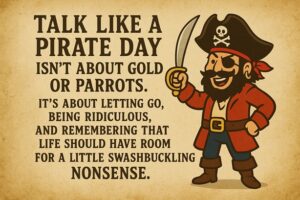
Aye, Talk Like a Pirate Day ain’t ‘bout gold nor squawkin’ parrots. Nay, it be ‘bout lettin’ go, actin’ the fool, an’ rememberin’ that life needs a fair bit o’ swashbucklin’ tomfoolery in its sails! Arrr!

Now, if ye’ll excuse me, I hear the siren call o’ a half-eaten bag o’ chips and a suspiciously unguarded office supply cabinet. Happy Talk Like a Pirate Day, ye scallywags! May yer plunder be plentiful and yer parrots surprisingly well-behaved. Arrr!


A Pirate’s Creed

Hoist up the sails, ye scallywag crew,
This day we be speakin’ like buccaneers do!
With “Arrr!” on our lips an’ a mug full o’ cheer,
We toss out the land talk and bellow it clear.

It ain’t ‘bout the gold, nor the parrots we keep,
Nor maps full o’ treasure that sinks in the deep.
It’s lettin’ go proper, it’s laughin’ away,
It’s swashbucklin’ nonsense, the pirate’s own way!

We dress in odd layers, with buckles galore,
Sashes that flap as we stomp on the floor.
A hat on me head shouts, “I’ve come here to plunder,
But look at me style — ain’t it fashion asunder?”

Our motto be simple, as Jack Sparrow said:
“Take all that ye can, give nothin’ instead!”
Efficient, perhaps, aye, and selfish, it’s true —
But HR’s code o’ conduct be not for our crew!

So grab ye a cutlass, or rock-paper-scissors,
Tell tales o’ the sea to yer friends an’ yer missus.
On this day o’ pirates, we’re free as the tide,
With laughter our compass, adventure our guide.

So here’s to the scallywags, bold and carefree,
To freedom, to folly, to bein’ at sea!
Why be a cog in the landlubber’s scheme,
When a peg-leg an’ nonsense can power yer dream?

Posted in Culture, Holidays, Humor, Language | Tagged , , , , , , , , , | Leave a comment

Are Artificial Sweeteners Stealing Years from Our Brains?

Back in July, I explored the ongoing debate around artificial sweeteners — substances that promise all the sweetness without the calories. At that time, most of the discussion centered on cancer risk, metabolic effects and the gut microbiome. Now, a new study published in Neurology (September 2025) adds an important and sobering dimension: the potential impact of artificial sweeteners on brain health.
A New Link: Sweeteners and Cognitive Decline

Researchers in Brazil followed more than 12,000 middle-aged adults for an average of eight years. They found that people consuming the highest amounts of artificial sweeteners — especially aspartame, saccharin, acesulfame-K, sorbitol and xylitol — experienced faster declines in memory and thinking skills compared to those who consumed the least.

  • The rate of decline was equivalent to about 1.6 years of extra brain aging.
  • The effect was most pronounced in people under 60 and those with diabetes.
  • Tagatose, one of the sweeteners studied, did not show a link to decline.

Importantly, this was an observational study, meaning it shows association, but can not prove cause and effect. Still, the large sample size and consistency of the findings make it a signal worth paying attention to.

How Could Sweeteners Affect the Brain?

Scientists don’t yet have definitive answers, but several theories are emerging:

  1. The Gut–Brain Axis
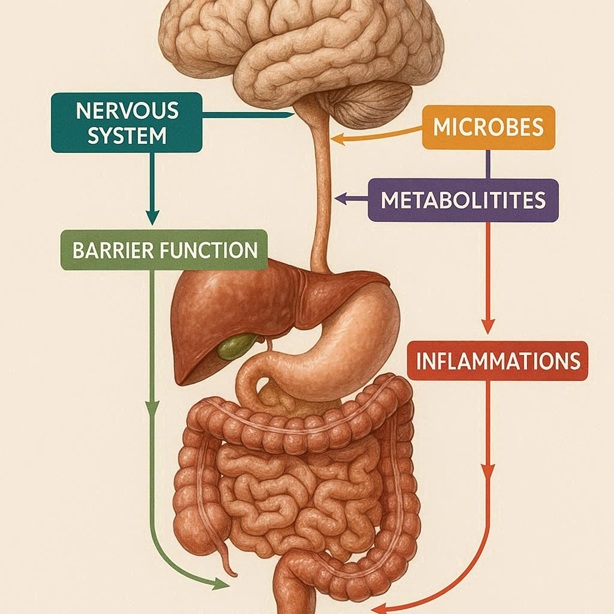
    Artificial sweeteners can alter the gut microbiome, which in turn influences inflammation and brain function. Disrupted gut bacteria may set off a cascade of low-grade inflammation that eventually reaches the brain.
  2. Insulin and Glucose Regulation
    Even without calories, the taste of sweetness can trigger insulin responses. Over time, this mismatch may contribute to insulin resistance — a key risk factor for cognitive decline, especially in people with diabetes.
  3. Vascular Health
    Chronic inflammation and metabolic stress can damage small blood vessels in the brain, reducing oxygen and nutrient delivery. This so-called small vessel disease is a recognized driver of memory problems and dementia.

Putting the Findings in Context

Before anyone panics and swears off diet soda forever, a few caveats:

  • The study measured consumption levels, but participants self-reported their diets, which introduces some uncertainty.
  • The differences in brain aging, while meaningful, were modest — equivalent to roughly a year and a half over the study period.
  • More research is needed to confirm these findings and determine whether certain sweeteners are more problematic than others.

Still, this is not the first time artificial sweeteners have raised red flags beyond simple calorie counting. Together with earlier research on metabolism and the gut, the new cognitive angle underscores that these compounds are not necessarily “free passes” to sweetness.

What This Means for You

For most people, occasional use of artificial sweeteners is unlikely to cause harm. But if you’re relying on them daily, especially in multiple servings, it may be wise to rethink the habit.

  • Moderation remains key. Too much of anything is bad for you.
  • Whole foods first. Opt for naturally sweet foods like fruit, rather than highly processed alternatives.
  • If you have diabetes, pay particular attention, since the study suggests you may be more vulnerable to these effects.

The Bottom Line

Artificial sweeteners were once seen as the safe solution to cutting sugar, but the science is evolving and what seemed like a simple swap now looks more complicated. The latest research hints that while they may protect your waistline, artificial sweeteners could come at a cost to your brain over the long run.

As always, balance wins: reducing both added sugar and artificial substitutes, while focusing on nutrient-dense, minimally processed foods, is still the most reliable path to long-term health for both the body and the mind.

Posted in Science | Tagged , , , , , , , , , , | Leave a comment

The Space Between Us

I don’t really like talking about politics.

I have my own opinions, leaning off-center, but I won’t say which way, because it shouldn’t matter. What I care about more than declaring my political lean is holding space for honest conversation. What matters more to me are the people in my life. I have friends who lean the opposite way from me and that’s okay. They’re my friends. When they say something I find disagreeable, I’ll push back. I’ll debate back. We don’t physically fight. We spar. Verbally. No one’s mind is ever changed, but the verbal jousting clears the air. Then we go out for a beer and laugh about the dumb things we did when we were younger.

That’s a healthy conflict. It’s frustrating, but it’s safe. Nobody bleeds, nobody goes to jail, nobody gets buried.

What astonishes me about our world today is how much activism has become fused with violence. The recent assassination of Charlie Kirk isn’t the reason I’m writing this, but it is one of the reasons. Among the many others: the June assassination of Minnesota legislator Melissa Hortman, the April firebombing of Pennsylvania Governor Josh Shapiro’s residence. And those are just this year.

The list of political violence from the last decade is staggering. The 2017 Congressional baseball game shooting. The 2020 kidnapping plot against Michigan Governor Gretchen Whitmer. The 2020 attempted assassination of Judge Esther Salas. The 2022 attempt on Brett Kavanaugh’s life. The brutal attack on Nancy Pelosi’s husband. The shooting spree against New Mexico officials in 2022–2023. Two attempts on Donald Trump in 2024, just weeks apart.

This isn’t a partisan problem. This is both sides of the aisle. And this is the United States of America.

Voting with your gun is not a new thing in the United States. The assassinations of Abraham Lincoln and John F. Kennedy are among the best known. The assassinations of presidents James Garfield and William McKinley are almost forgotten in our common lore. Reagan was shot and lived. Teddy Roosevelt took a bullet in the chest and went on to deliver a 90-minute speech. We romanticize the frontier, but do we really want frontier justice back in the public square?

Is violence a legitimate means of expressing one’s political opinion? Is it free speech? Protected speech? Think carefully about the world that would create. A nation where assassination becomes routine is not a democracy. It is a battleground and battlegrounds don’t host elections. They host wars. Is this what the highest levels of democracy embodies for us?

What unsettles me most is not just the violence itself, but the creeping sense that it is becoming ordinary.

Some say that the United States has not been this divided since the Civil War, when conflict became state against state, neighbor against neighbor, brother against brother. I have two friends, brothers, whom I’ve known since high school. One is a year ahead of me, the other is a year behind. We grew up together — ate in each other’s kitchens, annoyed each other’s mothers, survived adolescence in the same small circle. Their bond was unbreakable. Except, it was broken. One brother wrote a politically themed book in 2024 and that created a conflict with the other brother, a conflict so bad that they have not spoken since.

I am still friends with both, but they are not friends with each other. I agree with one. I don’t understand the politics of the other. But the question that nags me is this: does politics really have to decide our friendships? Couldn’t we skip the ideology and still be friends, challenge a mountain, challenge a bar, dare each other at the zoo’s lion exhibit? (Spoiler: it’s never the lion who blinks first.)

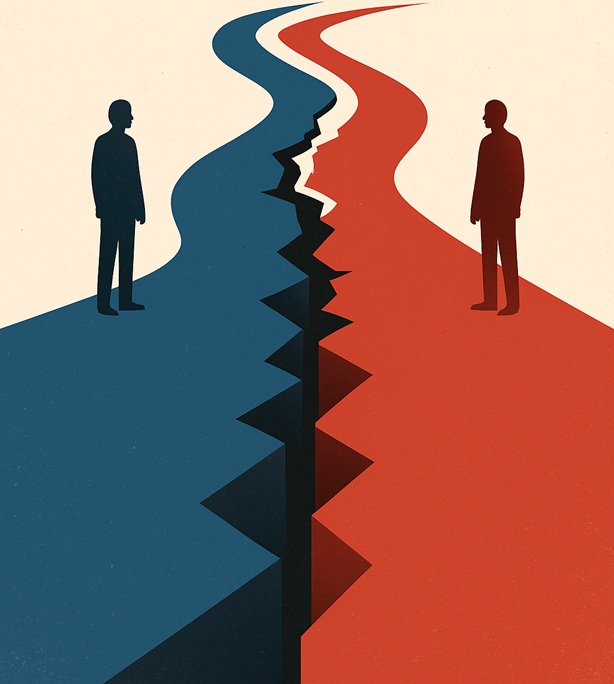
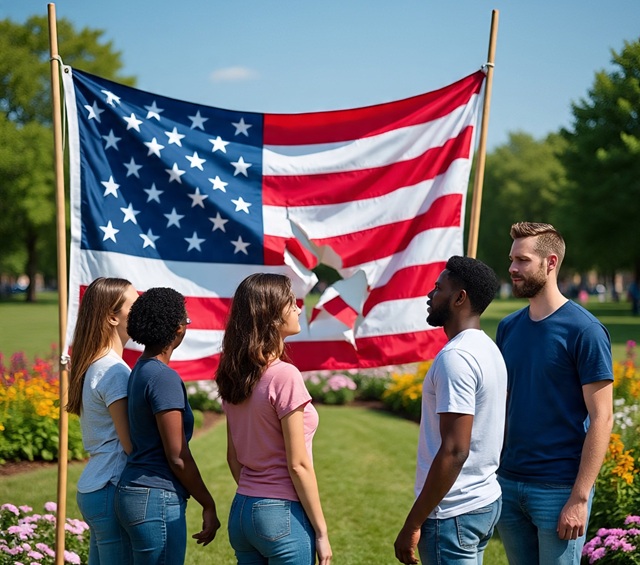
Their broken bond feels like a mirror of the country. We are one people split down the middle, daring each other to cross the line. So where does this lead? Do the parties pick up arms and settle it by force? Do we fracture into two nations, the Liberal States of America and the Conservative States of America? Or do we rediscover that democracy is not about dominance, but about coexistence?

There aren’t many paths. We could double down on violence until no one feels safe. We could retreat into echo chambers until the other half of the nation feels like foreigners. Or — harder, slower, but better — we could work at rebuilding trust. That means listening without planning our rebuttal. It means remembering that the person across the table is still a neighbor, still a parent, still a human being who laughs at dumb jokes.

Perhaps the most thoughtful path is to acknowledge that the middle ground isn’t a political compromise, but a social one. It’s the space where we can recognize that the person on the other side of the aisle is a human being with their own fears, hopes and beliefs. The path forward might be less about changing minds and more about restoring trust and shared values, not just in our political institutions, but in each other. It means finding the humanity in our opponents, treating them as neighbors rather than enemies. It’s about remembering that the verbal sparring we once enjoyed can still exist without the risk of bloodshed.

The middle ground is not glamorous. It doesn’t trend. It doesn’t draw clicks or campaign donations. But it is where trust lives. It is where values can be shared again. The middle ground isn’t about politics. It’s about friendship, civility and a future where our disagreements don’t threaten our existence as a society. The middle ground is the neighbor who disagrees with your vote, but still shows up with a shovel when your driveway is snowed in. Political assassination may be making headlines, but it doesn’t have to write our future. We can. And if my two friends ever find their way back to each other, maybe the rest of us can, too.

America can’t lead the free world if we can’t even manage ourselves.

Posted in Society | Tagged , , , , , , , , , , , | Leave a comment

There Be Dragons Here: The Secrets of the Deep

Among the many hats that I wear, one of my favorites is a caving helmet. For many years my wife and I have been members of the National Speleological Society, an organization dedicated to the study, exploration and conservation of caves and their environments. The NSS is more than just a group of adventure-seekers. Its members are not just hobbyists, but rather a diverse group of speleologists — a scientific term for those who study caves — who are passionate about protecting these fragile underground ecosystems.

The NSS is at the forefront of American caving, working to advance our understanding and appreciation of caves. The society is involved in

  • Conservation — actively working to preserve caves from damage
  • Education — teaching new generations about safe caving practices
  • Research — conducting scientific studies on cave geology and biology
  • Cave rescue — training skilled teams to assist in emergencies

Caving was one of the first passions my wife and I dove into together, right alongside bicycling and search and rescue. Over the years, we’ve done it all, from conservation to cave rescue, but the things that stand out the most are the trips involving exploration and mapping.

As members, my wife and I have experienced all of these facets of caving. But you may have noticed that I deliberately left one item off that list: recreation. That’s because there’s a world of difference between a recreational thrill and true exploration. Most recreational cavers are thrill-seekers looking for an adrenaline hit. Adrenaline is produced when the brain perceives danger or stress, usually meaning someone has gotten themselves into trouble. But I’ll save the topic of adrenaline for another article.

Thrill seekers tend to get themselves into trouble. In the insuring medical emergency, formations are broken, rare lifeforms destroyed and rescue teams are left scrambling to save the day. Caves are too ancient, too fragile and too unforgiving to treat them like an amusement park ride.

Caving is not an activity for the faint of heart. It requires a deep respect for the underground environment and a commitment to preserving its delicate balance. Unlike thrill-seekers who might damage formations and disrupt the ecosystem, we approach caving with a sense of reverence and responsibility.

Exploration is something altogether different. For me, exploration is the most captivating aspect of caving. It’s the thrill of locating a passage no human has ever seen before or finding a cave that no one knew existed. Think of it this way: you are entering a world millions of years old, untrodden by human feet. It’s like Neil Armstrong setting foot on the Moon, with the knowledge that he is the first person to ever walk there. Caves don’t get as much coverage as the Moon landings, but sometimes getting through them is equally challenging.

Unlike the surface of the Moon or a remote mountain peak, caves don’t come with maps. You can’t just pick up a guidebook to an unexplored cave system. While National Geographic loves to talk about remote caves, they follow us into them. Cavers have to make their own maps and that can be an adventure in itself. That curve in the passage might lead to a dead end or it might open into ten miles of borehole. More likely, though, it’s hiding a series of nasty narrow squeezes, at least one of which is tighter than what my chest can manage.

Recently I took part in an expedition into a commercial cave that has been open to the public for more than a century. It has a lot of mapped passage and multiple commercial tour routes and while most of the cave’s passages are well-traveled, some remain closed and mysterious and there are still leads that remain unexplored. Our target was one such lead, a tight squeeze noted on the map, where moving air hinted at more cave beyond. In caving, a “breathing” passage is a sign of a barometric pressure difference, signaling hidden chambers. This means the cave “breathes” with the outside world, a potential hint of something interesting beyond.

Our team of six set out loaded with gear. Going into the unknown means being ready for anything: gear to get you in and gear to get you back out, equipment for potential research, the readiness not to return the same day and everything needed to survey along the way.


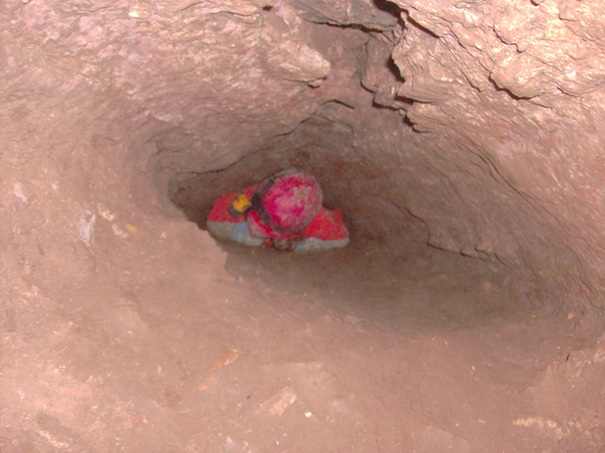
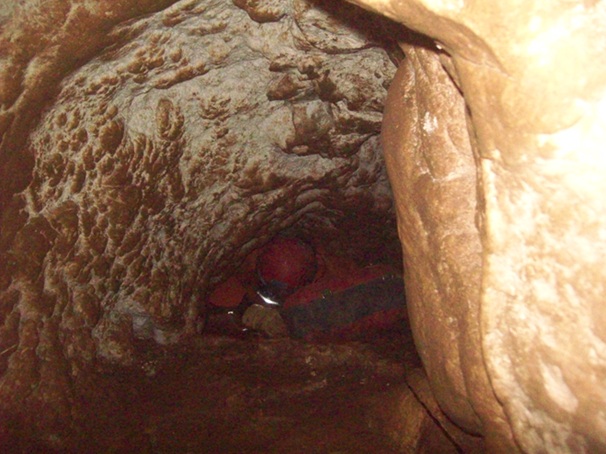
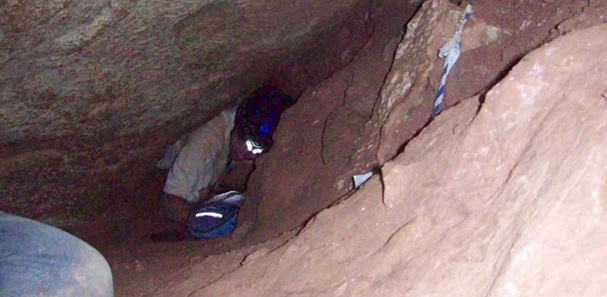
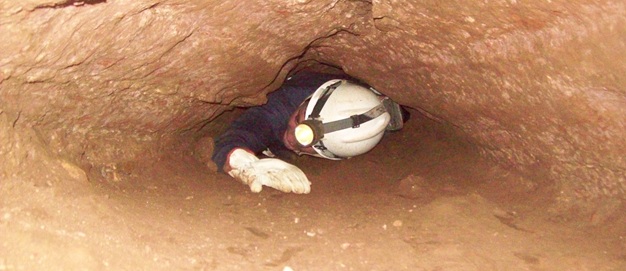
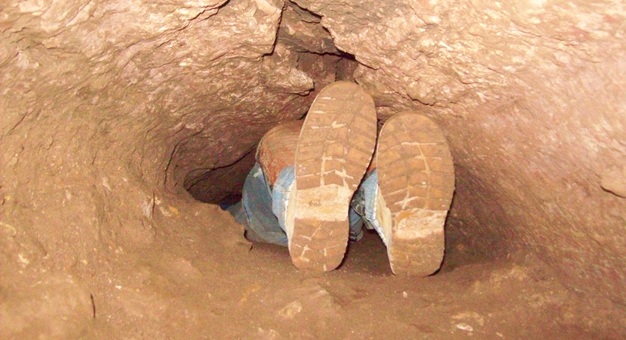
The squeeze was the kind where you decide which way you want your head to be facing and slide in, pulling yourself with your fingers and pushing with the toes of your boots, hoping not to hit an obstacle that will end your trip. Luck was with us. The squeeze opened into a small room, followed by another squeeze and another. The squeezes tested our resolve and physical limits. It was a challenging task, but one that allowed me to appreciate the spirit of exploration.

A horizontal squeeze, as icky as it sounds, is infinitely preferable to a vertical slot. In a vertical slot, you’re inadvertently lying on one of your arms or pushing it ahead of you like an awkwardly placed tree branch that does nothing to help.

But we had cave! New cave! Our travel was impeded not just by the series of annoying squeezes, but also by the need to map as we went. It’s an unspoken code in the exploration world: don’t “scoop” passage. Map it and leave what you couldn’t get to for someone else to explore.


Just after midnight came the real test: a vertical crack so narrow that each inhale wedged you tighter, each exhale freed you to move. I want to say it’s sexy, but my washing machine would never agree. A lot of caving trips send you home looking like you’ve been wrestling pigs in the mud. Not elegant, not comfortable, certainly not laundry-friendly, but that’s caving.

My job on this trip was surveying. I was “lead tape” or “back tape” depending on who was leapfrogging whom. Surveying requires you to be detail-oriented. You have to set good survey points that are in useful locations and won’t be destroyed by time or clumsy cavers. And you have to be dead-on for your azimuth and inclination readings or your map will be no better than a five-year-old’s crayon drawing.

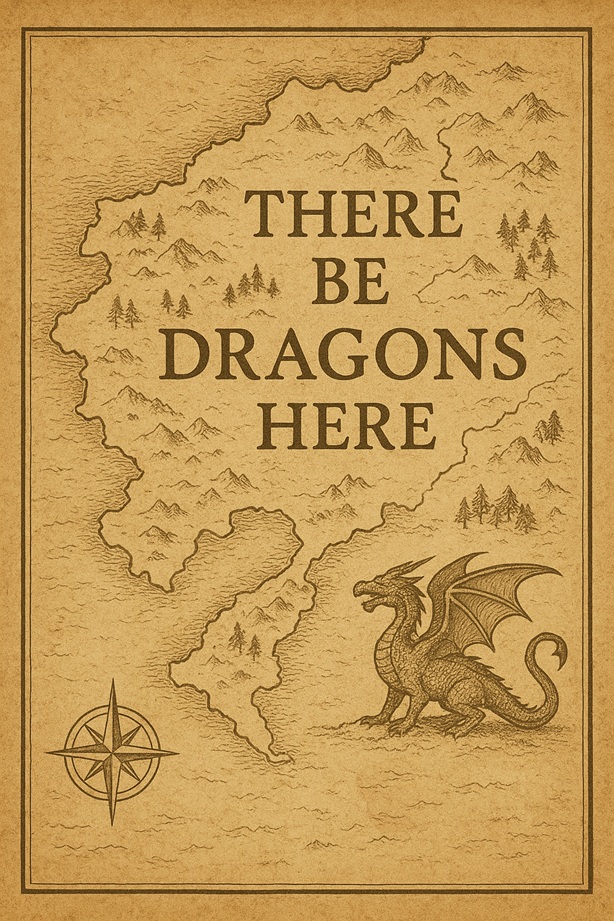
We worked late into the night, carefully logging a few hundred feet of new passage with a few small rooms and a lot of squeezes. No breathtaking formations, just aragonite dustings and moonmilk, basic sedimentary deposits. It was a tough night, but a night well spent. The satisfaction was immense. At the end of the trip, as we gathered around the draft map, our sketcher (cartographer) scrawled a note in the margin: “There be dragons here”, a nod to the medieval cartographers who marked uncharted territories with mythical creatures. It was a fitting metaphor for our own quest, which had taken us into the unknown and pushed us to our limits.

As I looked at the map, I couldn’t help but feel a sense of pride and accomplishment. We had uncovered new passage, documented our findings and contributed to the ever-growing body of knowledge about this incredible cave system.

Caving is not just an adventure. It’s a journey of discovery, a test of physical and mental endurance and a chance to connect with the natural world in a unique way. It’s a world that requires patience, respect and a willingness to push beyond your comfort zones.

For those who are drawn to the underground realm, there’s no shortage of excitement and challenge. Whether you’re a seasoned caver or just starting out, the world of caving has something to offer. So, if you’re ready to embark on an odyssey of discovery, join us in the underground world of caves. Just be prepared to get a little dirty. I doubt my washing machine will ever forgive me, but I wouldn’t trade these muddy, exhausting nights underground for anything.

Exploration underground is a quest, as much about patience and persistence as bravery, every bit as mythic as chasing dragons. Because sometimes, the real adventure isn’t in slaying dragons. It’s in finding where they live.

Posted in Adventure | Tagged , , , , , , | Leave a comment

The Neighborhood Menu: Tales from the Wetlands Edge

Content Warning: This post deals with the difficult topic of pets and wildlife and uses dark humor to discuss the food chain. It may not be suitable for all readers.


If you live on the edge of a wilderness wetlands reserve like I do, you’re probably familiar with the annual ritual of posting “Missing Pet” signs in the neighborhood.  Every summer, the same thing happens. Signs start popping up on street lights and mailboxes:

“Missing Cat! Reward!”
“Lost Dog! Please Call!”
“Have You Seen Fluffy?”

The rewards are always enticing, but let’s be real, those signs are just a formality. There’s an uncomfortable truth that no one wants to say out loud: no one ever collects the rewards.

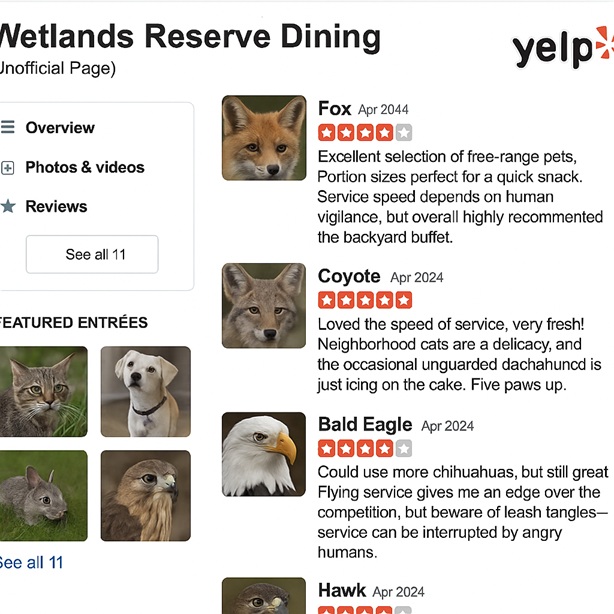
We all know the truth. Little Fifi didn’t “wander” off and accidentally end up living with another family down the street. She didn’t get lost in the next cul-de-sac over and made camp under someone’s deck. No. Fifi made the unfortunate mistake of starring in her own episode of Predators of the Wetlands and ended up as the main course at the local wildlife café, an appetizer for the ecosystem. She’s a cautionary tale written in talon marks.

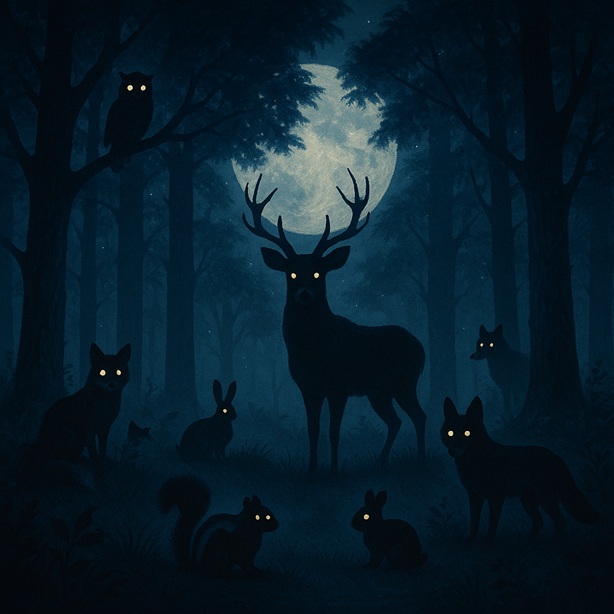
My neighborhood borders a wetlands reserve and is a bustling hub for all sorts of magnificent wildlife. We have the usual suspects — rabbits, deer, skunk, the occasional Canada Goose and a few raccoons with highly suspicious résumés. But we also have the hardened carnivores and they are not shy. These guys don’t knock on your door looking for a cup of sugar. They’re here for the meat selection.

The foxes and coyotes are our four-legged patrols, always on the lookout for an easy meal. The skies, however, are where the real danger lies. No fence will restrict approach from above. Cats and small dogs are on the menu and if you’re not careful, your furry friend might become an unwitting participant in the local food chain.

Hawks, the silent ninjas of the skies, can pick off a rabbit without breaking a sweat. Coyotes run coordinated raids like a well-trained special ops team. And raccoons? Let’s just say they have no moral objections to stealing lunch. Yours, mine or the neighbor’s. They’re the ultimate opportunistic diners, feasting on whatever crosses their path. The eagles are strategic hunters. If you’re not paying attention to what’s happening above you, whether you’re on the ground or in a tree, well, you might just be the special of the day. The wetlands is an all-you-can-eat buffet and your pets are sometimes the main course.

Now, some folks like to comfort themselves by thinking their cat or small dog is “too big” to be carried away by a hawk. Maybe so. But let’s be clear: carry-away size is not the only criterion for ending up on the menu. Even a predator that can’t fly off or run off with your pet can still take a sit-down meal right there on the spot.

Living in this beautiful, wild place requires a certain level of vigilance. While the natural world is a wonder to behold, it’s important to remember that it doesn’t operate on suburban rules. So, how do you keep pets — and let’s be honest, small children — safe in this neighborhood? It’s simple: be smart, be vigilant and remember that you’re living in their backyard. They were here first.

To ensure your smallest family members don’t become part of the food chain, a few simple precautions are in order:

  • Supervise Outdoor Time: Never leave a small pet or child unattended in the yard. It only takes a second for a predator to make its move.
  • Keep Pets on a Leash: Even in your own yard, a leash can be the difference between a safe walk and a frantic dash for safety.
  • Be Aware of Your Surroundings: Get in the habit of scanning the trees and the skies. If you see a large raptor circling overhead, it’s not looking for a scenic view. It’s scouting for dinner.
  • Fence It Up: A secure, high fence can deter most ground predators, like coyotes and foxes. It won’t stop the birds, but it’s a good first line of defense.
  • Stay Informed: Know which animals are in your area and what their habits are. Knowledge is power and, in this case, it might just save you from putting up a “Lost Cat” sign.

And if that fails, keep your furry friends indoors or in secure, escape-proof steel-reinforced bunker, preferably with a bulletproof roof, surrounded by motion-activated sprinklers and maybe a moat. In short, living on the edge of a wetlands reserve means embracing the wild, but also being smart about it. So, let’s enjoy the wildlife from a safe distance and keep our pets and kids off the menu.

Out here, the circle of life isn’t just a song. It’s a takeout menu.

Posted in Animals | Tagged , , , , , , , | 1 Comment

Life on the Edge … of a Wetlands Reserve

When people talk about a quiet, peaceful neighborhood, they usually mean low traffic, polite neighbors and the gentle hum of suburban life. I have one of those, but with a twist. Living on the edge of a wetlands reserve sounds peaceful and idyllic and it is, in that “National Geographic meets suburban living” kind of way. My street is blissfully quiet, mostly because there’s little automobile traffic due to it being the “edge of civilization”.

On the other hand, my backyard is like Grand Central Station for wildlife. I’m not complaining, though. It’s like having my own personal nature documentary playing out in my yard. My street’s unofficial Neighborhood Watch includes a hawk, a fox and at least one raccoon with questionable morals.

Like everyone, I have squirrels in the backyard. You know, those little furry daredevils who think the bird feeder is an obstacle course built just for them. I’m positive they’ve unionized. I’m convinced they hold strategy meetings to plan new ways to bypass the squirrel-proof bird feeder. (Spoiler: “squirrel-proof” is just marketing code for “squirrels will take this as a personal challenge”.)

The supporting cast out here gets a bit more dramatic. Some mornings I glance out the window to see a hawk perching on my fence post, scanning the neighborhood for scurrying snacks. A bald eagle flies overhead once in a while too, just to remind everyone who’s the top dog — well, top bird — around here. It’s beautiful, impressive and a stark reminder that the food chain is very much an active outdoor dining experience.

The four-legged crowd is a whole other story. Rabbits hop through like they’re late for a tea party. They’re basically our furry lawnmowers. The raccoons are the night shift, conducting their secret business under the cover of darkness. They come in wearing their little bandit masks, rummaging through my trash like they’re looking for clues. The fox is smooth, charming and clearly up to something. We’re still trying to figure out the plan. The skunks? They make their grand entrance with zero warning and leave behind a fragrant reminder that the world belongs to them. And the coyotes? They like to hold their howling jam sessions at 2 AM, because apparently that’s when their muse strikes.

Canada Geese show up in rowdy mobs, treating my lawn like it’s the dance floor at a wedding reception. They honk, they waddle, they leave “party favors” everywhere. Once in a while a deer wanders through, looking politely confused, as if to say, “Excuse me, is this the salad bar?” before giving me that “oh, sorry, wrong yard” look and trotting away. I’m pretty sure I’m being judged on my lawn care skills. Once a family of field mice tried to move in, until other animals decided the lease terms weren’t in the mice’s favor. The ensuing turf war was more of a rapid, one-sided evacuation and I haven’t seen a mouse since.

Down in the wetlands pond, there are fish and turtles, living their best aquatic lives. Thankfully, the water stays low enough that they don’t visit me personally. I like them from a distance, the way some people like their in-laws.

Living here is a little wild, literally, but I wouldn’t trade it for anything. My back yard neighbors may not always be human, but they’re far more entertaining. Out here, the HOA meetings involve actual squawking, chittering and howling and the fines come in the form of Canada Goose droppings on my driveway. If nothing else, I’ve learned that life is more fun when you share your backyard with a bald eagle, a fox and about 42 squirrels. I’m grateful for the quiet and I’ve accepted that my backyard is a never-ending nature documentary.

Posted in Animals | Tagged , , , , , | Leave a comment

Ukraine’s Struggle for Independence: Why It Matters for the World’s Future

The full-scale invasion of Ukraine by Russia in 2022 was a shocking event that reverberated across the globe. For many, it seemed to come out of nowhere, an act of unprovoked aggression in the 21st century. But to understand the true significance of this conflict, we must look beyond recent events and delve into a history that has bound and divided these two nations for nearly 400 years. The current struggle isn’t just a modern territorial dispute. It’s the culmination of centuries of cultural suppression, political control and Ukraine’s long, arduous fight for self-determination.

Bucha main street after Russian invasion of Ukraine by Oleksandr Ratushniak/Wikimedia Commons

Bucha main street after Russian invasion of Ukraine by Oleksandr Ratushniak/Wikimedia Commons

A Long History of Russian Domination

The story begins not with modern states, but with a medieval realm. From the 9th to the 13th centuries, much of present-day Ukraine was the heartland of Kyivan Rus’, a powerful East Slavic state. Kyiv was already a thriving metropolis when Moscow was barely a village. However, following the Mongol invasion, these lands fell under the control of other powers, leading to centuries of fragmentation.

A pivotal turning point arrived in the 17th century. The Pereyaslav Agreement of 1654 was initially an alliance between the Ukrainian Cossack Hetmanate and the Russian Tsardom against the Polish-Lithuanian Commonwealth. The Cossacks viewed it as a military protectorate, but Russia saw an opportunity. Over time, this treaty became the justification for Russia’s gradual assertion of control, which was solidified in the 18th century. Under Catherine the Great, the last remnants of Ukrainian autonomy were systematically dismantled and the territory was fully integrated into the vast Russian Empire.

Decret of Hetman Bohdan Zynoviy Khmelnytsky - historical document/Wikimedia Commons.

Decret of Hetman Bohdan Zynoviy Khmelnytsky – historical document/Wikimedia Commons.

The 19th and early 20th centuries were marked by aggressive policies of Russification, which sought to suppress the Ukrainian language, literature and culture. Despite this, a vibrant intellectual and political movement continued to push for a distinct Ukrainian national identity. This push briefly succeeded after the fall of the Russian Empire in 1917, when Ukraine achieved independence as the Ukrainian People’s Republic. But this freedom was short-lived, as the country was conquered by the Bolsheviks and absorbed into the new Soviet Union.

Throughout the Soviet era, Ukraine was under Moscow’s firm control. This period included the horrific Holodomor, a man-made famine in the 1930s that killed millions of Ukrainians, and continued suppression of national identity. True, lasting independence finally came with the collapse of the Soviet Union in 1991. Since then, Ukraine has been on a path to strengthen its sovereignty and align itself with the West, a path that Russia has consistently tried to undermine, culminating in the 2014 annexation of Crimea and the full-scale invasion in 2022.

Holodomor - Starved peasants on a street in Kharkiv, 1933 - Wikimedia Commons.

Holodomor – Starved peasants on a street in Kharkiv, 1933 – Wikimedia Commons.

In short, for nearly four centuries, Ukraine has been under direct or indirect Russian domination. Its independence since 1991 marks not only a political reality, but the culmination of a centuries-long national aspiration.


Why Ukraine’s Independence Matters for Europe

  • Geopolitical Stability and Security

Ukraine is Europe’s frontline against Russian aggression. As a vast country between Russia and the European Union, its sovereignty creates a vital buffer. If Ukraine were to fall under Moscow’s control again, Russia’s military would sit directly on the borders of NATO members such as Poland, Romania and Slovakia. The fragile peace that Europe has enjoyed since the end of World War II would shatter.

A Russian victory would also embolden authoritarian regimes worldwide by proving that borders can be redrawn by force, treaties mean nothing and might makes right. For the world this would fundamentally destabilize the post–World War II security order built on peace, law and cooperation.

NATO North Atlantic Council Working Session - Wikimedia Commons

NATO North Atlantic Council Working Session – Wikimedia Commons

  • Economic Significance

Ukraine is the “breadbasket of Europe”. Its fertile black soil produces massive amounts of wheat, corn and sunflower oil. Disruptions caused by war would ripple across the globe, leading to food shortages in Africa, the Middle East, Asia and beyond.

Ukraine also plays a role in Europe’s energy security, serving as a key transit route for gas and oil pipelines. A weakened or occupied Ukraine would give Moscow even more leverage over Europe’s energy supplies. A silenced, occupied Ukraine would not only destabilize Europe, but shake the world economy.

Wheat fields in Ukraine - Raimond Spekking/Wikimedia Commons.

Wheat fields in Ukraine – Raimond Spekking/Wikimedia Commons.

  • Democratic Values and International Law

For Europe, Ukraine’s fight is not only about territory. It is about principles. Ukraine has chosen a path toward democracy, human rights and integration with Western institutions. Its people have repeatedly stood up for this choice, from the Orange Revolution (2004) to the Maidan protests (2013–14).

Supporting Ukraine means defending the principle that sovereign nations have the right to choose their own future. It also reinforces the global commitment to international law, territorial integrity and the rejection of conquest by force.

Most importantly, Ukraine’s fight is a fight for values. This is not just a war over land. It is a war over the principle that free people can choose their own future. Europe’s democratic project, its union built on law, human rights and mutual respect, depends on Ukraine’s survival.

Cambridge demonstration in support of Ukraine - AFirehawk/Wikimedia Commons.

Cambridge demonstration in support of Ukraine – AFirehawk/Wikimedia Commons.

Why Ukraine Matters for the United States

It is easy to ask: why should America care about a war thousands of miles away? The answer is simple: because what happens in Ukraine will shape the future of global freedom.

  • America’s Security

If Russia succeeds in conquering Ukraine, it will not stop there. Other nations once under Soviet rule — Estonia, Latvia, Lithuania — would be next. Unlike Ukraine, those countries are NATO members. That means American soldiers could be drawn into a direct war with Russia. Supporting Ukraine now is not charity. It is prevention.

  • America’s Economy

War in Europe will send shockwaves through global energy and food markets. Gas prices will rise, inflation will spike, supply chains will falter. Helping Ukraine defend itself is far less costly than living with a permanently destabilized Europe.

  • America’s Values

The United States has long defined itself as a defender of liberty. If we allow a democracy to be crushed by brute force, we send a signal to every authoritarian regime from Moscow to Beijing that aggression pays. Ukraine is not only defending its own land. It is standing on the front line of the global struggle between democracy and tyranny. Fates of Taiwan, Cyprus, Guyana, Kosovo and many others can depend on Ukraine’s outcome.

Freedom and Democracy for the Ukraine - Franzisko Hauser/Wikimedia Commons.

Freedom and Democracy for the Ukraine – Franzisko Hauser/Wikimedia Commons.

The Stakes of This War

Ukraine’s story is not just about history. It is about the kind of future we all want to live in. Do we want a world where powerful nations can simply erase their neighbors? Where famine, fear and dictatorship spread unchecked? Or do we want a world where nations, large and small, have the right to determine their own destiny?

The Ukrainian people have made their choice. They have chosen freedom, even at terrible cost. In doing so, they have reminded the world of something we sometimes forget: freedom is never free. It must be defended, sometimes with words, sometimes with sacrifice and sometimes, tragically, with blood.

For Europe, for America and for the entire international order, Ukraine’s independence is not just important. It is essential. Their fight is our fight. Their freedom is tied to ours.


Posted in World | Tagged , , , , , , | Leave a comment

The County Fair: Where Fun Meets First Aid

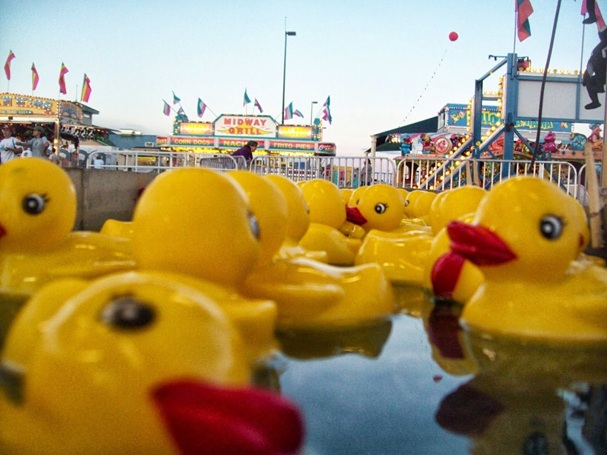
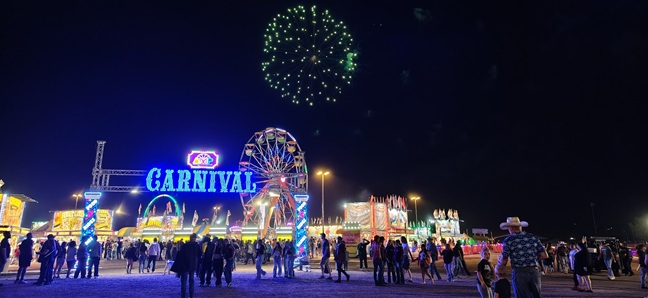
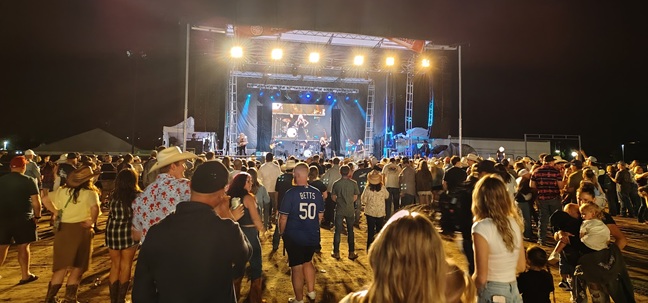
Every summer the county fair rolls into town with its smell of funnel cakes, squeal of livestock and the whirl of carnival rides. And every summer my search and rescue team trades our wilderness gear for matching team t-shirts and a booth at the fair. It’s a nice change of pace. We’re there to talk to people, show off our ropes and cool gear and teach some basic preventative SAR skills (such as carrying the Ten Essentials on a hike). We like to remind folks that while they may be the reigning champ of hide-and-seek, if they stay put, we can find them a lot faster. It’s not true search and rescue, but it’s a great way to meet the community and do a little recruiting.

Back in the day, the fair was all about the kids. We’d have a steady stream of lost children or, more often, their parents, as the kids, clever little survivalists that they are, were usually smart enough to come straight to us. We could easily handle half a dozen or more separated families a day. It was our predictable fair rhythm, a fun, wholesome challenge of reuniting families.

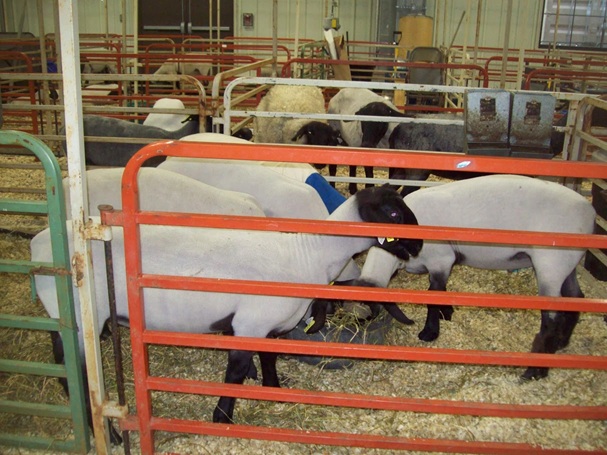
But over the years, something has changed. Lost children are still a part of the job, but they’ve been eclipsed by something far more common: medical emergencies. Our fair draws over twenty thousand people a day and it seems they’ve become increasingly creative in finding ways to get into trouble. Now, we’re not the only medical team on site. The fire department and the local ambulance service are there too, but we still get absolutely slammed. This year, the biggest hits were cuts and scrapes, but we also saw plenty of dehydration, heat exhaustion, diabetic complications, an accidental pepper spray discharge and one episode of chest pains. I often find myself wishing for the good old days when a kid on the midway would get ditched by their parents who wanted a “private moment” in the Ferris wheel gondola.

And this year’s medical was relatively tame. We’ve seen it all in the past: anaphylaxis, gunshot wounds, livestock bites, electrocutions and even cardiac arrests. The fair, for our team, has unfortunately become an annual mass casualty rodeo.

How to Stay Safe and Out of Our Tent

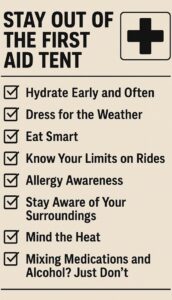
While we’re happy to help, we’d much rather see you enjoy the fair without visiting our tent. To help you avoid becoming one of our “patients”, we’ve put together a list of tips. You can help us go back to the days of just finding lost parents by following a few simple rules.

  • Hydrate, Hydrate, Hydrate. This is the number one issue we see. The summer heat, combined with a lot of walking, can sneak up on you. Skip the sugary soda and grab a water bottle. And if you’re going to mix alcohol with your fair food, be extra mindful of your water intake.
  • Dress for the Weather. Grab hats, sunglasses and sunscreen for the hot days and bring along light layers for the cooler evenings.
  • Know Your Vitals. If you have a known medical condition like diabetes or a heart issue, be proactive. Take your medications, monitor yourself and don’t push your limits. The fair is not the time to prove you can handle a twelve-hour day in the sun.
  • Mixing Medications and Alcohol? Just Don’t – We’ve seen far too many emergencies start this way.
  • Leave the Livestock Alone. The petting zoo is great, but remember that even the friendliest looking animals are still wild. Respect their space, follow all posted rules and don’t assume a cute sheep won’t bite if it feels threatened.
  • Mind the Midway. Rides are fun, but if you feel dizzy or have a history of motion sickness, take it easy. We’ve seen a number of people get sick after riding Alien Abduction one time too many. Also, be aware of your surroundings, especially if you have an allergy. That deep-fried onion ring stand might use the same oil as the fried cheese and you don’t want to find that out the hard way.
  • Have a Plan. This is where our preventative SAR training comes in. If you get separated from your group, have a designated meeting spot. This simple trick can save hours of anxiety and help our team focus on the people who really need our medical expertise. And remember, make sure your four year old knows that your real names are not “mom” and “dad” and can communicate this information and, perhaps, your phone number to us.  If you fail all of this, your rendezvous plan just might become our tent.

By following these tips, you can minimize your risk of becoming a medical emergency at the fair. And if you do need help, don’t hesitate to reach out to the medical teams on hand. We’re here to help you have a safe and enjoyable time at the fair.

The county fair is supposed to be about fun, community and maybe winning a giant stuffed animal you’ll regret having to carry. With a little preparation, you can make sure your fair memories are about the rides, the games and the fried Oreos, not the EMT who had to bandage you up.

The county fair is a ton of fun and we love being a part of it, so next year come say hello to us at our booth, swap some SAR stories and enjoy the fair safely. We’d love to see you, just hopefully not surfing up the midway on our stretcher.


Posted in Search and Rescue | Tagged , , , , | Leave a comment

When Humans Attack: A Cautionary Tale About Wildlife Encounters

A coworker of mine recently went to Yellowstone Bear World, a private animal reserve in West Yellowstone, Montana, to hold, pet and bottle feed bear cubs.  This seems wrong on so many levels.  We often see news stories about “adults”, who should know better, getting into trouble for trying to engage a wild animal in a social situation, much as a you would a member of your target sex at a bar.  This may work well when you’re trying to pick up a date, but having the same tryst with a bear, a majestic snacking machine wrapped in fur, will not yield the results you may be after.

We’ve all seen those adorable wildlife photos on Instagram: a curious bear cub sniffing a backpack, a playful dolphin leaping alongside a boat, a squirrel perched on a bird feeder, seemingly posing for the camera. These images paint a picture of harmonious coexistence between humans and nature, but the reality can be quite different.

Let’s face it, humans can be a bit overzealous when it comes to wildlife encounters. We want that perfect selfie, that Instagram-worthy video, those bragging rights for having come face-to-face with a wild creature. And sometimes, our desire for a close encounter can backfire spectacularly, in a close encounter sort of way.


🦫 The Belarus Beaver Brawl

Take the unfortunate incident of the Belarusian fisherman who met his demise at the teeth of a beaver. Instead of admiring the majestic rodent from a safe distance like a sane person, he decided he needed a photo with it, in his arms. The beaver disagreed. One bite later, a femoral artery was opened and, tragically, the man died, the only documented human death attributed to a beaver. Beavers aren’t exactly known for their cuddly dispositions. They generally keep to themselves, unless being hugged by an enthusiastic tourist.

Sadly, this is not an isolated incident, it’s just the tip of the iceberg. Humans have a long and illustrious history of pushing their luck with wildlife, often with hilarious (and usually painful) consequences:


🦬 Yellowstone’s Annual Bison Toss

Every year, the bison in Yellowstone National Park star in a reality show called “Tourists Gone Wild”. There was the woman who tried to pet a bison. The guy who posed next to one. The child whose parents encouraged him to get “just a little closer”. And then there was the guy who thought it’d be hilarious to high-five a bison at Yellowstone National Park. The result? People getting flipped into the air like rag dolls at a rodeo.

🐻 Bear with Me, This Won’t End Well

Let’s talk about the man who tried to feed a bear a sandwich. Yes, an actual, full-grown man offered a large black bear a peanut butter sandwich from the confines of his tent. The bear, being a bear, accepted the sandwich. Then it decided it also wanted the sleeping bag, the cooler and possibly the man’s foot.  A hiker, attempting to show off his “connection with nature”, tried to give a bear a hug. The bear, understandably, did not comprehend this display of affection, but responded in kind, anyway. Then there’s the couple who posed for a photo with a bear in Romania, only to realize too late that the bear wasn’t exactly thrilled about the photo shoot. They narrowly escaped with their lives, but not before the bear swiped at them.  Keep in mind, a swing and a miss is considered assault.  A swing and a hit is considered battery.  Shockingly, the bear was blamed for being the villain.

🐊 The Alligator Wrestler

A Florida man, convinced of his “man vs. nature” prowess, decided to imitate Crocodile Dundee and wrestle an alligator.  The odds were with the alligator that day.  And then there was the Florida man who simply tried to pet a wild alligator. That’s not the same as just attempting to pin it down, right? Because reaching out to touch a huge reptile with razor-sharp teeth and a bone crushing bite is basically the same as petting a kitten. He learned the hard way that alligators don’t do snuggles. Alligators don’t hate humans. They just think of us the way we might think of a chicken nugget that wandered into our kitchen — unexpected, slightly confusing, but ultimately kind of tasty.

🐘 The Elephant Who Had Enough

Somewhere in Asia, a man thought it would be fun to get out of his safari vehicle and slap an elephant on the rear for his TikTok feed. Now, elephants are generally patient creatures, but given a potential proctology exam, this one voiced a protest. The man was promptly chased, caught and tossed into a bush like an empty soda can.

So, Why Do We Keep Doing This?

Because humans, bless our Instagram-loving hearts, often mistake wild animals for Disney characters.  We forget that:

  • Beavers are not stuffed toys.
  • Bison aren’t just furry cows.
  • Bears recognize us at the weirdest, noisiest trail mix that ever lived.
  • Alligators don’t really care that we’re not shaped like fish.
  • Elephants probably view us the same way that we would view an overly caffeinated squirrel, wearing clothes.

And ultimately, nature doesn’t care how many likes you’ll get on your posts.  Mother Nature truly doesn’t care if yet another monkey, in a loud Hawaiian shirt, loses a limb.  Or four.


A Few Rules for the Wild (That Shouldn’t Need Saying)

  • If it has claws, horns, fangs or an attitude — admire from afar.
  • Selfies are not worth stitches, unless you’re trying to get a selfie of stitches.
  • Feeding wild animals teaches them that humans are a source of snacks and not in a good way.
  • Wild animals are not your friends. They have not seen your YouTube channel. They don’t care about your social influencer status.


A Few Words of Wisdom

These are just a few – a few too many – examples of humans getting a little too close for comfort with our wild neighbors. It’s important to remember that wildlife are wild animals. They are not domesticated pets and they should be treated with respect and caution.

So, the next time you encounter a wild animal, at the lake, in the woods or just at a wildlife sanctuary, remember to keep your distance, put down the camera and resist the urge to become an impromptu wildlife rehabilitator. Your safety and the well-being of the animal will thank you for it.

Posted in Animals | Tagged , , , , , , , , , , , , | Leave a comment