The Curious Case of Gold: A Brick Looking for a Greater Fool

A friend of mine told me something dubiously profound the other day. We were talking about the state of the world, which is always a dangerous conversational trailhead, and he leaned in with the intense, hushed tone usually reserved for classified government leaks.

“I don’t trust the economy today,” he whispered. “I’m slowly liquidating my index funds and buying gold.”

It was an interesting moment. Interesting in a “make my left eye twitch” sort of way.

“You’re buying gold?” I asked.

“As much as I can get.”

Not a little gold.
Not “some gold as a hedge.”
Gold. A lot of it.

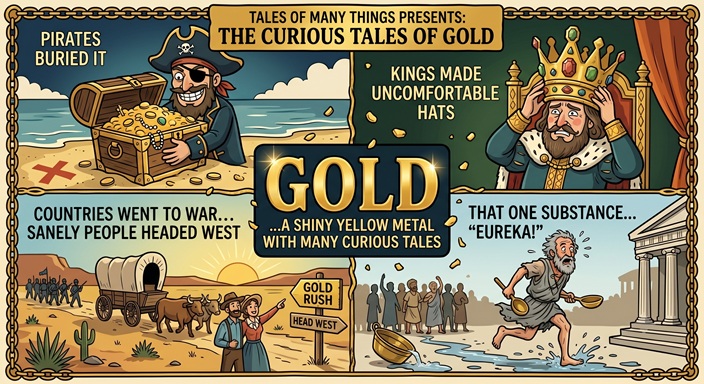
Gold, as in the shiny yellow metal. The stuff pirates buried in treasure chests and kings used to make hats that looked profoundly uncomfortable. The yellow rock that made countries go to war against one another and caused otherwise sane people to sell their belongings and head west, in hopes of striking it rich. That one substance that caused Archimedes to run naked down the street, yelling “Eureka!”

Now, I don’t have a formal PhD in business valuation or corporate accounting, but I’ve read Benjamin Graham, Peter Lynch and Warren Buffett. On the most fundamental, microscopic level, a business is a beautifully logical machine: it takes a set of inputs, makes something useful and sells it to people who actually need it. It could be a physical widget (manufacturing), an opinion (consulting) or a service (house cleaning or cloud infrastructure). Because of this, I know how money is made. I can measure how efficient a business is. I can look at a spreadsheet and differentiate between a cost and a profit.

But gold?

Valuating gold isn’t just harder than valuating a business. It’s entirely impossible.
 

The Brick That Does Nothing

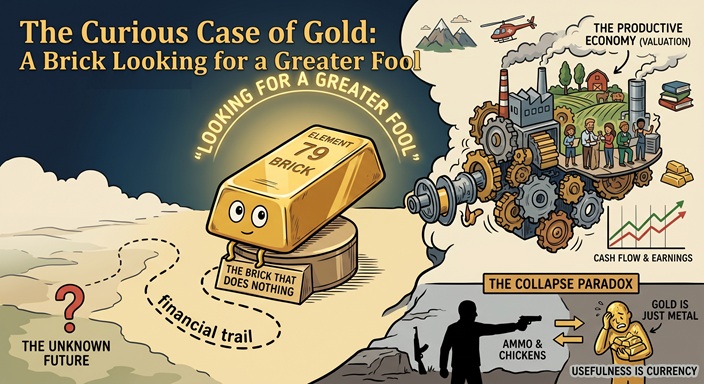
Let’s be brutally honest about what a bar of gold is: it is a heavy, shiny brick made of element 79 on the periodic table. And its primary behavior? It just sits there.

Now, before the angry emails arrive, let me acknowledge something.

Gold has value.

It has a handful of excellent industrial uses. It’s highly malleable. It’s highly conductive. It’s perfect if you are looking to manufacture a specialized electronic circuit that can handle a very low current with minimal signal loss while refusing to tarnish in high humidity. Beyond that, it’s a very pretty material that human beings have used for millennia to decorate their bodies and try to look important to their neighbors.

What gold does not do is make anything.

A share of stock represents ownership in a business. A business produces goods or services. Customers buy those goods or services. Revenue comes in. Expenses go out. Profit remains. That profit can be reinvested to grow the business or returned to shareholders.

That’s your dividend. I understand that.
I can examine whether the business is growing.
I can measure cash flow.
I can compare debt levels.
I can estimate future earnings.
Even if I’m wrong, I have something tangible to analyze.

Gold?

Gold is a brick.
A very shiny brick.
A brick that occasionally gets turned into jewelry or electrical contacts.
But mostly, just a brick.
It sits there.
It produces nothing.
It invents nothing.
It serves no customers.
It pays no dividends.
It doesn’t have an operating cash flow.
It doesn’t innovate.
It doesn’t hire an aggressive new CEO.
It doesn’t optimize its supply chain.
It has no earnings report.
The annual shareholder meeting for a gold bar consists entirely of wistfully staring at it.

If you put a brick of gold in a dark safe for thirty years and check in on it, you will not find a family of happy little gold coins running around the brick. No one has ever witnessed a brick of gold excrete pellets of revenue. Ever.

So how do you value it? How do you make money investing in a literal lump of metal?

That’s where things get interesting.

With a business, I can estimate future profits.
With a rental property, I can estimate future rent.
With a bond, I can estimate future interest payments.
With gold, there is no cash flow to analyze.
Its value is whatever somebody else is willing to pay for it.

That doesn’t automatically make gold worthless, but it does move the conversation from investing toward speculation.

The famous “greater fool theory” says you can make money buying something overpriced if you can later find an even bigger fool willing to pay more than you did.

Unlike a stock, gold does not create wealth. Its historical claim to fame is preserving wealth. Whether that preservation is worth decades of forgone productive returns is a separate question.

For the most part, gold is the ultimate game of financial hot potato. You aren’t investing. You are just praying that when the music stops, there is a more gullible soul standing next to you, holding an open wallet. To me, there is no purer, more distilled definition of speculation.

That sounds harsh, but there is an uncomfortable truth buried inside it.

If an asset produces no cash flow, then your return depends entirely on future buyers valuing it more highly than you do today.

You are not collecting profits.
You are not collecting rent.
You are not collecting interest.
You are waiting for someone else to offer you a better price.

That is the entire game.

Gold investors often object here.

They point out that gold has preserved purchasing power over very long periods of time.

Fair enough. But preserving purchasing power and generating wealth are two different things.

A productive farm generates food.
A factory generates widgets.
A software company generates revenue.

Gold generates patience.
And storage fees.
Sometimes theft concerns.
Occasionally a strong urge to show visitors your secret safe.

The distinction matters because wealth is ultimately created through production.

Society becomes richer when people build things, invent things, grow things, transport things, heal people, teach people and solve problems.

A gold bar does none of these. It merely exists.

 

The Recession Reality Check

The common response is that gold shines brightest during economic crises.

Let’s examine that.

Imagine a recession.
The stock market crashes.
Businesses fail.
Unemployment rises.
People are struggling to pay mortgages and buy groceries.
Gold owners proudly announce that their metal has retained value.

Excellent.

Now who exactly is buying it?
The struggling family trying to keep the lights on?
The laid-off worker?
The business owner fighting bankruptcy?

If everyone is suffering financially, the pool of people capable of paying premium prices for your gold will be smaller than expected. Gold works best when enough economic activity remains intact, when people still have money available to purchase gold.

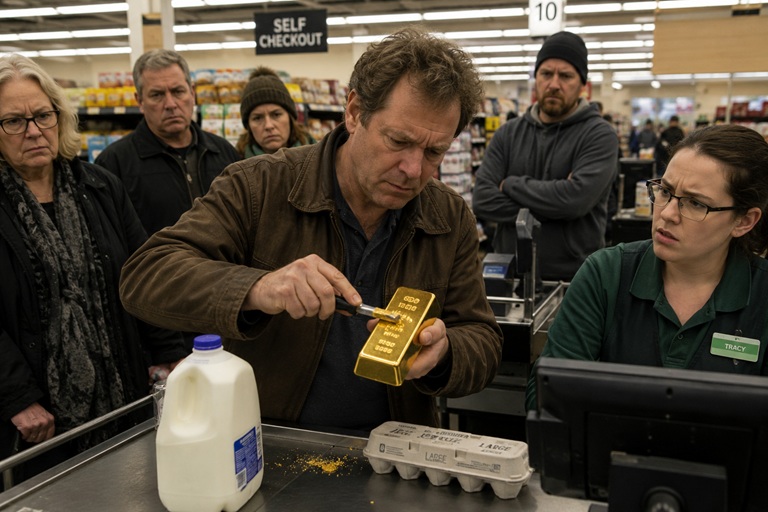
Are you going to chip off a corner of a gold bar at the grocery store checkout line to buy a gallon of milk? “Yes, hello, cashier, let me just shave off 0.04 ounces of this bullion for this carton of eggs.” What are everyday people even going to do with gold when they don’t have a secure roof over their heads? It turns out that luxury commodities require an abundant, cash-flush society to maintain their premium valuation.

Which means even the “gold saves me from economic disaster” scenario still depends heavily on functioning markets and functioning buyers.
 

The Ultimate Apocalyptic Paradox

And then we arrive at the survivalist version. This is where things become unintentionally hilarious.

Imagine the absolute worst-case scenario. The Full Collapse. This is the ultimate, late-night campfire fear of every doomsday prepper. The global markets are completely worthless, the government has entirely collapsed and the grid is dark. There is no internet, no banking system and absolutely no place to legally sell your gold.

Think about it.

Markets disappear.
The dollar becomes wallpaper.
Civil order evaporates.
Society is now operating on direct barter.
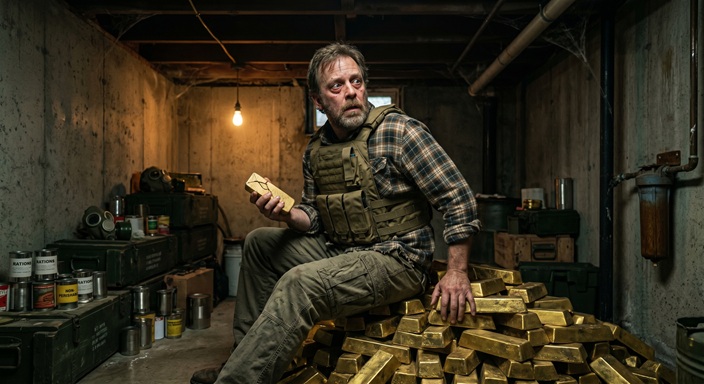
You have a basement filled with gold.
Your neighbor has chickens.
Another neighbor has potatoes.
Someone else has clean water.

Who wins?

Not the guy with gold.
The guy with chickens wins.
The guy with potatoes wins.
The guy with antibiotics wins.
The guy with clean water wins.
The mechanic wins.
The farmer wins.
The electrician wins.
The nurse wins.
The person who knows how to repair a generator wins.

Welcome back to the prehistoric barter economy. The local economy is now entirely defined by a simple transaction: trading a bushel of potatoes for a healthy chicken.

In a true collapse, usefulness becomes currency. Let’s play out this transaction. You walk up to a farmer with a heavy, glittering bar of 24-karat gold and you demand three chickens and a sack of grain. The farmer looks at you, looks at the gold and says: “I can’t eat that. My kids can’t eat that. It can’t keep my crops warm and it won’t stop a wolf. Keep your rock. I’m keeping my birds.

You can not eat gold.
You can not drink gold.
You can not heat your home with gold.
You can not treat an infection with gold.

At that point, a gold bar is simply an unusually heavy object that reflects sunlight well.

In fact, let’s take it a step further into the deep, uncomfortable woods of logic. If we enter a true Mad Max apocalypse and I am the survivalist who invested heavily in functional tools, medical supplies, food, guns and ammunition and you are the survivalist who spent your life savings filling a basement with heavy gold bars, then guess what? I am now the guy with the guns, the ammunition and your basement full of gold. And something deeply unspeakable has probably happened to you.

History becomes very unpleasant when institutions disappear. If a societal collapse is severe enough to permanently destroy the value of paper money and corporate equities, no type of conceptual currency matters anymore. Gold only holds value because a stable government and a robust cooperative economy exist to back up the illusion that it represents wealth. Without the infrastructure of civilization, gold reverts instantly to what it always was: an inconveniently heavy, too-soft lump of metal.

Fortunately, I don’t think we’re headed there. Modern economies are remarkably resilient. The end-of-civilization scenarios make for entertaining movies, but poor investment strategies.

Which brings me back to my original concern.
 

What Gold is Actually Good For

Gold’s value depends on a paradox. Gold is often purchased because people fear the financial system, yet gold’s ability to function as an investment depends heavily on that same financial system continuing to operate.

You need buyers.
You need markets.
You need price discovery.
You need legal ownership.
You need enough prosperity that someone can afford to buy your shiny brick.

Without those things, gold stops being an investment and starts being an unusually expensive paperweight. Strip away the psychological panic, the apocalyptic marketing and the late-night gold-bug commercials and you are left with a simple truth. Gold is just a metal.

That doesn’t mean gold is worthless. It means gold is not productive. And over very long periods of time, productive assets tend to win.

Businesses create value.
People create value.
Innovation creates value.
Gold simply waits for someone else to decide it is valuable.

The irony is that nearly every gold investor ultimately believes in civilization. They have to. If civilization survives, they need markets, brokers, exchanges, buyers, property rights and functioning institutions to sell their gold. If civilization doesn’t survive, they need food, water, medicine and security. Gold occupies an awkward middle ground, too dependent on civilization to thrive in a true collapse, yet too unproductive to create wealth the way productive assets do during normal times.

Personally, I’d rather own a small piece of a company that wakes up every morning trying to make money than a metal brick waiting patiently for the next buyer. Because when the darkness inevitably falls on the market, I’d rather own a piece of a business that provides the world with electricity, food and medicine, rather than a basement full of shiny metal bricks, waiting around for a greater fool who might never show up.

At least that productive business is doing some work.
Posted in Culture, Economy | Tagged , , , , , , , , , , , | Leave a comment

Juneteenth and the Dangerous Lie

There are holidays that celebrate victories.
There are holidays that celebrate sacrifices.
And then there are holidays that exist because humanity made a terrible mistake.
Juneteenth belongs to that last category.

But for many, Juneteenth has already been neatly packaged into a three-day weekend with barbecues, federal closures and corporate emails expressing a generalized appreciation for “freedom”. But freedom isn’t a corporate perk point. And Juneteenth didn’t happen because humanity suddenly woke up, looked at itself in the mirror and decided to be kind.

Every year, someone asks why we need a holiday like this. The answer is uncomfortable because it forces us to confront a truth that stretches far beyond American history.

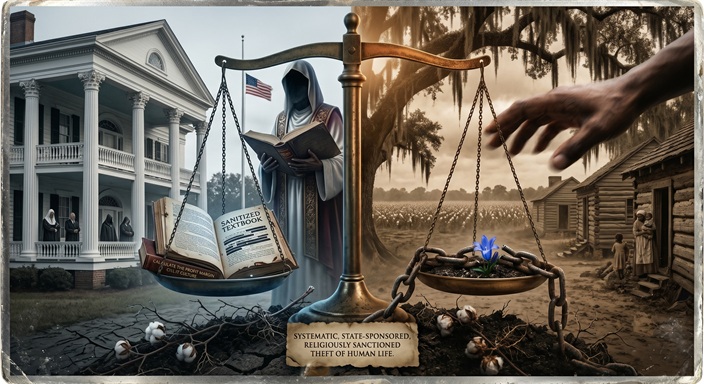
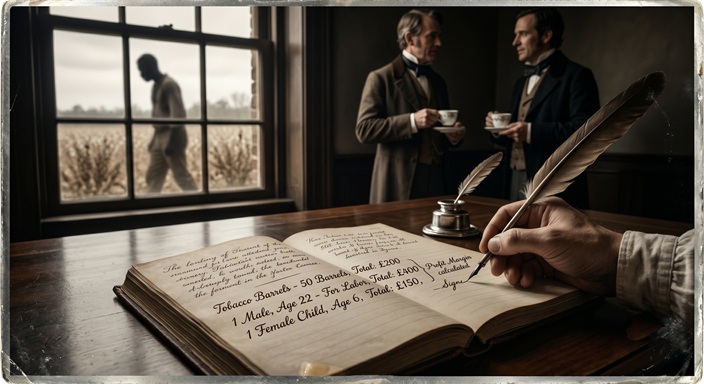
Juneteenth exists because we, as a species, possess a terrifying capacity to look directly at human suffering, calculate the profit margin and call it culture. It exists because for centuries an entire society convinced itself that some people were born to be owned. And if we want to understand the true weight of this day, we have to stop looking at history through the lens of a sanitized textbook and look at it for what it actually was: a systematic, state sponsored and religiously sanctioned theft of human life.

Human beings have spent thousands of years trying to convince themselves that some people matter less than others.

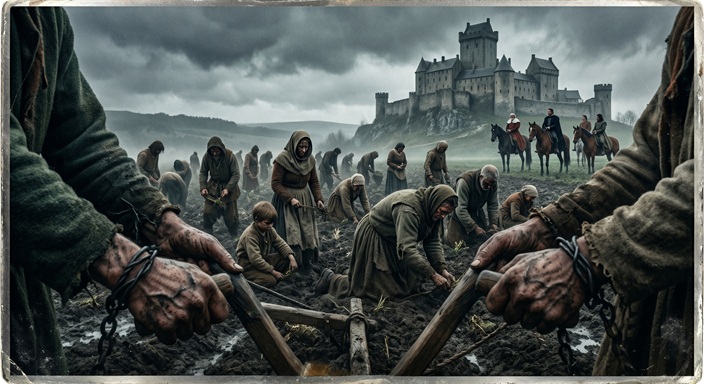
The Bible contains rules for slavery. Ancient Rome built an empire on it. Europe had serfdom, where generations of families were effectively tied to the land and to the will of their lords. Kingdoms conquered kingdoms and carried away captives. Tribes raided tribes. Empires traded people as commodities. The Catholic Church itself recently acknowledged its role in enabling slavery.

History offers no shortage of examples.
None of them make it right.


The Great Lie of Historical Equivalence

When we talk about American chattel slavery, a defense mechanism often kicks in. People rush to the history books to rationalize it. “Slavery has always existed,” they say. “The Romans did it. The Greeks did it. It has been the divine right of kings.”

Some will argue that slavery in America was different from other forms of bondage. Some historians would agree. Others would point out that serfdom was its own form of inherited misery.

Frankly, that debate misses the point. The moment one person decides another person is property, something fundamental has broken.

Let’s be brutally honest. From a moral perspective, serfdom is no more justifiable than any other form of forced servitude. Human subjugation is human subjugation. Throughout history, societies have repeatedly engineered elaborate hierarchies to convince themselves that some people were born to serve others.

It doesn’t matter whether the chains are iron shackles, legal contracts, inherited debts or social customs. It doesn’t matter whether the justification comes from economics, conquest, race, religion or tradition.

The argument is always the same.
“They exist to serve us.”
And that is the lie.
Juneteenth exists because a young America embraced that lie.

American slavery introduced a specific, uniquely toxic mutation to this ancient evil: race. In the ancient world, you became a slave because your army lost a war or because you fell into debt. It was a tragedy of circumstance. But in America, slavery became a permanent, generational curse written into your DNA. It wasn’t just about what you did. It was about who you were. It was a system that decreed that because of the color of your skin, you were subhuman. Your children were born into the ledger books as property before they even took their first breath. Enslavement became hereditary, permanent and legally tied to ancestry, creating a racial caste system that would outlive slavery itself.

Are we indeed so different as races that one group has a natural right to subjugate another? Science says no. DNA says no. Reason says no.

So why did we do it? Did we do it out of pure comic-book evil?
No. We did it because we could. And we did it because it paid well.
The most profitable lies are often the ones we teach ourselves until we mistake them for truth.

The Declaration of Independence proclaimed that all men are created equal while millions of African Americans were bought, sold, beaten and denied even the most basic right to determine the course of their own lives.


The Banality of Institutional Evil

The most frightening lesson of history is that evil rarely arrives wearing a black hat. It doesn’t introduce itself as a monster. Instead, it arrives wrapped in the law, validated by custom and preached from the pulpit.

For centuries, American slavery wasn’t a fringe underground crime. It was the bedrock of the global economy. It was normalized by ordinary people, respected institutions, democratic governments, massive businesses and religious organizations.

It is tempting to dismiss that contradiction as the work of villains. It is too easy.

The more unsettling lesson is that ordinary people accepted it.
Merchants accepted it because it was profitable.
Politicians accepted it because it was expedient.
Churches accepted it because they found ways to justify it.
Families accepted it because it was simply the way things had always been.

That may be the most frightening lesson of Juneteenth.

The greatest evils in history are rarely carried out by monsters.

They are carried out by ordinary people who become comfortable with injustice.

The Bible was quoted to justify the lash. Theology was twisted to argue that keeping African Americans in chains was actually a form of Christian benevolence. Just recently, the Catholic Church issued an apology for its historical role in enabling and validating the transatlantic slave trade. It took centuries to say what should have been obvious from day one: you can not own another human being.

But that is how deeply a culture can poison itself when an atrocity becomes profitable and convenient. When an entire economic system relies on free labor to build its empires, human conscience is the first thing to be auctioned off.


What Juneteenth Actually Means

Then came the Civil War.
Then came emancipation.
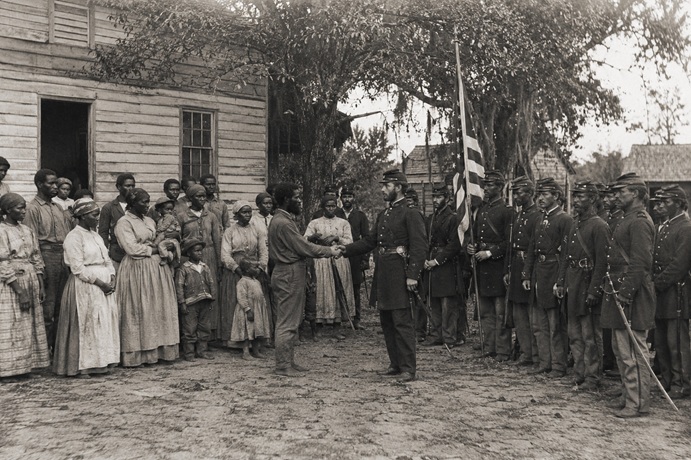
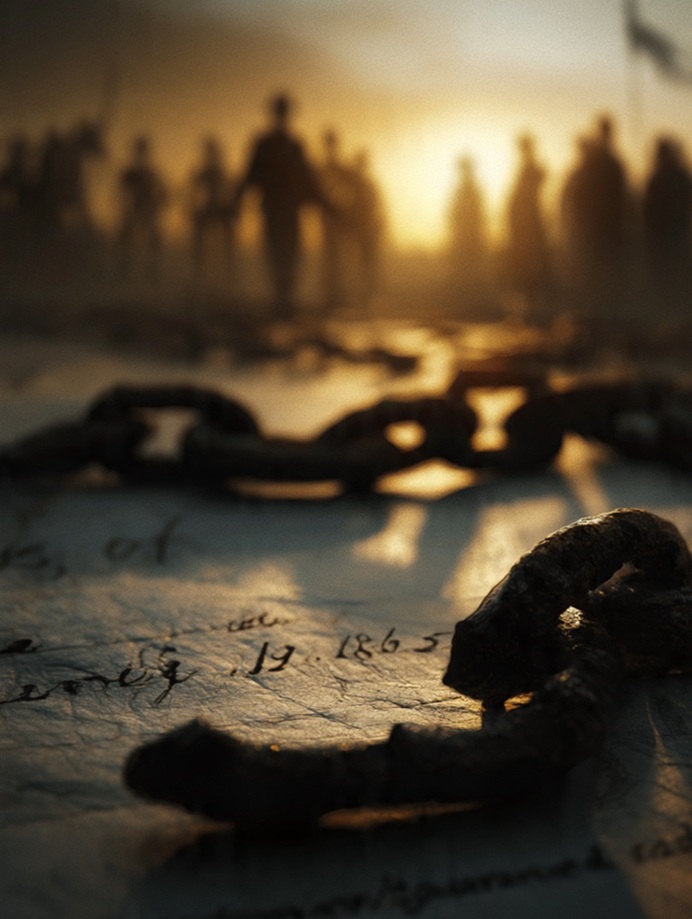
Then came June 19, 1865, when the news finally reached enslaved people in Texas that they were free.

Juneteenth commemorates the day Union soldiers arrived in Galveston, Texas to enforce the Emancipation Proclamation. It was a full two and a half years after the proclamation had legally freed enslaved people. Reflect on that lag. For thirty months human beings were kept in fields under the whip simply because enforcement had not arrived, because many enslavers concealed the truth and because those in power wanted one more harvest out of stolen labor.

Think about that for a moment.
The war was over.
Freedom had been declared.
And yet people remained enslaved because those in power simply refused to let go.

There is no excuse for what was done to African Americans in the early days of this country. None. No amount of historical context, no economic justification and no theological gymnastics can ever clean the blood off those ledger books.

Juneteenth is on our calendar because we must remember that human beings are capable of normalizing the unthinkable. It is a monument to the fact that laws can be fundamentally illegal in the eyes of human decency and that customs can be wicked.

Juneteenth is the day we remember that freedom delayed is freedom denied.
It is also the day we remember that ending slavery did not end the struggle for equality.

History did not suddenly become fair.
The work simply changed.

The uncomfortable truth is that we have not completely solved this problem.


The Burden of the Future

If we think this is just a history lesson, we are missing the point entirely. Human trafficking is alive and well in the dark corners of the globe today. The impulse to exploit, to look at another human being and figure out how to extract wealth from their suffering, has not been engineered out of our species. Politics change. Technology changes. Human nature remains stubbornly the same.

How do we reconcile our past? By refusing to sugarcoat it. By looking at the scars left by chattel slavery and admitting they are still raw.

How do we fix our future? By recognizing that freedom is not a static state of being. It is an active, exhausting, daily defense against our worst impulses.

Human trafficking exists today.
Forced labor exists today.
Children are exploited today.
Debt bondage exists today.

Millions of people around the world are trapped in systems designed to strip away their choices and their dignity.

The faces change.
The methods evolve.
The lie survives.
“They exist to serve us.”

Juneteenth asks us to reject that lie.

Not for one race.
Not for one nation.
For everyone.

Because this holiday is bigger than the history of African Americans, even though that history is at its heart.

It is a warning to every country, every culture, every religion and every generation.

Never again convince yourself that another human being belongs to you.
Never again accept that freedom is a privilege reserved for some and denied to others.
Never again allow convenience, profit or tradition to outweigh human dignity.

We can not rewrite the past.
We should not try.
The scars are real.
The suffering was real.
The evil was real.

Our responsibility is something else entirely.

To remember.
To tell the truth.
To admit where humanity has failed.

And to make absolutely certain that when future generations look back at us, they can not say we saw injustice and looked the other way.

Ultimately, Juneteenth is a screaming, unyielding call to all people and all nations: no type of servitude, no type of slavery, is ever okay. People are born with the absolute, unalienable right of self-determination. It is our heavy, collective burden as a society to remember the horrific evils of our past, to dismantle the subtle ways we still devalue human life today and to fiercely champion the rights of all people going forward.

That is why Juneteenth matters.
Not because it reminds us that America was imperfect.
But because it reminds us that freedom is never guaranteed.
It is a promise that every generation has to choose to keep.

Today it is our burden to look past the holiday sales and the long weekend, to respect the dark history that brought us here. Because the moment we forget how easily ordinary people can normalize evil, we pave the way for it to happen again.

It must never happen again, but history offers no guarantees that it won’t.


Posted in Culture, Economy, Society | Tagged , , , , , , , , , , , , , | Leave a comment

100 Things I’ve Learned from Writing 100 Tales

Fourteen months ago, I started a blog called Tales of Many Things because I have never been particularly good at focusing on one project at a time.

Normal bloggers pick a lane.

Travel.
History.
Science.
Politics.
Food.
Technology.

I looked at that sensible approach and thought, “What if I wrote about search and rescue, the Oxford comma, quantum mechanics, Memorial Day, artificial intelligence, odd human behavior, family history and whatever strange fact annoyed me over breakfast?”

It seemed like a perfectly reasonable lack of editorial discipline.

One hundred articles later, I’ve discovered something unexpected.

There aren’t many things.

There are only a handful of stories that human beings keep telling themselves while wearing different costumes.

I thought today would be a good occasion to write about the “100 Things I’ve Learned from Writing 100 Tales”. What on Earth have I learned after spending 100 articles wandering through the strange corners of existence?

Then I remembered that I’m the kind of person who writes entire articles because an amusement park sign looked funny or phone manufacturers overpromise and underdeliver.

So here’s the abridged version. After bouncing from search and rescue missions to ancient history, corporate absurdities and punk rock lyrics, I sat down to count the pieces of wisdom I’ve picked up.

Not literally one hundred things. Maybe a dozen and a half. Things like:

The funny thing is that these ideas keep showing up no matter what I write about. When I look back across all those seemingly unrelated posts, I stop seeing the individual topics and start seeing the recurring themes connecting them:

Somewhere along the way, I realized I wasn’t changing subjects nearly as often as I thought I was.

The topics change. The questions don’t.

I’ve also discovered that writing a hundred articles doesn’t make anyone wise. It mostly gives you a larger collection of odd facts and a growing inability to let perfectly good rabbit holes go unexplored.

After a hundred tales, I’ve come to suspect that this blog was never really about science, history, language, search and rescue, holidays, politics, technology or the strange corners of human civilization.

It’s been about the same thing all along. It’s been about what it means to be human in a strange and wonderful universe. It asked the question about how people make sense of a complicated world.

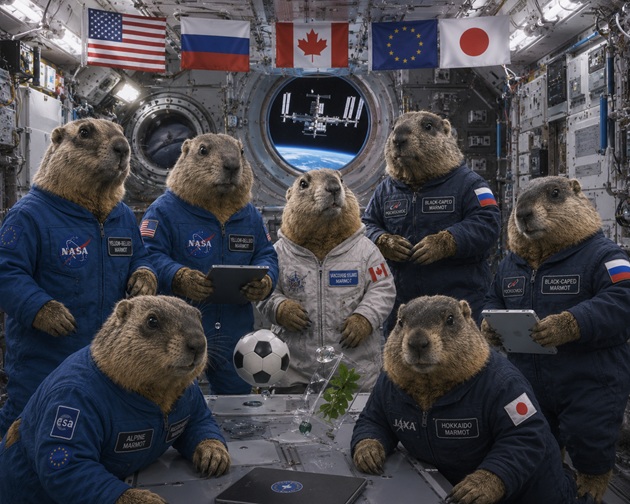
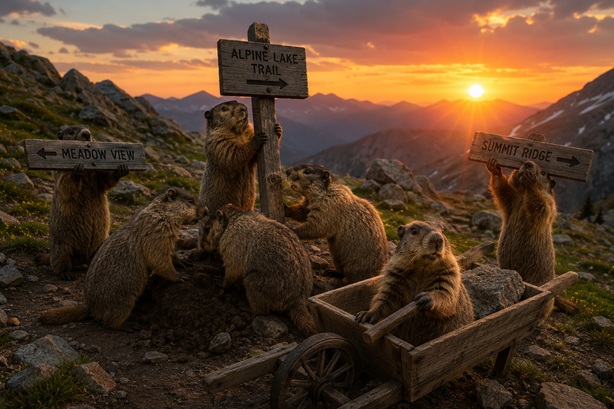
Though I still maintain that the marmots are up to something.

Thank you for wandering through these tales with me.

Here’s to the next hundred questions.

Posted in Culture, Philosophy | Tagged , , , , | Leave a comment

Take the Extra Minute to Respect the Dark

We have reached that magical point of the year in the northern hemisphere when daylight feels almost infinite. Summer solstice brings us the longest days of the year and with them, an irresistible urge to squeeze every drop of adventure out of the sun.

We stay out longer. We push farther. We attempt that extra loop or that peak on the urban edge after work because the sky stays bright well past dinnertime.

Summer has a way of making us optimistic. The sun seems to linger forever over the mountains. Trailheads are busy, campsites are full and people are squeezing every possible hour out of the outdoors.

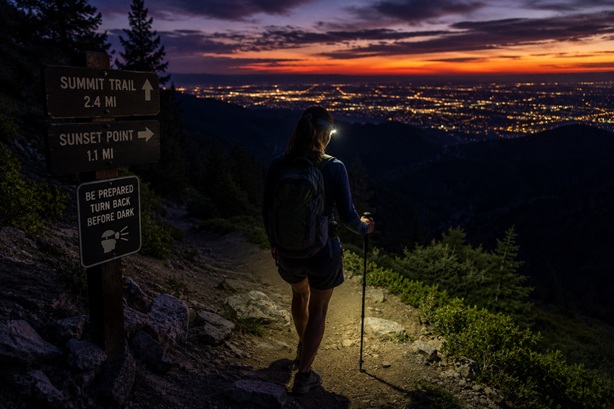
It’s easy to believe that darkness is someone else’s problem. After all, sunset isn’t until after 9 PM. You have plenty of time.

Until you don’t.


Understanding the Problem

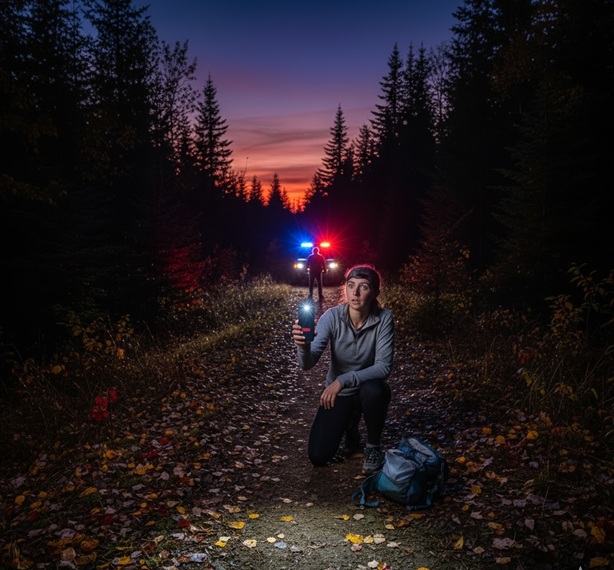
But this abundance of light introduces a dangerous psychological illusion. Because the sun stays up late, we treat the wilderness as if it has no curfew. Every year, right around the solstice, search and rescue teams quietly brace for a specific, highly predictable surge in calls.

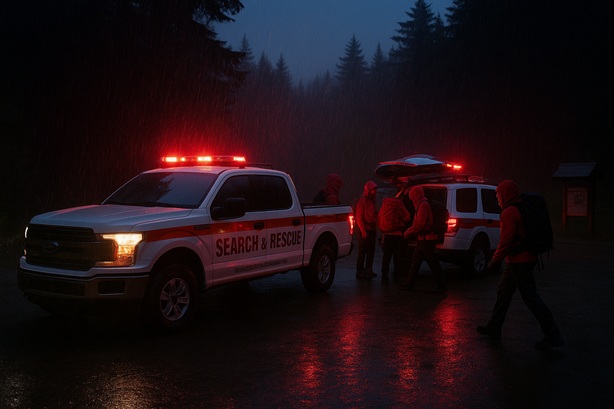
Search and rescue teams respond to hikers who underestimated how quickly daylight disappears. What began as a pleasant afternoon hike becomes a navigation problem. A missed trail junction becomes a search. A twisted ankle that would have been a minor inconvenience at noon becomes a significant emergency after dark.

The irony is that darkness itself is rarely the problem.

The problem is failing to prepare for it.

These aren’t dramatic technical rescues on high-alpine peaks. These are assists for ordinary people — trail runners, casual hikers and after-work explorers — who took advantage of the extra light, but went out completely unprepared for the eventual, inevitable darkness.

When you lose the light, you lose the mountain you thought you knew. Here is how the transition from dusk to dark changes your risk profile and how to #TakeTheExtraMinute to ensure you walk out on your own two feet.


The Wilderness Changes After Sunset

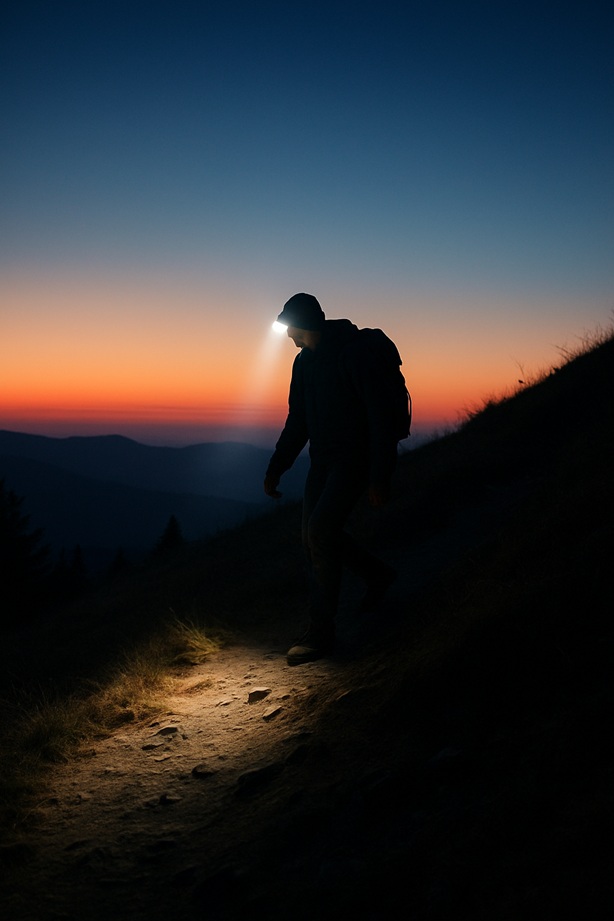
The trail you confidently followed all afternoon is not the same trail after dark. Landmarks disappear. Distances become difficult to judge. Shadows distort terrain. Familiar objects suddenly look unfamiliar.

Human beings are visual creatures. We navigate the world primarily through sight, and when visibility drops, our perception of risk changes dramatically.

A trail junction that seemed obvious in daylight can become nearly invisible under a headlamp.

A rock step that was easy to negotiate at noon can become a fall hazard at dusk.

A route that felt straightforward on the way up can become confusing on the descent.

Many search and rescue calls begin with a simple statement, “We thought we’d be back before dark.”

Unfortunately, darkness doesn’t care what your plan was.


The Urban Edge Illusion

This problem isn’t limited to remote wilderness.

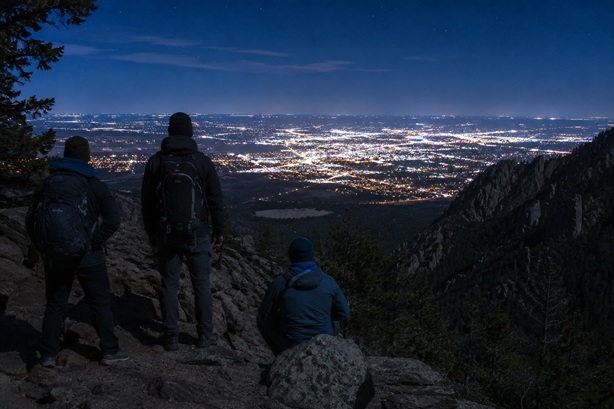
The most common setting for a night rescue isn’t a remote, deep-wilderness valley. It’s the “urban edge”. These are the popular open spaces, county parks and foothills that border our cities. Municipal parks and nearby recreation areas that feel close to civilization.

Because these trails are close to home and highly familiar, hikers treat them with a lower threshold of respect. You might head out at 6:30 PM for a quick three-mile loop. The sun is blazing. The air is warm. You don’t bring a pack, a jacket or a light because “it’s just a neighborhood trail”.

The trail is familiar. Cell service is available. The parking lot isn’t far away. But when darkness falls, those assumptions can become liabilities.

A minor friction occurs. You miss a trail junction. You twist an ankle. A steep climb takes thirty minutes longer than you anticipated.

Murphy and Darwin have a way of singling out targets. A missed turn can lead into unfamiliar drainages. A social trail can become indistinguishable from the main route. A simple slip on loose terrain can leave someone injured and unable to navigate out.

The wilderness does not become safer simply because a city is visible in the distance.

In the summer, twilight can linger deceptively, but once the sun drops behind the ridge, the transition to pitch-black is sudden and unforgiving. Suddenly, that friendly backyard trail transforms into an entirely different world.


How the Dark Rewrites the Rules of the Trail

When visibility drops to zero, your perception of reality changes entirely. The wilderness becomes a place of high friction:

  • The Vanishing Junction: In the beam of a weak light, or worse, no light at all, trail signs and forks vanish into the shadows. What looked like an obvious intersection at 3:30 PM looks exactly like a game trail or a boulder field at 9:30 PM. A massive percentage of our summer calls are simply lost hikers who missed a turn they’ve walked past a hundred times in daylight.
  • The Loss of Micro-Terrain: Human depth perception relies heavily on ambient light and shadows. In the dark, the ground flattens out. You can no longer easily distinguish between a solid rock, loose scree or a three-inch drop-off. This is when ankles snap, knees blow out and minor slips turn into high consequence falls down steep embankments.
  • The Temperature Drop: People associate the summer with warmth, but high-desert and mountainous urban edges experience rapid thermal shifts once the sun goes down. A comfortable 75°F afternoon at the trailhead can become a 45°F evening on an exposed ridge. If you are wearing nothing but shorts and a sweat soaked t-shirt, hypothermia can set in surprisingly fast, destroying your ability to think clearly.


The Phone Flashlight Fallacy

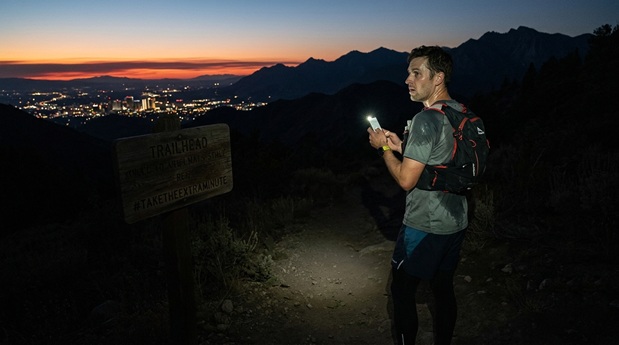
When hikers get caught in the dark, their immediate instinct is to pull out their smartphone and switch on the flashlight widget.

Do not rely on your phone flashlight. Treating your phone as your primary navigation and lighting tool is one of the most dangerous gambles you can make on a trail, for three critical reasons:

  1. It Destroys Your Battery: Running the high intensity LED flash on your phone drains the battery at an accelerated rate. If your phone dies, you don’t just lose your light. You lose your map, your compass, your ability to call 911 and the GPS ping that search and rescue teams use to find you.
  2. It Has Zero Throw: A phone flashlight casts a wide, weak, ambient flood of light that is useless for looking more than a few feet ahead. It does not project far enough down the trail to let you spot trail markers, rock cairns or upcoming hazards.
  3. It Requires a Hand: Holding a phone out in front of you means you only have one hand free to balance, scramble or break a fall.

The #TakeTheExtraMinute rule is simple:

  • Bring a real light.
  • Then bring a backup.

A quality headlamp keeps both hands free for balance and navigation. A spare flashlight or backup headlamp provides redundancy if your primary light fails.

If you expect to finish after sunset, bring lighting. If you don’t expect to finish after sunset, bring lighting anyway.


Night Hiking Isn’t the Problem

It’s important to make a distinction.

Night hiking itself is not dangerous. In fact, many experienced hikers intentionally travel after dark. Some prefer it. Others seek cooler temperatures, quieter trails or opportunities to observe wildlife and the night sky.

The difference is preparation.

People who plan to hike at night bring proper lighting. They carry extra layers. They understand navigation. They expect reduced visibility and adjust their pace accordingly.

The danger comes from accidentally becoming a night hiker.


The #TakeTheExtraMinute Darkness Briefing

Before leaving the trailhead this summer, take one extra minute and ask yourself a simple question: “What if I am still out here after sunset?”

Not because you plan to be, but because plans change. Weather changes. Trails take longer than expected. People get tired. Photos take longer. Children move slower. And mountains have a habit of humbling schedules.

That extra minute might lead you to throw a headlamp into your pack. It might convince you to bring spare batteries. It might inspire an extra layer. It might cause you to turn around a little earlier. It could prevent a search.

As daylight reaches its annual peak, remember that every long summer day ends the same way. The sun goes down. The darkness is not your enemy, but it deserves your respect.

Extended daylight is a gift, but it is also a psychological trap. It coaxes us into lowering our guard, pushing our timelines and leaving our survival gear in the car.

The mountains, the foothills and the canyons don’t care how beautiful the sunset was. They don’t care that you only planned to be out for two hours. Once the sun drops, the environment becomes completely indifferent to your comfort.

So this summer, whether you’re heading deep into the backcountry or just exploring the urban edge after work, #TakeTheExtraMinute to prepare for the dark before it arrives, because respecting the dark is the only way to ensure you enjoy the light.

Because the best rescue is the one that never has to happen.

Posted in Adventure, Search and Rescue | Tagged , , , , , , , , , | Leave a comment

The True Value of a Milestone and the Devil You Know

My manager retired this week. Twenty-eight years with the same company. Let that number sink in for a moment.

She was a tough woman, a retired Air Force Lieutenant Colonel, an absolute hard-ass when the mission demanded it, but a human shield for her team when the corporate avalanche started sliding. She was, in the absolute best sense of the phrase, the devil we knew.

The funny thing about devils you know is that you don’t fully appreciate them until they’re gone. After many years of working for her, I realized that people like that are becoming increasingly rare, not because younger workers lack character, but because the workplace itself has changed.

In an era where the average millennial is lucky to spend a tenth of that time at a single gig, nearly three decades of service isn’t just unusual. It’s monumental. Longevity like that is not something to casually dismiss. Sticking with one job for more than a generation isn’t exactly viewed as a badge of honor these days. It almost feels like an artifact from another civilization. But that’s a cultural debate for another time.

Lack of workplace longevity isn’t necessarily because younger workers are lazy or disloyal. Modern work culture is simply different. Companies restructure. Careers pivot. Loyalty has become transactional in both directions. Staying at one job for thirty years is no longer considered the gold standard of professional life that it once was.

Where I work, corporate longevity isn’t rewarded with the classic gold watch anymore. Instead, you get “perk points” for work anniversaries and unexpected project successes. To be fair, it’s not entirely unimpressive. The points can be spent at an online company store. It’s not exactly thrilling, though I’ll admit I used mine to score a snazzy tablet and a nice winter jacket, one that blissfully doesn’t make me look like I’m conducting a search and rescue mission while browsing the grocery store produce aisle.

But the real perk for an old salt at our company comes at retirement. They pay for you to go out to eat and you get to bring family and coworkers along on a very liberal budget.

And that’s where the story really begins.


Stepping Into Another World

I don’t think my boss picked the restaurant herself. I suspect her boss did. We ended up at one of those upscale establishments where dinner costs around a hundred dollars per plate before anyone starts ordering appetizers, drinks, sides or dessert.

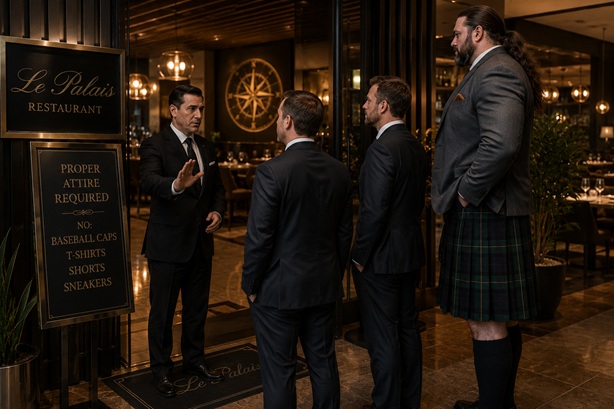
This was not a “show up in cargo shorts and a baseball cap” kind of place. This was a “respect the establishment” venue. The kind of a restaurant where if you show up dressed like a bum, you won’t even make it through the front door, although one of my coworkers walked in wearing a kilt. He’s tall enough to have to file a flight plan and as thick around as any two men. Most people stay out of his way, also due to respect.

Now, before I settled down, my career required heavy travel. I have literally eaten my way across the North American continent (and a couple of others). I’ve tried everything, a lot. And while I won’t say the $85 steak on my plate was poor quality, I can honestly say I’ve had steaks a quarter of that price that tasted every bit as good.

In my travels, the absolute best dining experiences I’ve ever found were small hole-in-the-wall mom-and-pop joints, tucked between gas stations and laundromats, family restaurants that could outperform half the culinary world with one handwritten recipe card and a grandmother who refuses to measure ingredients. Those are the places that leverage love and a generational family tradition to offer an unparalleled experience. Food, not dining.

Some of the best meals I’ve ever eaten came from places where:

  • the menus were laminated
  • the booths squeaked
  • the waitress called everyone “hon”
  • the family kid scooped up empty plates from the tables
  • the owner wandered table to table asking whether people liked the pie

Those places didn’t have dress codes. The waiters didn’t wear tailored uniforms. But they had something else. Heart. They were sincerely glad that you came.

These small out of the way diners stand in stark contrast to the high-end spots where the waitstaff wear identical uniforms, move with choreographed precision, where napkins appeared folded the instant someone stands up and staff glide by to sweep your table with a silver crumber between courses. Somewhere in the distance, I’m fairly certain I heard the sound of wealth being gently plated.

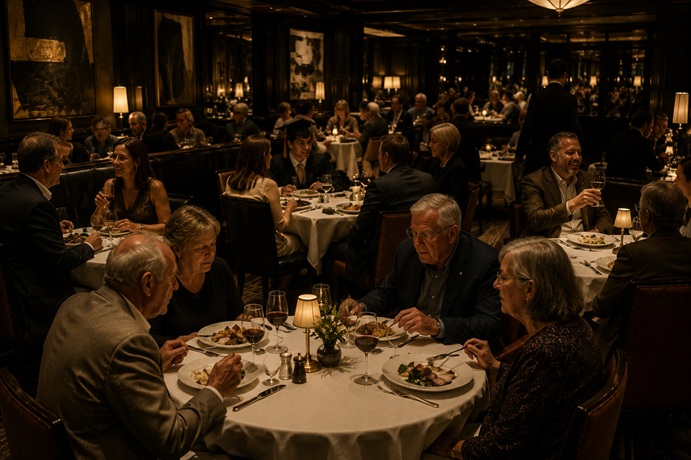
Yet, as I sat there watching the room, the food became secondary to the people-watching. Despite the burden of status, restaurants like the one we visited continue to thrive, too.


The Crowd in the Room

That fascinated me, because when I looked around the room, I didn’t see billionaires and their upscale millionaire buddies. I didn’t see celebrities or hedge fund managers or people stepping out of chauffeured cars while checking stock portfolios on their phones. The restaurant was packed, but as I looked around, I didn’t see a single person I could qualify as a “one-percenter”.

I saw ordinary people.

I saw couples who were probably celebrating anniversaries.
I saw families gathered around graduation dinners.
I saw someone who looked like they had just gotten promoted after twenty years at an ordinary office job.
I saw wrinkles.
Gray hair.
Off-the-rack clothing.
Suit jackets that had clearly lived full lives before arriving at this dining room.
Dresses that weren’t tailored to a perfect fit.

In other words, I saw everyday people deciding that this particular night mattered enough to elevate.

And maybe that’s why these places survive. Not because people need hundred dollar steaks, but because human beings need ceremony. That’s what these restaurants are really selling.

Ceremony.

They create a space where life’s milestones feel substantial. The lighting, the formality, the pacing, the care, the sense that the evening has been intentionally separated from ordinary life. All of it quietly tells you, “This moment matters.”

That has enormous emotional value, especially in a culture increasingly dominated by speed, convenience and disposable experiences.

Fast food feeds hunger. A great restaurant feeds memory. And memory is powerful.

People remember:

  • where they celebrated engagements
  • retirement dinners
  • anniversaries
  • graduations
  • reconciliations
  • promotions
  • final goodbyes

The restaurant becomes attached to the emotional geography of their lives. That’s why these establishments survive housing crashes, recessions and even pandemics. Not because luxury is recession proof, but because meaning is resilient. They survive because they sell sanctuary and significance.

Even during hard times, people still reach moments where they need to pause and say, “This mattered. We should honor it.” The $100 price tag isn’t just paying for the food. It’s an admission fee to a temporary world of luxury that says, “You earned this.” And honestly, maybe we don’t do enough of this anymore.


The Architecture of a Milestone

We rush through milestones now. Promotions become LinkedIn posts. Birthdays become text messages. Retirement becomes a calendar event followed by another meeting invitation.

But humans are ritualistic creatures. We need markers. We need transitions. We need occasions where the ordinary rules soften long enough for us to acknowledge that something important has happened.

That dinner was one of those moments.

And underneath the expensive menu and polished silverware was something surprisingly simple, a group of people gathering to acknowledge that twenty-eight years of someone’s life mattered.

As the night wound down, my thoughts returned to my manager.

Work is not always perfect. No job is. Companies are not families, no matter what corporate branding departments say. But over nearly three decades, relationships form. For twenty-eight years, she navigated the corporate storms. Shared battles accumulate. Trust gets built slowly through difficult projects, stressful meetings and long stretches where people quietly have each other’s backs.

She had my back when it counted and at the end of the day, she was the devil I knew.

Stepping out of our everyday routine to put on nice clothes, sit across a white tablecloth and watch the waiters sweep away the crumbs was the perfect send-off. It wasn’t about the steak. It was about taking a collective breath to say that twenty-eight years of dedication mattered.

And perhaps there’s another truth hidden in all of this. Sometimes the greatest luxury is not the steak. It’s having enough people around the table to celebrate the journey with you.

I’ll miss my boss. She’s had my back for a long time. And the next time I find myself at a small mom-and-pop diner enjoying a perfect $20 meal, I’ll still look back at that upscale dining room with a lot of respect, not for the price tag, but for the milestones it honors.

Even when the devil you know is finally riding off into retirement.

Posted in Culture, Leadership, Philosophy | Tagged , , , , , , , , , , | Leave a comment

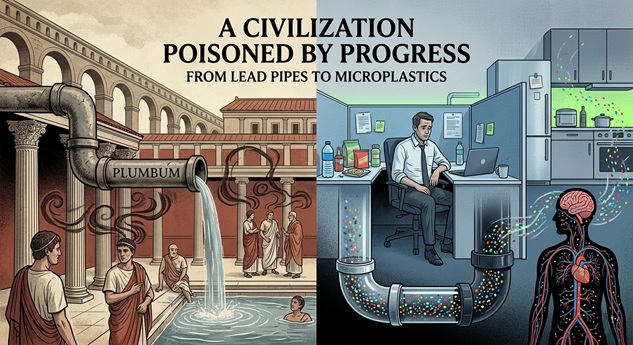
A Civilization Poisoned by Progress: From Lead Pipes to Microplastics

History rarely repeats itself perfectly, but it often rhymes in chilling ways. We often look back at the giants of the past and wonder how a civilization so advanced, so structured and so dominant could simply dissolve. No collapse comes overnight and history has a way of whispering warnings long before civilizations are willing to listen.

For centuries, historians have debated the fall of the Western Roman Empire. Some blame military overexpansion. Others point to corruption, political instability, economic collapse or moral decay. The reality is that civilizations rarely die from a single wound. Empires usually collapse from a thousand small compromises that accumulate over generations.

But one theory has always fascinated me because it feels disturbingly modern. The Romans may have slowly poisoned themselves. And two thousand years later, we may be doing exactly the same thing to ourselves with plastic.


Rome’s Invisible Problem: A Civilization Poisoned by Progress

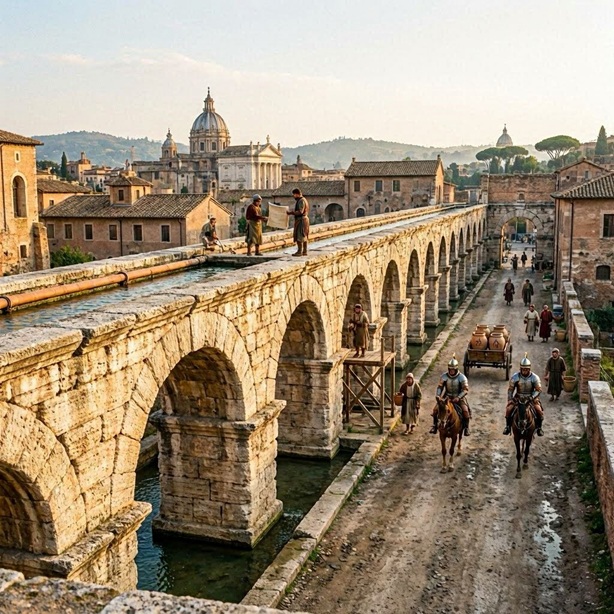
The theory that lead poisoning contributed to the fall of Rome is controversial, but it is far from fringe fantasy. The Romans were masters of engineering and their crown jewel was the aqueduct system. To bring water into the homes of the elite and into public baths, they used lead pipes.

In fact, the Roman world used lead extensively:

  • Water pipes
  • Cooking vessels
  • Cosmetics
  • Wine production
  • Food storage
  • Plumbing systems

It should be no surprise that the English word “plumbing” comes from the Latin plumbum, the word for lead.

Roman engineers were brilliant. They created the modern conveniences of their time. But their infrastructure also introduced chronic exposure to a potent neurotoxin they did not fully understand. Lead accumulated in their bodies, slowly.

Acute lead poisoning is obvious. Chronic lead poisoning is subtle. It affects:

  • cognition
  • impulse control
  • fertility
  • mood
  • memory
  • cardiovascular health
  • childhood development

And perhaps most importantly for a civilization, it impairs executive function.

Proponents of this theory suggest that the Roman “ruling class” essentially suffered a multi-generational decline in mental faculty. Some historians argue that Roman aristocrats may have received especially high doses because of a sweetener called sapa, created by boiling grape juice in lead vessels. The acid in the grapes reacted with the metal, creating lead acetate, literally “sugar of lead”.

When the people making the decisions for an empire are suffering from brain fog and impulse control issues, the administrative and military structure begins to crumble from the top down.

The wealthy may have unknowingly marinated themselves in neurological damage. They didn’t know their “modern” plumbing was a slow-acting poison. They mistook a toxic convenience for a permanent triumph of engineering.

Now, to be fair, lead pipes alone probably did not cause the collapse of Rome. Many Roman water systems developed mineral coatings that reduced exposure over time. And empires are too complicated to explain with a single toxin.

But the larger point remains compelling. A civilization can normalize chronic environmental poisoning long before it understands the consequences.

That idea feels painfully familiar today.


The Plastic Age: The Nanoparticle Revolution

Fast forward 2,000 years. We don’t use lead pipes anymore, but we have created something arguably more insidious because it is nearly impossible to filter out.

Our civilization’s miracle material is not lead. It’s plastic.

Plastic is everywhere because it solved countless problems:

  • cheap manufacturing
  • sterile medical equipment
  • food preservation
  • lightweight transportation
  • modern electronics
  • water resistance
  • industrial efficiency

Modern civilization would barely function without it. The ubiquity of plastic is the lead of our era. It is in our clothes, our food packaging and our tires. Recent studies have found that a single liter of bottled water can contain an average of 240,000 detectable plastic fragments.

But that’s only the tip of the iceberg when it comes to plastic. The real specter of this modern convenience is much more terrifying. There is growing evidence that we are only beginning to understand the biological cost of saturating our environment with plastic particles.

While microplastics are small, nanoplastics are small enough to pass through the intestines and lungs directly into the bloodstream. From there, they can cross the blood-brain barrier and even the placenta.

Microplastics and nanoplastics have now been found in drinking water, oceans, rainwater, human blood, lungs, placentas, breast milk, arteries, testicular tissue. That list alone should probably alarm us, as a society, more than it does. We are not merely surrounded by plastic anymore. We are incorporating it into ourselves. We are effectively stuffed with synthetic polymers that our biology has no way to process.

And unlike a visible pollutant, nanoplastics are especially concerning because they are small enough to cross biological barriers inside the body. Researchers are still trying to determine the long-term consequences, but early findings increasingly suggest links to:

  • inflammation
  • endocrine disruption
  • fertility problems
  • cardiovascular disease
  • immune dysfunction
  • neurological effects

In other words, we may be conducting a civilization-scale biology experiment without informed consent. And like the Romans, we are only beginning to suspect the cost after building an entire society around the material.


Why the Parallel Matters

The Roman comparison matters because the danger is not simply toxicity. The danger is normalization. That is how civilizations sleepwalk into disaster.

Rome normalized lead because:

  • it was useful
  • profitable
  • technologically advanced
  • culturally integrated

We normalize plastic for exactly the same reasons.

And the truly unsettling part is that environmental toxins rarely produce dramatic Hollywood-style collapses. Civilizations don’t usually wake up one morning and suddenly fall over.

Instead, they experience:

  • slightly lower fertility
  • slightly worse cognition
  • slightly more chronic illness
  • slightly higher aggression
  • slightly weaker resilience
  • slightly more institutional dysfunction

Tiny degradations.
Across millions of people.
Over generations.

The result is not cinematic apocalypse. It is slow erosion. A civilization becoming incrementally less capable of sustaining itself. If we change nothing, we are essentially following the Roman roadmap to a gradual decline in public health and societal resilience.

If our global population continues to accumulate plastic at the current rate, we risk facing a future of diminished human capacity. If future research confirms significant biological impacts from microplastics, they could contribute to trends that already concern public health researchers, including fertility challenges and chronic inflammatory disease. These issues will strain our social and economic systems to the breaking point.

A civilization is only as strong as the health and mental clarity of its people. If we are collectively clogged by our own waste, the complex systems we rely on, global trade, technological maintenance and governance, will eventually falter, not from a single invasion, but from a thousand internal fractures.


The Hard Truth: The Economics of Collapse

Modern society has developed a dangerous habit. If something is profitable enough, we assume we will solve the consequences later. But history suggests otherwise.

Civilizations are remarkably good at:

  • detecting immediate threats
  • ignoring slow-moving ones

Especially when the slow-moving threat is economically convenient.

Lead made Rome wealthier before it made Rome weaker. Plastic has unquestionably made modern life more efficient, affordable and scalable.

The question is whether we are accumulating biological and societal costs faster than we are willing to acknowledge them.


So What Happens If We Change Nothing?

Probably not an overnight collapse. That is not how systems fail.

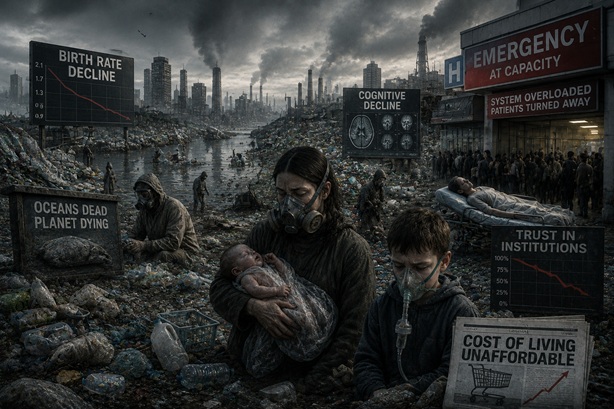
The more realistic scenario is a gradual degradation of public health and societal resilience:

  • rising chronic disease
  • fertility decline
  • mounting healthcare burdens
  • cognitive impacts
  • environmental instability
  • increasing distrust in institutions
  • widening economic strain

Not because plastic is a cartoon villain, but because biology always sends an invoice eventually.

And if microplastics are significantly affecting human health, then future historians may look back at us the same way we look at Rome: astonished that an advanced civilization kept poisoning itself despite mounting evidence.


A Thoughtful Way Forward: Engineering an Exit

We are at a crossroads, but unlike the Romans, we actually have the science to see the threat before the empire falls. Avoiding disaster requires more than just “recycling”. It requires a fundamental redesign of our relationship with materials.

The answer is not panic. And it certainly is not pretending we can eliminate plastic overnight. Modern civilization is too dependent on it. The answer is intelligent adaptation before crisis forces adaptation upon us.

That means:

  • reducing unnecessary single-use plastics
  • improving filtration systems
  • investing in biodegradable materials
  • modernizing waste management
  • regulating industrial discharge
  • funding long-term health studies
  • redesigning packaging culture
  • developing safer manufacturing standards

But perhaps even more importantly, we need to recover the ability to think generationally. Ancient Rome often optimized for immediate luxury and political stability while underlying systems weakened. Modern civilization frequently does the same thing.

A healthy civilization asks:

  • What are we normalizing?
  • What invisible costs are accumulating?
  • What are we leaving to our children?
  • What systems are convenient now but corrosive later?

Those are not anti-technology questions. They are survival questions.


The Hopeful Part

The Romans did not fully understand lead toxicity. We do not have that excuse. For the first time in history, humanity has the scientific tools to detect slow-moving environmental threats before they become irreversible. That matters enormously.

History is not destiny. Parallels are warnings, not prophecies. Civilizations collapse when they lose the ability to respond to reality. They survive when they are willing to confront uncomfortable truths early enough to change course.

The fall of Rome was a tragedy of ignorance. Our fall would be a tragedy of apathy. We have the data, we have the history and we still have the time to change what’s flowing through our pipes.

Posted in Science, Society | Tagged , , , , , , , , , , , , , | Leave a comment

These Aren’t the Aliens You’re Looking For

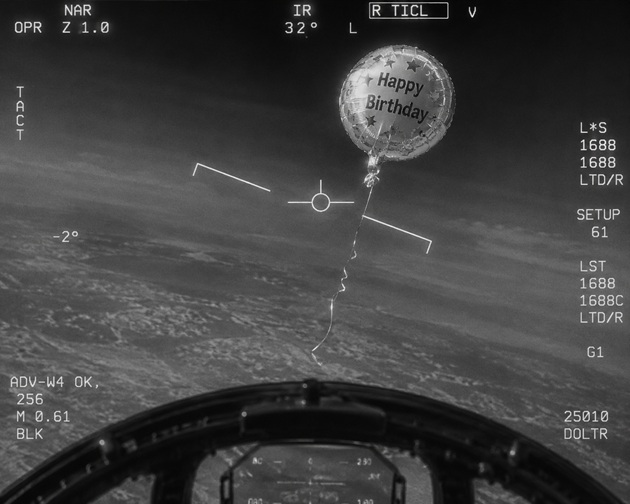
On a recent visit, my mother asked me what my thoughts were on those declassified UFO videos the United States government released. You know the ones, grainy, green-tinted, dramatic and supposedly the definitive proof that E.T. is playing tag with our Navy jets.

It’s a fair question. After all, nothing spices up a news cycle quite like the possibility that we’re not alone.

My default answer to this question always points back to my 3I/ATLAS article, where I previously explained that while the universe is big, this isn’t our ride. The short answer for these government tapes? Interesting, sure. Significant? Not even close. Lower your expectations.

That may sound disappointing. Humanity has spent decades preparing emotionally for the arrival of extraterrestrials. We were promised towering motherships over major cities, inscrutable monoliths and at least one dramatically lit briefing room where a nervous general says, “Mr. President, they’ve arrived.”

Because here’s the part that tends to get lost between cable news segments and TikTok deep dives: the scientific community has already had a go at these videos and unlike the breathless speculation that preceded them, the explanations are decidedly earthly.

The blurry infrared footage turned out to be common terrestrial phenomenon. Science can be rude like that. There’s nothing like a scientist to turn your pulsing rave into a badly lit high school biology lecture.

While military analysts were apparently scratching their heads and looking for the nearest tinfoil hat, the scientific community did what it does best: ruined the party with actual data. Scientists methodically dismantled these claims with the unbridled enthusiasm of a tax auditor.

That ominous, star-shaped UFO defying physics? A parachute flare distorted by the camera system. That eerie red orb menacingly navigating a wind farm? A balloon. It turns out the footage doesn’t prove the existence of extraterrestrials. It mostly highlights how unfamiliar the average person and, terrifyingly, sometimes even trained military personnel are with complex atmospheric, optical and climatic phenomena.

The short answer remains the best one: don’t get excited. These aren’t the aliens you’re looking for.


The Deep Mystery of Area 51

Of course, no discussion of UFO mythology is complete without mentioning the Mecca of UFO lore, Area 51, the spiritual homeland of conspiracy theories everywhere.

Ufologists love to point to this patch of desert as the cosmic DMV for recovered Roswell aliens and their spaceships. Somewhere beneath the Nevada desert, supposedly, the government has reverse-engineered a flying saucer while a terrified intern opened the wrong freezer door.

Maybe not. Science and history have a pesky habit of ruining a good sci-fi plot.

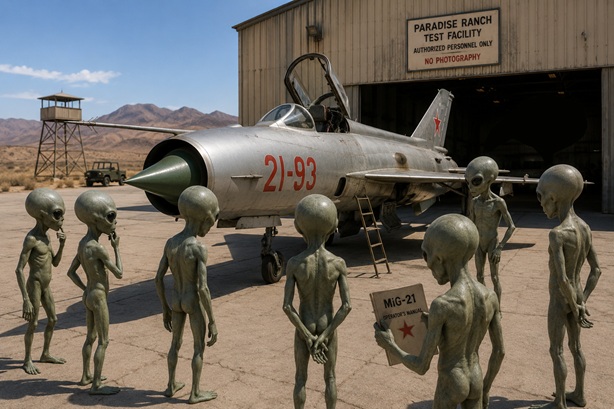
The site, originally nicknamed “Paradise Ranch”, because the military occasionally enjoys irony, was established in 1955 as a testing ground for the Lockheed U-2 spy plane. The purpose was straightforward: prepare to spy on the Soviets without getting shot down.

Later came the Lockheed A-12 Archangel, the Lockheed SR-71 Blackbird and the Lockheed F-117 Nighthawk, all aircraft so bizarre looking for their time that they probably caused half the UFO reports in the American Southwest by accident.

At one point the facility was also used to study captured Soviet aircraft like the Mikoyan-Gurevich MiG-21. And this means the government really was flying strange craft in the desert. In other words, it was a playground for cutting edge aviation, wrapped in extreme secrecy.

Inadvertently, the military’s intense paranoid security around cutting edge aviation birthed the modern UFO mythology. If you see a sleek, silent, titanium triangle flying at Mach 3 in 1960, you don’t think “Oh, that’s just Lockheed’s new budget item.” You think “Aliens!”

Except, it was all terrestrial aviation.

And honestly, that explanation is far more plausible than “the government successfully kept the biggest discovery in human history secret for eighty years.”

Because conspiracies have a math problem.


Why the Alien Conspiracy Collapsed Under Its Own Weight

The reality of Area 51 is far less X-Files and far more Office Space. No one actually lives out there on that vast, isolated, miserable salt bed eighty-some miles northwest of Las Vegas. The employees commute. And because the Air Force wanted to avoid a massive, conspicuous traffic jam in the middle of the Nevada desert, they set up an airline.

Every day, a fleet of unmarked, white Boeing 737s with a single red stripe down the side ferries workers, a mix of military personnel, engineers, contractors and analysts, back and forth from Harry Reid International Airport. Aviation enthusiasts jokingly call this fleet “Janet”, which stands for Just Another Non-Existent Terminal, which is objectively the funniest possible name for a secret airline. Janet operates roughly twenty flights a day, moving a workforce of about 2,000 commuters.

Why does this matter? Because we can use basic math to completely dismantle the alien conspiracy.

We can make a highly reasonable guess as to how many people have actually worked at Area 51. The average military posting lasts about three years. The average civilian contractor stays with their employer for four. Let’s be incredibly conservative and say the average tenure for everyone out there is four years.

The Janet flights have operated since March 1972. As of this year, that is 54 years of continuous operation. If you shuffle 2,000 people every four years over a 54 year span, you get roughly 13.5 cohorts. That means a grand total of 27,000 people have held a ticket on Janet Airlines to Paradise Ranch. Conservatively.

Twenty-seven thousand. That’s a small town.

Now here’s where things get awkward for the “they’re hiding alien bodies” crowd. Conspiracies have a fatal structural flaw: they tend to collapse under their own weight. And 27,000 human beings add a hell of a lot of weight. Conspiracies do not become more stable as you add tens of thousands of participants. They become drunken group projects. It’s a scaling problem.

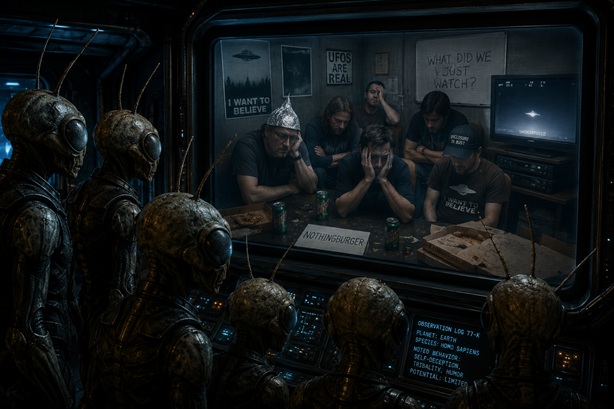
What are the mathematical odds that over the last half-century, every single one of these 27,000 employees, who get to spend their nights off drinking and gambling on the Las Vegas Strip, actually managed not to blab at a poker table?

Exactly zero.

Humans are notoriously terrible at keeping secrets, especially after a few drinks in a casino. Yet, out of 27,000 supposed witnesses, exactly zero people have staggered out of a poker game and announced, “Yeah, we’ve got a pile of gray, almond-eyed bodies and a fleet of flying saucers sitting in Bunker 3.” That silence is scientifically significant. It doesn’t prove top-tier military discipline. It proves the bodies and the fleet simply don’t exist.

And this is where the alien mythology runs face-first into statistics.

Because if thousands upon thousands of people cycled through a facility over decades and nobody produced verifiable evidence of alien spacecraft or non-human bodies, the simplest explanation is probably the correct one: there are no alien spacecraft and no non-human bodies.


The Tapes Behind the Curtain

And that brings us full circle back to the declassified UFO tapes.

Cool? Absolutely.
Extraterrestrial? No.

They’re real, in the sense that they depict unidentified phenomena. But “unidentified” is doing a lot of heavy lifting. It doesn’t mean alien. It means we didn’t immediately recognize it.

The prevailing scientific consensus remains stubbornly unchanged: while mathematical probability dictates that life almost certainly exists somewhere in the vast, unfathomable universe, there is absolutely no evidence in these files suggesting that alien technology has ever visited Earth.

The cosmos contains hundreds of billions of stars in hundreds of billions of galaxies. It would be profoundly arrogant to assume Earth won the biological lottery alone. But “life probably exists somewhere” is not the same statement as “they crashed in New Mexico and now the Air Force is hiding E.T. behind a keypad door.”

Those are very different claims requiring very different evidence.

Scientists reviewing these videos consistently point out that most of the footage highlights something deeply human: we are remarkably bad at interpreting unfamiliar atmospheric, optical and sensor phenomena in real time. Even trained observers can misinterpret what they’re seeing when dealing with glare, infrared distortion, parallax, weather effects or classified aviation technology.

The grand stage illusion of “don’t look behind the curtain” has resulted in a massive, crushing disappointment for hardcore ufologists. The universe is complicated enough without adding space tourists. The definitive proof of recovered spacecraft or non-human biology has been left holding nothing but grainy, unresolved, blurry footage of meteorological anomalies and weather balloons.

In the end, the grand reveal of the secret tapes turned into one of the largest collective shoulder shrugs in modern conspiracy culture. Hardcore UFO enthusiasts were hoping for a smoking ray gun: recovered spacecraft, biologics, definitive proof that humanity isn’t alone.

Instead they got grainy videos, unresolved dots and the crushing realization that many “alien craft” possess the advanced technological capabilities of a birthday party decoration drifting into restricted airspace.

Which, admittedly, is a far less exciting movie.

The aliens aren’t here. But hey, at least the Air Force built a really efficient commuter flight, something commercial airlines still haven’t figured out.

Posted in Science | Tagged , , , , , , , , , , , , , , , , | Leave a comment

How We Forgot the True Meaning of Decoration Day (and Found a Great Deal on Mattresses)

There was a time when Americans looked at a field full of graves and thought, “We should bring flowers.

Now we look at a three-day weekend and think, “Forty percent off patio furniture!

Progress is a mysterious thing. Mostly, it seems very good at forgetting what it replaced.

Memorial Day, once upon a time, was called Decoration Day, which sounds less like a federal holiday and more like something your grandmother organized with alarming seriousness. It emerged in the shattered aftermath of the American Civil War, when communities across the country, North and South alike, began decorating the graves of fallen soldiers with flowers, wreaths and flags. Not because Congress told them to. Not because there was a marketing campaign. Not because somebody needed to move inventory on inflatable pool flamingos before June.

People did it because grief demanded ritual.

The Civil War broke America in ways we still don’t fully understand. Roughly 700,000 people died, depending on which historian you ask and how good they are at arguing on podcasts. Entire towns lost most of their young men. Families received bodies weeks later, if they received them at all. Cemeteries multiplied across the country like scars.

And so ordinary citizens, many of them women who had lost sons, husbands, brothers, began the practice of tending graves and laying flowers for the dead. In the South, these became Confederate memorial traditions. In the North, Union remembrances. Eventually the traditions merged into what became Decoration Day, officially proclaimed in 1868 by General John Logan of the Grand Army of the Republic.

The idea itself was beautifully simple: pause and remember the cost.

That was it.

No appliance sales. No “Doorbuster Blowout Freedom Extravaganza.” No pickup trucks in commercials hauling fifty-seven flags while a gravelly voice tells you financing has never been more patriotic.

Just remembrance.

And honestly? There’s something profoundly American about the original concept. Not the chest-thumping version of patriotism we sometimes package for television audiences, but the quieter kind. The kind where a nation acknowledges that citizenship has a price tag and somebody else already paid it.

The old observances were solemn affairs. Cemeteries filled with families dressed in black. Veterans marched in slow processions. Church bells rang. Speeches were given, not to celebrate war, but to mourn it. Decoration Day was less “USA! USA!” and more “Dear God, let us never do this lightly again.

Which, of course, is why modern America eventually converted the occasion into Boat Weekend.

This isn’t entirely surprising. Americans have a remarkable talent for turning meaningful traditions into opportunities to buy snack foods in bulk. Thanksgiving became Black Friday with cranberry sauce. Christmas became an endurance sport sponsored by Amazon. And Memorial Day gradually evolved into the ceremonial beginning of summer, complete with hot dogs, beer coolers and the annual rediscovery that your grill has been living outside uncovered since October.

To be fair, none of this is inherently evil.

People gathering together is good. Families having cookouts is good. Swimming pools opening is good. The invention of the hamburger is arguably one of humanity’s finer achievements. Nobody is demanding we spend Memorial Day wandering barefoot through cemeteries reciting funeral dirges while a lone bugler plays “Taps” in the distance like a Ken Burns documentary.

But somewhere along the line, we stopped holding the two ideas together.

Because Memorial Day was never intended to celebrate war. It was intended to remember the dead. Specifically, the dead who never got to come home and enjoy the freedoms we casually burn through every day like propane at a backyard barbecue.

That’s the uncomfortable tension sitting quietly underneath the picnic table this holiday.

The people we honor on Memorial Day never got a long weekend. They never got retirement. They never got to complain about airport security, argue on Facebook, refinance their mortgage or discover the exquisite disappointment of assembling patio furniture from Costco instructions, translated through seventeen languages and mild cruelty.

Their lives simply stopped.
And the country they left behind promised not to forget.
That promise matters.

Not in some aggressively performative way. You don’t need to drape yourself in forty square feet of flag fabric and post inspirational eagle memes online. The dead are probably not checking social media for engagement metrics.

Memorial Day asks for something much smaller and much harder: A moment. Just a moment.

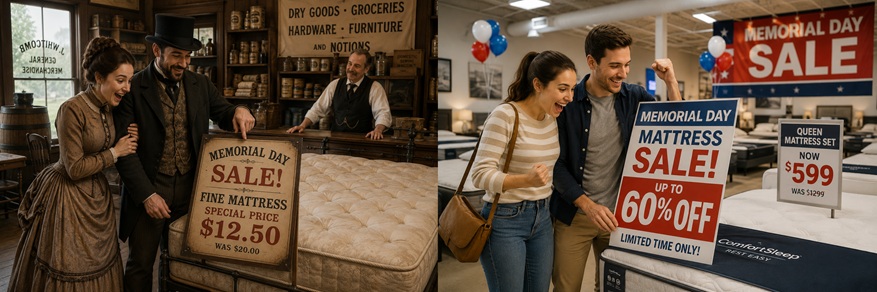
Do you really think the men buried beneath those white stones imagined their sacrifice would eventually become a clearance event for sectional sofas? It’s difficult to imagine anyone at Antietam thinking, “At least someday this will help move inventory on queen-size pillow tops.” It’s hard to believe that these men gave up their lives so you could brag about getting a mattress set and a bed frame, with headboard, at a deep discount.

Probably not. And that’s the ask.

A pause before the burgers hit the grill. A thought during the parade. A visit to a cemetery. A flag placed quietly near a headstone. A recognition that freedom is not self-sustaining machinery humming along on its own. It is maintained, repeatedly and imperfectly, by generations of people willing to sacrifice for strangers they will never meet.

That realization should humble us a little.

And perhaps that’s what we’ve really lost. Not the flowers. Not even the solemnity. We lost the ability to sit still with sacrifice long enough to feel uncomfortable about it.

Decoration Day understood discomfort.

It emerged from a nation still bleeding. The flowers placed on graves were not patriotic decorations in the modern sense. They were acts of grief. Human beings trying desperately to impose tenderness onto horror. It was America acknowledging the cost of surviving itself.

That feels worth remembering.

So yes, enjoy the barbecue. Open the pool. Laugh with your family. Eat the slightly overcooked hot dog. Argue about baseball. Fall asleep in a lawn chair while your uncle explains how he could totally rebuild a transmission if he had the time.

But maybe also take sixty seconds somewhere in the middle of all that noise. Because remembrance was the whole point in the first place.

Because before Memorial Day became the unofficial start of summer, it was a nation standing quietly among rows of graves with flowers in its hands, trying very hard not to forget the people buried beneath them.

Posted in Culture, Holidays, Retail | Tagged , , , , , , , | Leave a comment

Take the Extra Minute: Search and Rescue as a Tourist Recovery Service

Every Memorial Day the mountains fill with hikers, campers and road-trippers eager to escape the city and start summer outside. And every Memorial Day search and rescue teams quietly brace for impact, because the patterns of who gets into trouble are remarkably predictable.

Despite the stereotypes, search and rescue is not just rescuing reckless thrill-seekers dangling from cliffs. A large percentage of missions are remarkably ordinary people who made ordinary mistakes in an extraordinary environment.

Many of those calls involve visitors from out of state. Not because tourists are careless, but because the mountains operate by rules they’ve never encountered before. The Rockies are brutally effective at exposing environmental ignorance.

A hiker from sea level may have no concept of what 12,000 or 14,000 feet actually feels like. Dry mountain air dehydrates people long before they realize they are in trouble. Afternoon thunderstorms can evolve from blue skies to lightning and hail in under an hour.

And perhaps most dangerous of all is the psychological trap: “I flew all this way. I have to finish.”

Search and rescue teams see this constantly. When we analyze who we rescue, a clear divide emerges: out-of-state visitors are usually rescued due to environmental unfamiliarity. Locals are usually rescued due to environmental complacency.

A visitor starts a 14er well after sunrise instead of before dawn. They ignore the building clouds because the summit is “so close”. They push through dizziness because they paid for the trip months ago and it was expensive. They continue upward despite nausea, dehydration or altitude sickness because turning around feels like failure.

The mountain does not care how expensive your plane ticket was. It doesn’t care if you reach the summit. In fact, the mountain is completely indifferent to the outcome.

If you are heading into the mountains this weekend, whether you just hopped off a plane or you’ve lived in the foothills for twenty years, here is a tactical breakdown of how your background changes your risk profile and how to #TakeTheExtraMinute to avoid a rescue.


The Tourist Trap: When Vacation Overrides Judgment

Colorado’s fourteeners are particularly good at humbling people.

For tourists, the biggest threat isn’t a lack of athletic ability. It’s a lack of geographic humility. When you fly across the country to bag a 14er, you bring a hidden psychological baggage with you: The Destination Trap. Because you spent money on flights, lodging and gear, you feel immense pressure to summit, often ignoring glaring red flags that a local would use as an immediate cue to turn around.

One of the most dangerous misconceptions tourists bring to Colorado is believing physical fitness protects them from altitude. It doesn’t. Elite athletes still get altitude sickness. At sea level, a fit person may hike ten miles without issue. At 14,000 feet, that same person can suddenly experience:

  • The Invisible Thief (Altitude Sickness): Flatlanders frequently underestimate what starting a hike at 9,000 feet and ascending to 14,000 feet does to the human body. Altitude sickness isn’t just a headache. It impairs judgment, destroys coordination and can rapidly progress to debilitating conditions like AMS (Acute Mountain Sickness) and HAPE (High Altitude Pulmonary Edema).
  • The Flash Dehydration: The air at high elevation is incredibly dry, meaning your sweat evaporates instantly. You don’t realize how much fluid you are losing until you are already dizzy, cramping and experiencing cognitive decline.
  • The Afternoon Lightning Rule: Tourists often assume storms behave the way they do back home, but in the Rocky Mountains, summer storms are a daily clockwork event. Tourists look at a clear blue sky at 9:00 AM and assume they have all day. By noon they are trapped above treeline on exposed rock as a lightning-producing cell forms directly overhead. Mountain weather is violent and fast.

And the problem compounds because visitors often mistake altitude sickness for simple fatigue. They think, “I just need a break.” What they actually need is to descend immediately.

Every year, hikers are caught above treeline because they started too late, stayed too long or believed they could “beat the storm”. Lightning does not care about optimism.


The Local Trap: Familiarity Becomes Overconfidence

Locals, meanwhile, tend to get rescued for entirely different reasons. They like to shake their heads at tourists hiking in flip-flops, but local complacency is often far more dangerous and significantly more expensive to resolve.

People who recreate in the mountains every weekend slowly normalize risk. The terrain loses its novelty and, consequently, its perceived threat. Trails become routine. Exposure becomes familiar. Terrain that would terrify a visitor becomes “just another Saturday”.

Locals don’t get rescued because they ran out of water on a casual trail. They get rescued because they pushed deep into technical remote backcountry terrain, underestimated a route or assumed “I know this area well enough to skip the extra gear.”

That confidence often pushes locals farther into:

  • The “I Know This Trail” Illusion: Locals often leave the heavy layers, the first-aid kits and the satellite messengers at home for a “quick afternoon lap” on familiar peaks. But a broken ankle on a remote boulder field doesn’t care that you’ve hiked the trail ten times before.
  • High-Exposure Thresholds: Because locals are comfortable with scrambling, they are more likely to push into Class 3 or Class 4 terrain without protection, leaving zero margin for error if a handhold breaks or loose scree gives way.
  • The “Spring is a Lie” Avalanche Risk: Memorial Day looks like summer in the city, but at elevation, the snowpack is undergoing massive thermal stress. Locals pushing deep into couloirs or high-alpine basins are highly susceptible to wet slab avalanches or breaking through fragile snow bridges over rushing snowmelt streams.

When a local gets into trouble, it rarely looks like a simple walk-out. It usually involves a complex, multi-agency technical rescue.

They are broken femurs three miles into a scree field. Avalanche burials deep in winter terrain. Technical rope evacuations after a climbing fall. Mountain bikers injured far beyond vehicle access.

The irony is that locals often know exactly how dangerous the environment is. They just believe experience will protect them from it.

Sometimes it does.
Sometimes it doesn’t.


The Common Thread: Human Nature

Tourists and locals make different mistakes, but they usually fail for the same reason: they stop objectively evaluating risk.

Tourists become emotionally committed to the destination. Locals become emotionally committed to their confidence. Both ignore warning signs telling them it’s time to turn around.

And search and rescue exists in the space between those decisions and the consequences that follow.


The #TakeTheExtraMinute Safety Briefing

Whether you’re visiting the mountains for the first time or recreating in them every weekend, there are some rules you should keep in mind.

The Tourist Safety Mandates:

  • The 12:00 PM Hard Turnaround: If you are not off the summit and heading back toward treeline by noon, turn around. No exceptions. The mountain will be there tomorrow. Your cardiac rhythm might not be if lightning hits the peak.
  • Acclimatize for 48 Hours: Do not land at the airport and attempt a 14er the next morning. Give your body two full days at moderate elevation to adjust its oxygen transport.
  • The Hydration Scale: Drink double what you think you need and carry electrolyte replacement. If you aren’t urinating frequently, you are losing the battle against dehydration.

The Local Safety Mandates:

  • Ditch the “Fast and Light” Obsession: Never let your familiarity with a route dictate your emergency kit. Always carry a headlamp, an extra thermal layer and a space blanket, even on your backyard trails.
  • The Satellite Baseline: If you are stepping off a well maintained trail into a boulder field, talus slope or technical ridge, a dedicated satellite messenger (like a Garmin inReach) should be active on your pack.
  • Expect the Complex Rescue: Understand that if you break a leg in a technical couloir, you are asking 20 to 30 volunteers to risk their lives rigging rope systems to haul you out. Your safety choices directly impact our safety margins. And that rescue won’t be fast. You may be packaged like a burrito for two days.

For everyone, the basics are the same:

  • Tell someone your route and expected return time.
  • Carry offline navigation, extra layers, a headlamp and a first-aid kit.
  • Watch for dehydration, lightning, fatigue and loss of judgment.
  • Turn around early if conditions change or you are behind schedule.
  • Match the trail to the least experienced person in your group.


The Ultimate #TakeTheExtraMinute Message

The mountains don’t care where your driver’s license came from.
They don’t care if you trained all winter or booked the trip six months ago.
They don’t care if you’ve climbed the route twenty times before.

The mountains punish ignorance and overconfidence with the same indifference.

That’s why the best search and rescue mission is the one that never happens.

So this summer, whether you’re a tourist chasing a bucket list summit or a local heading into familiar terrain, #TakeTheExtraMinute to reassess conditions, check your gear, hydrate and ask yourself one simple question: “Am I making decisions based on reality or commitment?” And remember that your extra minute looks different depending on your zip code:

  • If you’re visiting: Take the extra minute to check the weather forecast for the peak, not the town, and give yourself permission to turn around if your body is struggling with the air.
  • If you’re a local: Take the extra minute to pack the layers you think you won’t need, double-check your communication gear and respect the high-alpine terrain like it’s your first time seeing it.

Because the mountain only cares about the difference once it’s too late.

Friction in the backcountry is inevitable, but catastrophe is preventable. Prepare for the mountain you are actually standing on, not the one you wish was there, because whether you flew a thousand miles or drove twenty minutes to get to the trailhead, the best rescue is the one that never has to happen.

Posted in Adventure, Search and Rescue | Tagged , , , , , , , | Leave a comment

The Beautiful Risk of Chasing a Difficult Dream

Sometimes the “rockstar” jobs pay surprisingly little.

Not the literal rockstars, mind you. The ones who make it to stadium tours on private jets usually do just fine. I mean the professions that people grow up romanticizing. The careers where passion is supposed to compensate for instability. The fields where everyone entering believes they will somehow become one of the few who break through.


The Playing Field

We live in a world of sobering statistics.

I read not long ago that the average lawyer makes around $100,000 per year. That sounds respectable until you realize how much education, debt, competition and stress often accompany the profession. You have to become a “super lawyer” before the truly eye-watering salaries appear.

Real estate is another example. There are reportedly more licensed real estate agents than there are home sales in a given year. That means a lot of people carrying business cards with smiling headshots are fighting over a relatively fixed number of opportunities. Many make no money at all.

In music, that reality can feel even harsher. The average professional musician earns about $60,000 annually and while most enter school with stars in their eyes, the traditional safety net is often a competitive race for a public school teaching position. Very few music students set out with the explicit dream of “herding” rambunctious fifth graders. They dream of the stage.

It’s a dog-eat-dog world out there.

And strangely enough, that’s what gives me hope.


A Shining Light

A friend of mine recently shared that his daughter had been admitted into a master’s program in music at a prestigious music conservatory. I’ve never actually met her, but if social media is any indication, her father has documented her journey with the kind of pride only a parent can truly understand.

And honestly? He’s earned the right.

Music is one of the hardest professional roads a person can choose.

The public sees the glamorous edge of it: sold-out concerts, film scores, standing ovations, viral fame. What they don’t see are the thousands upon thousands of disciplined musicians practicing scales in tiny rooms for years while competing for a handful of elite opportunities.

If you pursue music professionally, the statistical odds are brutal. The average professional musician earns far less than most people imagine. Many extraordinarily talented performers end up teaching lessons, directing school bands or piecing together freelance work simply because the competition is relentless.

And there is absolutely nothing wrong with teaching music.

In fact, the world desperately needs good music teachers. Somewhere along the way, many of us learned to undervalue the people who quietly pass beauty, discipline and inspiration to the next generation. There is dignity in that work. There is meaning in it.

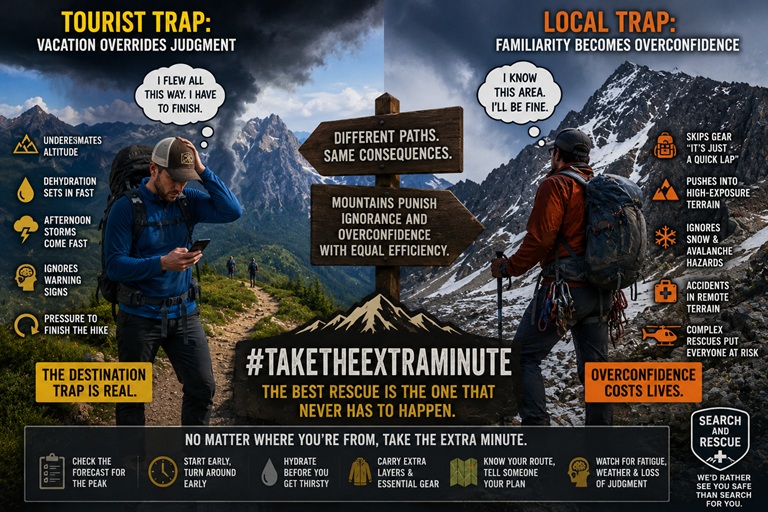
 

Climbing the Ladder

But let’s also be honest about human nature.

Very few eighteen-year-olds enter music school dreaming of patiently explaining quarter notes to energetic fifth graders after lunch period. Most walk in carrying stars in their eyes. They imagine Carnegie Hall, movie soundtracks, jazz clubs, orchestras, touring companies or recording studios. They want to become exceptional.

And occasionally, someone actually does.

That’s what struck me about my friend’s daughter.

To get where she is, she didn’t just play well. She conquered an elite gatekeeping system. Elite music programs often accept fewer than ten percent of applicants. The most prestigious ones hover closer to a razor thin five percent.

Her achievement isn’t just about a degree. It’s a monumental feat of resilience. Admission is not based on a standardized test and a clean résumé alone. These students push through years of grueling practice, survive high-stakes auditions, competitions, juries, live performance evaluations, years of disciplined refinement and the psychological weight of performance obstacles to claim their spot among the best. They are filtered again and again through environments where nearly everyone is talented. And most still never reach the level they once imagined.

By the time someone reaches that level, something important has already happened.

Even if they never become a household name, they have demonstrated an unusual combination of persistence, resilience, discipline and courage. They have already climbed a mountain most people never even attempt.

And here is the hopeful part.


Where the Hope Lies

The world often talks about difficult careers in extremes. Either you become wildly famous or you “fail”. Either you become the superstar attorney arguing before the Supreme Court or you drown in debt. Either you become a platinum-selling musician or you resign yourself to obscurity.

There are no guarantees of seven-figure superstardom, but reality is usually far kinder than that. There is a vast middle ground between superstardom and failure and it is filled with meaningful lives.

There is something deeply moving about a young person who looks at a “low-odds” field and says, “I will be the exception.” It’s a reminder that:

  • Elite skill creates its own gravity. When you are “amazingly good”, you break through the noise of the crowded middle.
  • Passion is a discipline, not just a feeling. Reaching this level requires a work ethic that will serve her in every corner of life.
  • Pride is earned. We should applaud those who refuse to settle for the “safe” path and instead do the hard work to make their “dream” path viable.

People who become truly excellent at difficult things often find ways to build stable, fulfilling careers even if they never become celebrities. The top tier of any profession tends to create its own gravity. Exceptional people attract opportunities. Not always glamorous ones. Not always massively lucrative ones. But real ones.

That young woman may or may not become famous. Statistically, probably not. But she has already separated herself from the pack in one of the most competitive artistic arenas on Earth. That matters. Tremendously.

There’s a very good chance she builds a strong and meaningful life in music because she has already demonstrated the ability to survive the gauntlet required to reach this point. The path ahead may still be difficult, but it is no longer hypothetical. She is already walking it.

To my friend’s daughter and to anyone currently in the “audition phase” of their life: keep going. The statistics are real, but they don’t account for the person who refuses to be a statistic. You’ve already done the impossible by getting this far and that is the best indicator that your future is in very capable hands.

We often forget that the world isn’t just reshaped by the single ‘breakthrough’ genius, but by the cumulative power of everyone in the top tier pushing the boundary of their craft just one percent further.


Finding Hope in the Pursuit of Greatness

And perhaps that’s the lesson.

My friend’s daughter may never be a household name, but her landing at a school of this caliber changes the math. By proving she is already in the top tier of her generation, the odds of her struggling for a foothold diminish significantly. She isn’t just “hoping” anymore. She is building a rock-solid path in a field she loves.

Sometimes success isn’t becoming the biggest name in the room.
Sometimes success is proving you belong in the room at all.

In a world overflowing with cynicism, algorithms and shortcuts, there is still something profoundly beautiful about someone dedicating themselves to mastery. About a young person willingly choosing discipline over convenience. About someone saying, “This matters enough to spend years becoming good at it.”

Even when the odds are hard.
Especially when the odds are hard.

Because the people willing to chase difficult dreams are often the same people who eventually reshape the world around them, not always through fame, but through excellence, persistence and love for their craft.

The statistics matter.
But statistics describe crowds.
Greatness is always personal.

The world is changed by people willing to pursue mastery long after practicality tells them to stop.

And honestly, that’s worth applauding.

Posted in Education | Tagged , , , , , , , | Leave a comment