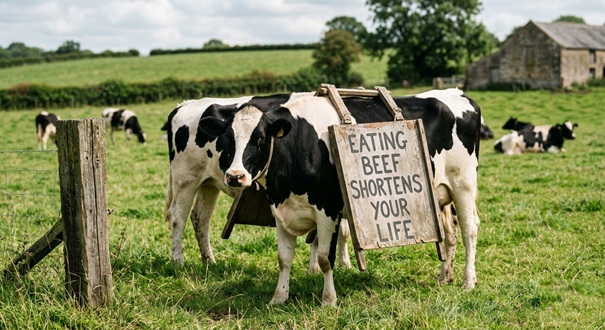
The Trouble with the Oxford Comma (and Other Style Wars We Pretend Matter)

It turns out my grammar makes purists twitch. If you didn’t notice anything wrong with my sentence structure, you’re probably a fairly normal person who slept through your high school English class. No judgment. Truly. Some of the happiest people I know have never once argued about punctuation.

But recently I was called out for not using the Oxford comma.

And here’s the uncomfortable truth: I don’t think heavy punctuation makes a person any more articulate. It just makes you more “punctuated”.

And while we’re stepping on sacred ground, I also don’t think indentation and spacing magically make poetry more profound, either, though with April being Poetry Month, I’ll revisit that particular brand of chaos in my next installment.

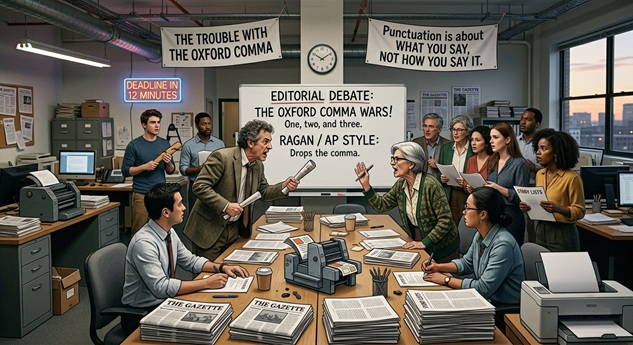
But today, we need to talk about the “Style Wars” and why people get weirdly tribal about it. Punctuation isn’t about what you say, but how you say it. In the world of professional writing, there are two major camps: the Bookish/New York Times Style (mostly Chicago Manual of Style) and the Ragan/Associated Press (AP) Style.

On a most basic level, the Bookish style is literary and traditional. It challenges you by saying, “I own a fountain pen.” Ragan is journalistic and efficient. It’s the “we have a deadline in 12 minutes” style.

They’re not exactly enemies, but they definitely side-eye each other across the room.

The Key Deltas: Why the Fight is Real

The biggest (and pettiest) battleground is the Oxford (or Serial) comma, but the stylistic rift goes much deeper. Here is how the two schools usually square off:

Feature Bookish / NYT Ragan / AP
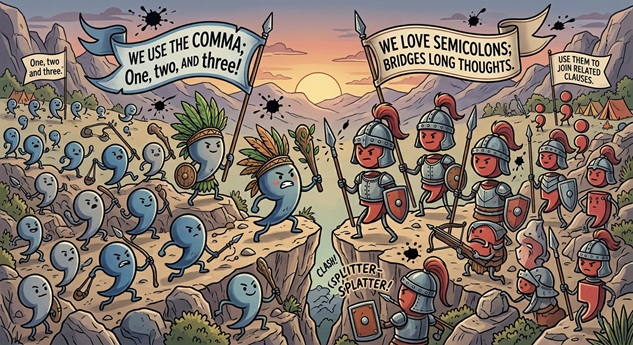
The Comma Uses the Oxford Comma (One, two, and three). Drops the final comma (One, two and three).
Semicolons Loves them; uses them to bridge long, complex thoughts. Avoids them. Better to just start a new sentence.
Dashes Uses the “em-dash”—with no spaces around it. Uses the “em-dash” — with spaces on both sides.
Numbers Spells out more numbers, especially in narrative writing. Numerals for 10 and above (save that space!).
Emphasis Uses italics for book titles and emphasis. Uses “quotes” or bold. No italics in the AP world.

Why the difference? It really comes down to intent. The Bookish style was designed for books and journals where precision and “slow reading” are the goals. It’s supposed to be like savoring a good meal. The Ragan/AP style was born on the loud, cramped floors of newsrooms. Every millimeter of ink costs money and every extra comma is a waste of capital. That ink quickly adds up. Ragan was built for speed, efficiency and saving the publisher a nickel on each page.
Then There’s … Whatever It Is I Do

My writing, if we’re being honest, is a bit of a stylistic mutt.

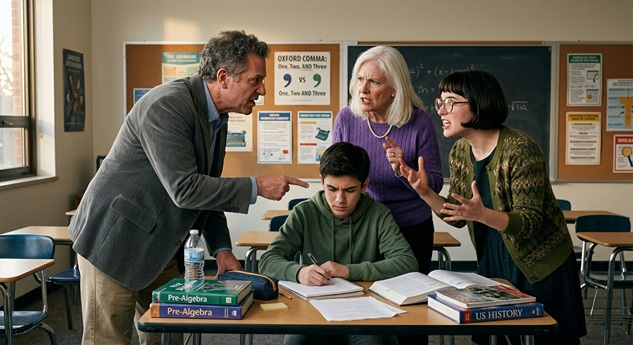
To make things more fun, my style is a quirky assortment of both Bookish and Ragan. It makes purists uncomfortable, but that’s how I grew up. I call it the Coyle/Anderson/Hayes Style, named after the gauntlet of teachers who hammered their specific brand of logic into my brain. Each had some strong opinions.

In my world, grammar isn’t a rulebook. It’s a seasoning. Here’s how we “modulate flavor” in the C/A/H style:

  • The Over-Literal Comma: To me, a comma in a list means “and”. When you write “red, white, and blue,” you’re actually saying “red and white and and blue.” It’s redundant. Pick a side: the comma or the word. Spit it out. Don’t stutter.
  • The Flavor Modulator: Commas are descriptive delimiters. “Bob, a tall lanky man, walked through the door.” If you want a fast story, just drop the appositive and you’ll have “Bob walked through the door.” But if you want color commentary? You drop in the “tall lanky man” between the commas. It’s like a parenthetical aside, but classier.  An appositive is comma delimited and can be removed without damaging the sentence.
  • The “But” Rule: The “but” almost always has a comma in front of it. “I wanted to go to the movies, but I had to finish my homework first.” It’s the breath you take before the excuse, because contrast deserves a pause.
  • Logical Punctuation: Quotes depend on what you’re quoting. This is where I really lose the purists. If I say, “The street fair was a ‘zoo’.” the period goes at the end of the sentence outside the ‘zoo’ quote. Why? Because “zoo” does not a sentence make. However, if my friend told me, “The street fair was a zoo.” the period belongs inside the quote. If it’s a full sentence, it earns its punctuation. It’s logical, even if it makes an editor cry. You’re not punctuating a zoo. You’re punctuating the sentence that it is in.
  • The Title Toss-up: “The Trouble with the Oxford Comma” vs “The trouble with the Oxford comma.” This is “Title Case” versus “Sentence case”. One feels like a grand announcement, the other like a casual conversation. I want my titles to scream out loud! Bookish takes the title case. Ragan relaxes with sentence case. Same idea. Different tribes. Choose your fighter.
Survival of the Fittest (Grammar)

These differences didn’t appear out of thin air. They evolved from context:

  • Newspapers needed speed, clarity and efficiency
  • Books and essays prioritized tone, rhythm and voice
  • Teachers passed down their preferences like family recipes

What we’re left with today isn’t the one “correct” way to write. It’s a toolbox. And like any toolbox, the right tool depends on the job.

When you read my blogs, you’re seeing a digital archaeological dig. You’ll find a little Bookish/NYT, a little Ragan/AP and a whole lot of Coyle/Anderson/Hayes trauma, which I somehow survived through graduation, despite their wildly different rules.

Writing is personal. I learned that in my school paper days. I’ve come out the other side believing that the best style isn’t the one that follows the most rules. It’s the one that communicates the most clearly and in the most engaging way.

Writing styles aren’t cages. They are lenses. In the professional world there is always an editor who scowls and fixes your style of choice. In my life the editor is inspiration and you will catch that every now and again my style will slip, because a different English teacher whispers the rule in my ear as I write.

Whether you are a minimalist AP devotee or a maximalist Oxford Comma warrior, the goal is the same: communicate clearly.

You can use the Oxford comma.
You can reject it.
You can mix styles like a grammatical DJ.

But if your reader:

  • understands you
  • enjoys the ride
  • and doesn’t have to reread every sentence

…you’re doing it right. It’s okay if your “quirky assortment” of style does its job.

At the end of the day, writing isn’t about commas, semicolons or whether your title capitalizes “with”. It’s about communication. And if your words land the way you intended, you’ve already won the war. Even if you lost the comma battle.

So, sorry to the person who called me out. I’m not missing a comma. I’m just modulating my flavor. And skipping the stutter.

Posted in Language | Tagged , , , , , , , , , , , | Leave a comment

The Quiet Evolution: Adapting to an AI World

I’ve recently been invited to participate in a transformation initiative at work. At a large company, opportunities like this don’t come from raising your hand. They come from being tapped on the shoulder. Senior leadership looks across the organization and division vice presidents handpick individuals they believe can help shape the company’s future.

By all measures, it’s an honor, a massive commitment and, frankly, the most exciting “second job” I’ve ever had. Being selected out of hundreds without ever applying is both humbling and energizing.

The initiative will require a couple of days each week through the end of the year, on top of my regular responsibilities, but it’s the kind of opportunity you don’t hesitate to accept. It’s not just more work. It’s a front row seat to change.

The Ubiquitous Wave

And change is exactly what this moment is about. The goal? To figure out how we navigate the massive wave currently hitting every shore on the planet: Artificial Intelligence.

We live in a world where everything has already changed multiple times over. The automobile reshaped distance. The computer reshaped productivity. The internet reshaped information. The smartphone reshaped daily life.

Now we’re on the cutting edge of the next wave: artificial intelligence.

Even if you consider yourself “a little Amish” and vow never to touch the stuff, it touches you.

AI is already woven into the fabric of our lives. It helps route our bank transactions, recommend what we buy, filter what we read and even decide which articles appear in our social feeds. If you found this blog through social media, there’s a good chance AI helped guide you to it.

AI is here. We aren’t escaping it, but more importantly, we shouldn’t want to.

Fear, Predators and Tools

Even if you never “use” AI directly, it uses you, quietly, constantly and pervasively.

There’s a natural reaction to that: fear.

Fear that AI will take over the world.
Fear that it will take jobs.
Fear that it will fundamentally alter the landscape of society.

I hear the whispers of fear as I walk the corridors of society. People worry about AI as if it’s an invasive species, a predator destined to take our jobs or turn our reality into a scene from The Terminator.

Some of those fears aren’t entirely unfounded. Some organizations will ruthlessly try to push the boundaries of what this technology can do while cutting costs. But it’s important to ground the conversation in reality.

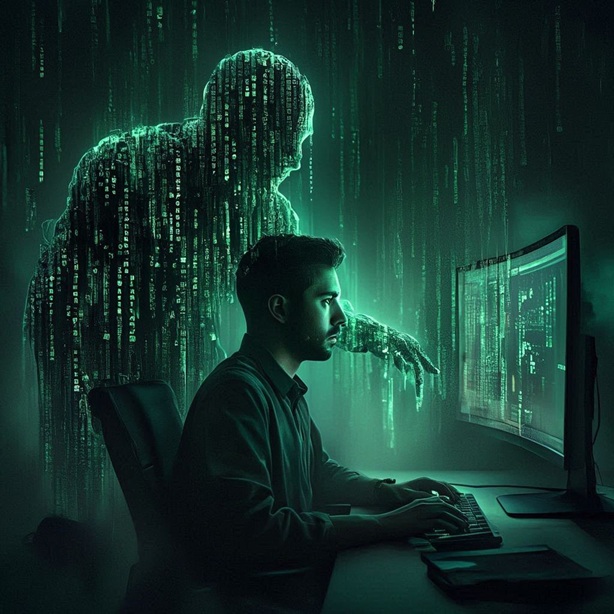
AI is not an invasive species or a predator. It’s a tool. Its purpose isn’t to replace the craftsman. It’s to take the burdensome repetitive sanding off our plates, so we can focus on the architecture, on more complex, creative and meaningful work. We aren’t headed for The Matrix. We’re not heading toward science fiction dystopias. We’re not building sentient overlords. What we are building is leverage.

History Doesn’t Repeat, But It Rhymes

Still, the idea of AI as an invader is worth examining. Not literally, but philosophically. Mark Twain once observed that history doesn’t repeat itself, but it does rhyme. To understand AI, we have to listen to the stanzas of the past.

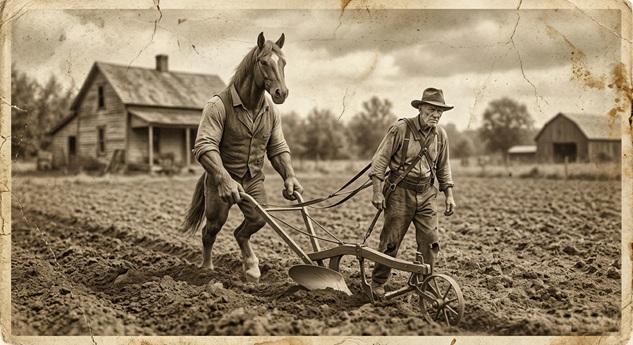
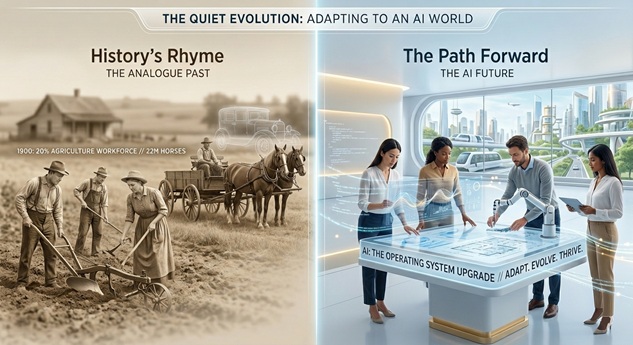
In 1900, there were nearly 22 million horses in the United States, serving a population of just over 76 million people. Horses powered transportation, agriculture and commerce. Then the automobile arrived.

Today, horses haven’t disappeared, but they’ve been recontextualized. There are now fewer than 7 million of them in a country of more than 340 million people. Yet we don’t see herds of displaced homeless horses wandering suburbia. Society adjusted. The role of the horse changed. Horse breeders are no longer aiming to pull your wagon. Most people who own horses do so out of their love for the animal.

The same pattern appears in human labor. Around 1900, roughly 20% of the U.S. workforce was employed in agriculture. Today, it’s less than 1%. Yet we don’t have a permanent 19% unemployment rate. Those workers didn’t vanish. They weren’t “deleted”. They transitioned. Entirely new industries, which didn’t even have names in 1900, emerged to absorb them.

This is the rhythm of progress.

The Blade of the Cutting Edge

So what does that tell us about AI?

It tells us that this isn’t an extinction event. It’s an evolution.

Some individuals and some companies will be early adopters, standing on the very blade of the cutting edge, being willing to experiment, to fail and to learn quickly. They are all in to buy back their time.

Others will take a more cautious approach, watching from a distance and learning from the early mistakes, waiting to see how many people bleed on that edge before they step forward.

And some, for whom change is simply too heavy a lift, will resist outright, hoping the wave passes them by.

It won’t.
Change never asks for permission.

And while change is uncomfortable, sometimes even disruptive, it is also where growth happens. Some people chase it. Some adapt to it. Some fight it. But eventually, everyone is touched by it.

What’s important to remember is that we are not being replaced by technology. We are augmenting ourselves with it.

In many ways, this moment feels less like replacing the human and more like upgrading the operating system we run on. The capabilities expand. The interface changes. The expectations evolve.

The Scars of Stagnation

History is full of reminders of what happens next.

Companies that adapt thrive. Those that hesitate struggle, then fail. Companies that fail to recognize the “rhyme” of history leave scars on the landscape.

Sears built an empire on catalogs, only to be overtaken by digital commerce driven by Amazon. Blockbuster dominated physical media distribution and owned the weekend, only to be replaced by Netflix’s streaming binge nights. Eastman Kodak actually invented the digital camera, but lacked the faith to kill their own film business.

Transformation doesn’t wait for comfort. It rewards action in a world where inaction is equivalent to where the dinosaurs are today. Inaction doesn’t pause the game. It removes you from it. Analog thinking can not survive in a digital world.

The Path Forward

Today, we stand on the edge of another shift, one that rhymes clearly with the past. And for the first time, I’m not just observing it from a distance. I’ve been invited into the room where the questions are being asked and the answers are being shaped.

The world is changing and we have to change with it. We aren’t replacing ourselves. We are leveraging a new power to do things we previously didn’t have the “bandwidth” to imagine.

That’s both exciting and humbling. Amazing people fostered change ahead of me. Now I am offered an opportunity to guide our future path.

The world isn’t ending. It’s evolving.

AI doesn’t represent a break from history. It represents its continuation. Another tool. Another shift. Another moment where we are asked to rethink how we work, how we create and how we define value.

The difference this time is the speed.

Change that once took decades now unfolds in years, sometimes months. That compresses not just the timelines, but also the decisions. It demands that individuals and organizations become more intentional, more adaptable and more willing to experiment.

We don’t need to have all the answers today. In fact, we won’t. But we do need to ask better questions:

  • Where can this technology remove friction?
  • Where does human judgment still matter most?
  • How do we combine the strengths of both?

The future won’t belong to AI alone and it won’t belong to those who reject it outright. It will belong to those who learn to work alongside it, who understand its strengths, respect its limitations and use it as a multiplier rather than a replacement.

We are not spectators in this transition. We are participants.

And like every transformation before it, this one will reshape the landscape, not by erasing what came before, but by building on top of it.

The question isn’t whether the world will change.

It’s whether we’re willing to change with it.

As I step into this transformation initiative, I’m not looking for ways to make us “robotic”. I’m looking for ways to make us more human by offloading the tasks that robots do better than we ever can. We are fundamentally embedded in this new reality. We can’t go back to the horse and buggy and honestly, why would we? The road ahead is faster, smarter and wide open. We’re building our tomorrow.

Posted in Leadership, Technology | Tagged , , , , , , | Leave a comment

Falling Forever: Why 200 Miles Up Feels Like Zero Gravity

After I wrote about losing gravity, I was asked a great follow-up question: if the Earth is a massive object warping the fabric of spacetime and pulling everything toward it, why do astronauts appear like they’re floating in a giant expensive fish tank?

If the curvature of space is still there, shouldn’t they just … “thud”?

The answer is surprisingly simple and a little counterintuitive.

The Perpetual Miss

The secret to weightlessness in Low Earth Orbit isn’t that gravity has “run out”. Objects in Low Earth Orbit aren’t free from gravity at all. In fact, gravity at the altitude of the International Space Station is still about 90% as strong as it is on the ground.

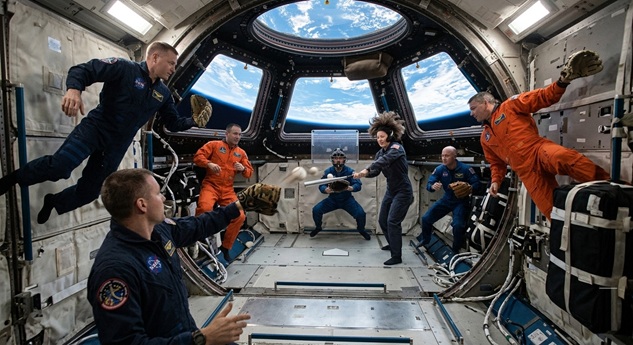
What’s really happening is that the spacecraft, the astronauts and everything inside the space station are in a perpetual state of freefall.

Imagine throwing a baseball. It travels in a curved path and eventually hits the ground. Now imagine throwing it faster. It travels farther before hitting the ground. If you could throw it fast enough, about 17,500 miles per hour, the curve of the ball’s fall would match the curve of the Earth beneath it. It would keep falling, but never hit the ground. That’s orbit.

The International Space Station isn’t “defying” gravity. It is falling toward the center of the Earth at a terrifying speed, but it’s moving forward so quickly that the surface of the planet curves away beneath it at the same rate that gravity pulls it down. The result is a continuous fall around the planet. In effect, the space station is moving forward so fast that it consistently misses the planet.

And because everything inside the station is falling at exactly the same rate, the “weight” disappears. It’s the ultimate “glitch” in the system: weightlessness is just the feeling of falling without ever hitting the floor. This is a critically important element in understanding how orbital mechanics work.

It is also important to stress that while you may be weightless in space, you are not massless and your mass still influences things in your immediate vicinity. Think of it this way: the Earth is effectively weightless as it orbits the Sun. It is in a perpetual freefall towards the sun, but moving quickly enough to keep missing it.  At the same time, Earth’s mass is not being negated. Even while “weightless” in its fall around the Sun, the Earth still exerts gravity on you as you walk across its surface.

Straight Lines in a Crooked Universe

From a relativity perspective, this is even more elegant. In curved spacetime, objects in freefall are actually following the straightest possible path available to them, what physicists call a geodesic. So paradoxically, an orbiting spacecraft isn’t being “forced” into a curved path. It’s following the natural geometry of spacetime shaped by Earth’s mass.

When you are on the space station, you aren’t “turning” in a circle because of a “pull”. You are traveling in the straightest possible path through a universe that has been bent into a curve. To the astronaut, they are flying straight. To the universe, they are circling the drain of Earth’s gravity well. That’s a perspective through the lens of relativity.


Faking It: The Vomit Comet

Of course, while we can’t turn gravity off, we’ve gotten pretty good at faking its absence and its presence. You don’t have to go to space to experience this “glitch”.

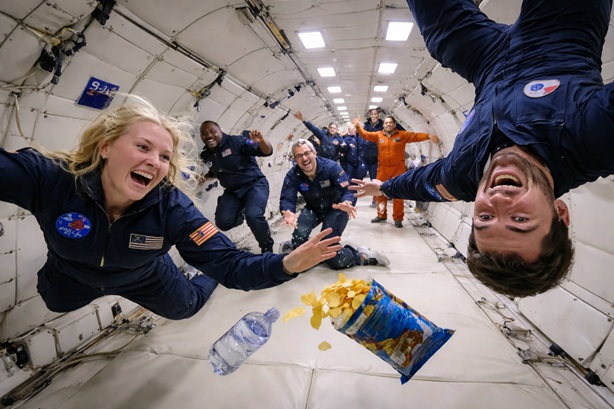
NASA’s famous KC-135A aircraft, affectionately known as the “Vomit Comet”, creates brief periods of weightlessness by flying in a carefully controlled arc. The plane climbs steeply, then noses over into a downward trajectory that matches the acceleration of gravity. For about 20 to 30 seconds at a time, everyone inside is in freefall together, just like in orbit. For those few seconds, you have successfully faked the absence of gravity. Loose objects hover, water forms floating spheres and your inner ear starts filing complaints.

At least until the plane pulls up, at which point gravity introduces itself again with twice the normal force as you enter the next arc. And thus the name “Vomit Comet”.

Do It Yourself: The Spin Cycle

On the flip side, if we can “fake” a loss of gravity, we can also “fake” its presence. We do this through centrifugal force using acceleration, particularly through rotation.

  • At the county fair:
    If you’ve ever been on a spinning amusement park ride, the “Gravitron”, where you’re pressed against the wall, you’ve experienced artificial gravity firsthand. As the ride spins, your body wants to continue moving in a straight line, but the wall forces you into a circular path. Your body resists that change and that resistance feels like a force pressing you outward.
  • In the lab:
    In a laboratory, centrifuges use this same principle to separate materials by density, spinning samples so that heavier components are forced outward more strongly than lighter ones.
  • Among the stars:
    In space the same idea has long been proposed for interstellar spacecraft. Theoretical generational spacecraft designed to travel to distant worlds will likely be massive rotating cylinders. By spinning the ship, the “outward” push would create a simulated gravity on the inner hull, allowing humans to live for decades without their bones turning into sponges from the lack of traditional gravity.

None of these are gravity in the traditional sense. It’s acceleration. But to your body, it feels the same.

The Invisible Anchor

All of this leads to a strange realization that gravity is both one of the most powerful forces shaping our existence and one of the most invisible.

We don’t see it. We don’t hear it. We rarely even think about it. But it defines “up” and “down”, anchors our bodies, governs the motion of planets and quietly orchestrates everything from the fall of a dropped cup to the orbit of the Moon. The one exception might be a falling cat, but that’s an article for another day.

We often think of gravity as burden, especially when hiking up a hill or climbing stairs, but gravity is critical to our existence. It keeps our atmosphere from leaking into the vacuum of space. It keeps our blood from pooling in our heads. It provides the “resistance” our bodies need to stay strong.

Gravity is the invisible inhale and exhale of the cosmos. We don’t notice it until it changes, yet it is the silent hand that ensures the “straight line” we are traveling today stays firmly attached to the ground beneath our feet. Like breathing, gravity is so constant that it fades into the background.

We can simulate its absence. We can imitate its effects. We can ride along its curves through spacetime. But we can not escape the fact that gravity is not just something we experience. It’s something we are fundamentally embedded within.

And perhaps that’s the most humbling part: even as we reach into space, we’re still falling, just very, very carefully.

Posted in Science | Tagged , , , , , , , , , , , , , , , , , , , , , , , | Leave a comment

Spring is a Lie (at Elevation)

The Deception of March in the Mountains

The trailhead is a tease. It’s 15°C (60°F) at the parking lot. The birds are chirping. The pavement is dry. The sun is warm. The air is soft. The snow is melting. It feels like the season has changed. You’re tempted to head up in shorts and a light hoodie.

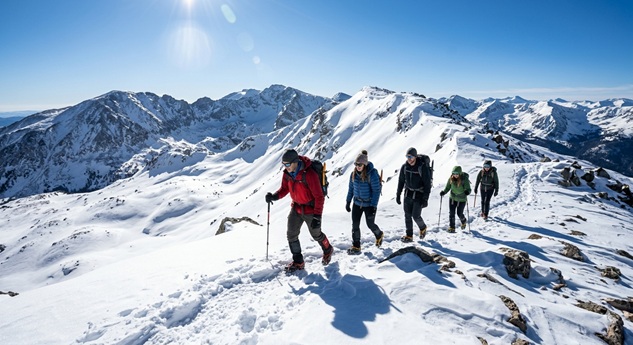
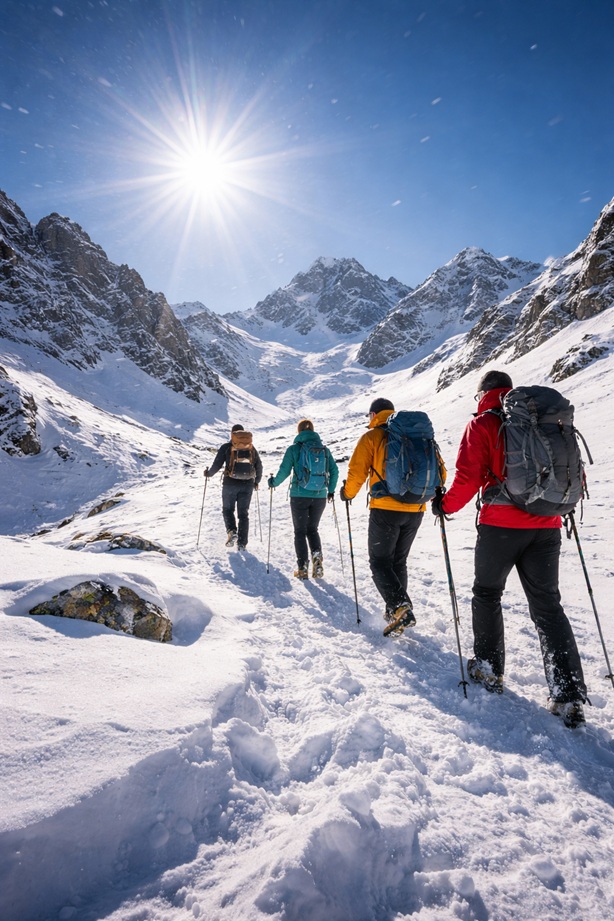
But the summit is a different season. In the high country, March isn’t the start of spring. It’s often the peak of winter. At elevation, March is often the snowiest month of the year. What you’re seeing isn’t spring. It’s an illusion, one that evolves the higher and farther you go.

“Spring” at altitude is a suggestion, not a fact. This is where people get caught between seasons. This is where plans fall apart. Before you head out, #TakeTheExtraMinute to respect the transition.

The Illusion of the Trailhead

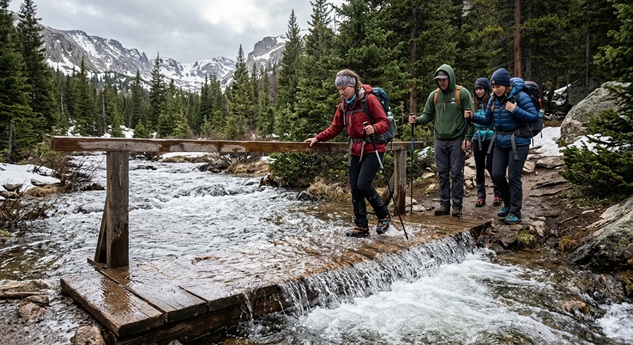
March is a month of contradictions. Dry ground turns to mud. Mud turns to ice. Ice gives way to collapsing snow. A single hike can hold all three and conditions change faster than your plan.

As you climb, the trail will morph through distinct stages:

  • The Muck: Deep, trail-damaging mud that wants to wrestle your boot. Or take you down if you’re not willing to part with your footwear.
  • The Glass: Refrozen meltwater that turns trails into skating rinks. February’s Invisible Edge is still waiting for you to make a mistake.
  • The Trap: “Rotten” snow that looks solid, but collapses into exhausting post-holing. Standing hip deep in wet snow is akin to being in quicksand, with a bonus risk of hypothermia.
  • The Slide: Rapid afternoon warming creates “wet slides”. That sunny 2:00 PM warmth is exactly when avalanche risk can spike.
  • The Torrent: By the afternoon, a stable morning crossing becomes a cold, fast moving hazard.

And as daylight stretches longer, people push farther, often past the point where conditions allow a safe return.

The Sun That Tricks You

The same sun that makes the trailhead feel like spring is working against you higher up. At elevation, sunlight reflects off snow with intensity:

  • Snow blindness can develop in hours without eye protection
  • Severe sunburns happen even on cold days
  • Rapid warming destabilizes the snowpack

That warming creates one of March’s most dangerous threats: wet avalanches.

Heavy snow, combined with rising temperatures, can trigger slides that move slower than winter avalanches, but with immense weight and force. Imagine being overtaken by wet concrete.

Avalanches don’t need steep terrain to be deadly. They just need enough slope and enough weight. And warm afternoon timing.

And March is all about timing.

When Winter and Spring Collide

March conditions don’t fail all at once. They stack.

  • Snow melts, then refreezes
  • Trails soften, then collapse
  • Slopes warm, then release
  • Water rises as snowpack drains

What starts as a manageable hike can quietly evolve into something technical and then dangerous.

Most people don’t notice the shift until it’s already happened.


Real Risk, Familiar Pattern

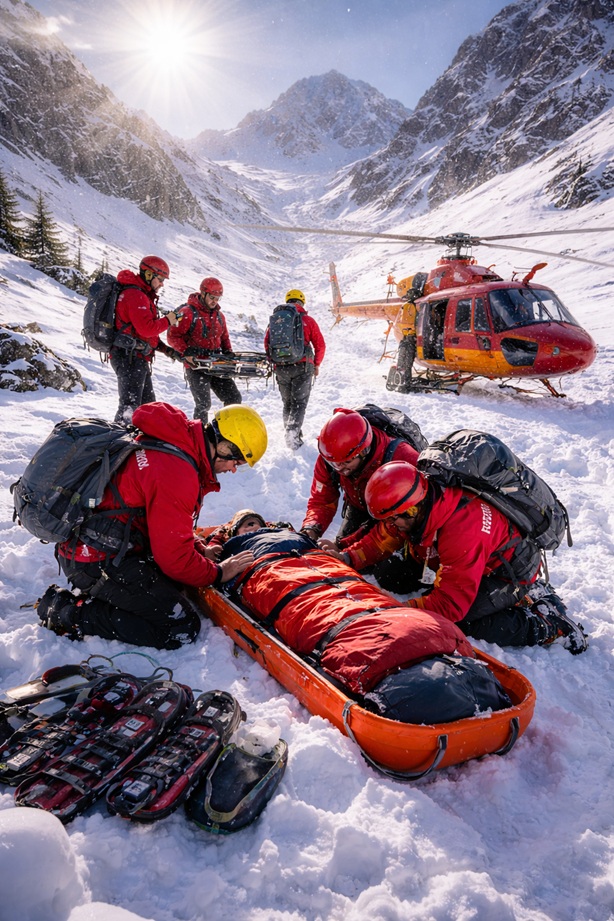
March rescues rarely begin in storms. They begin in blue skies.

A light pack. A confident start. A plan built for one season in a place experiencing two.

Then something changes:

  • Traction becomes necessary
  • A crossing becomes impassable
  • A slope becomes unstable
  • The return becomes uncertain

And suddenly, the easiest part of the day is behind you.

How to Stay Ahead of the Season

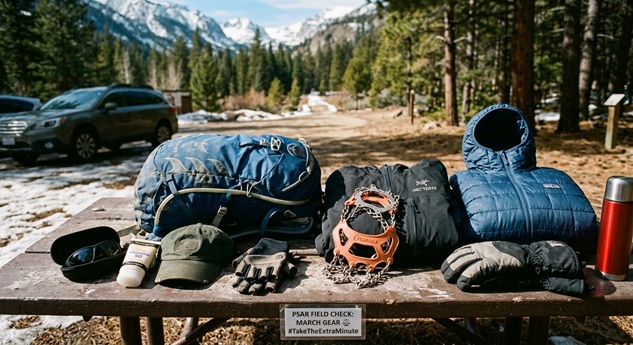
#TakeTheExtraMinute to pack for two seasons

  • Bring layers for both warmth and exposure. Step into the shade and it can feel like a freezer.
  • Carry traction. Even if you don’t start with it, elevation will deliver ice and on a 15° slope that can be a killer.
  • Don’t forget eye protection and sunscreen. Even when it’s cold, radiation will take its toll at 10,000 feet.
  • Check the “wet slide” factor. If the snow feels like mashed potatoes, it’s losing its bond. Check the avalanche forecast before you step off the pavement.
  • Plan the turnaround. March rescues don’t usually start in a blizzard. They start in beautiful weather that turns sour. If the water crossings are swelling or the snow is collapsing, have the “ego strength” to head back. There’s no shame to challenging the mountain on a different day. The mountain is playing for keeps.

Always respect the shift. Pay attention to changing surface conditions, be cautious near slopes and drainages in the afternoon, turn around when the terrain starts making decisions for you, because once conditions dictate your movement, you’ve already lost control of the situation. Once the first domino falls, the rest cascade and managing your safety quickly becomes a downward spiraling battle.

The Weight of the Extra Minute

March doesn’t announce its danger. It hides it in comfort, in sunshine, in the false confidence of a dry trailhead.

But the mountain hasn’t changed seasons yet. When you take a moment to reassess, to add a layer, to pack traction, to check the slope or to turn around, you’re not overreacting. You’re adapting.

And adaptation is what keeps small problems from becoming large rescues. Because if it’s dangerous for you, it’s dangerous for search and rescue, too.

#TakeTheExtraMinute, because March doesn’t make up its mind.

At 10,000 feet spring is a suggestion. Conditions are reality. Plan for both and don’t let a sunny trailhead lure you into a winter rescue. The Invisible Edge didn’t disappear. In March, it just moved.

Posted in Adventure, Search and Rescue | Tagged , , , , , , , , , | Leave a comment

Hug Your Cat Before It Plots Against You Day

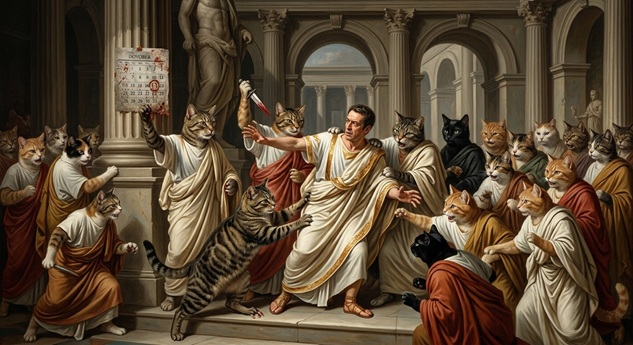
Last November, amidst the noble surrender of Chaos Never Dies Day, I stumbled upon a dark whispered necessity, a holiday so vital to the survival of the human race, that I promised to research it further, the “Hug Your Cat Before It Plots Against You Day”.

Today is March 15th, the Ides of March, and history has given us many warnings.

Empires rise.
Empires fall.
Trust is misplaced.
Daggers appear where you least expect them.

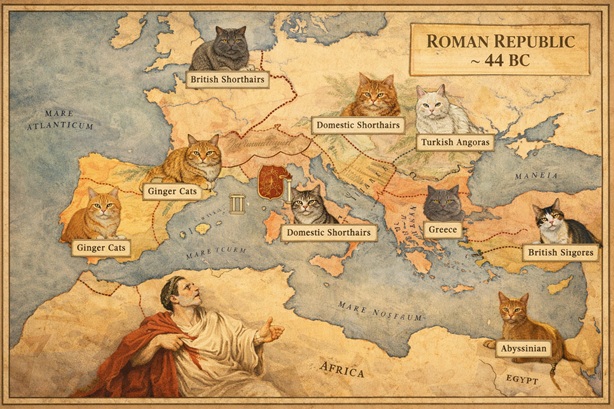
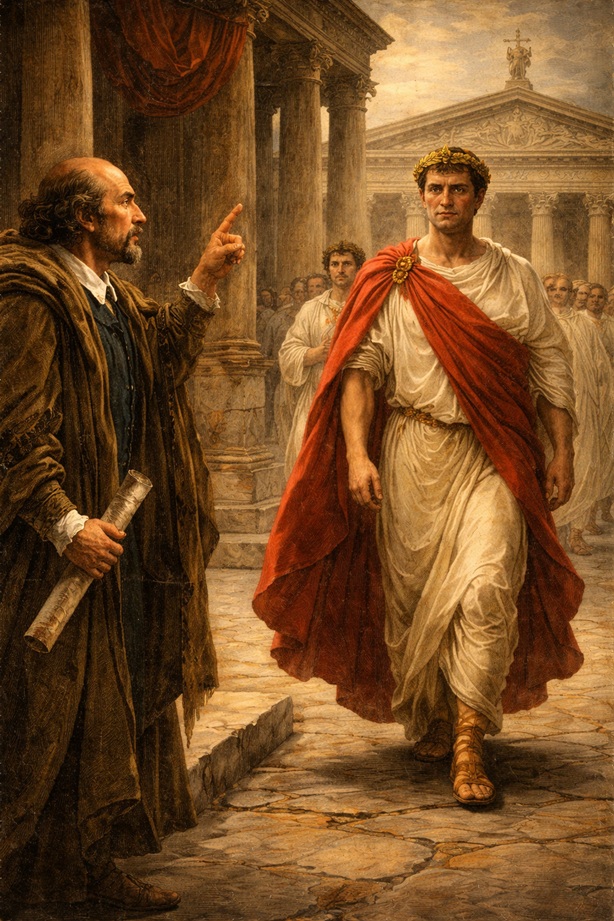
On the morning of March 15, 44 BC, Julius Caesar walked into the Roman Senate after reportedly being warned to “Beware the Ides of March”. The warning came from a mysterious soothsayer in Julius Caesar by William Shakespeare, immortalizing one of history’s greatest lessons in betrayal.

Caesar ignored the warning. An accomplished general, he lacked situational awareness on his home turf. He also, notably, did not have a cat. If he had, he might have recognized that specific, unblinking stare from the corner of the Senate floor, the one that says, “I have calculated the exact force required to knock your empire off the table just to see it shatter.

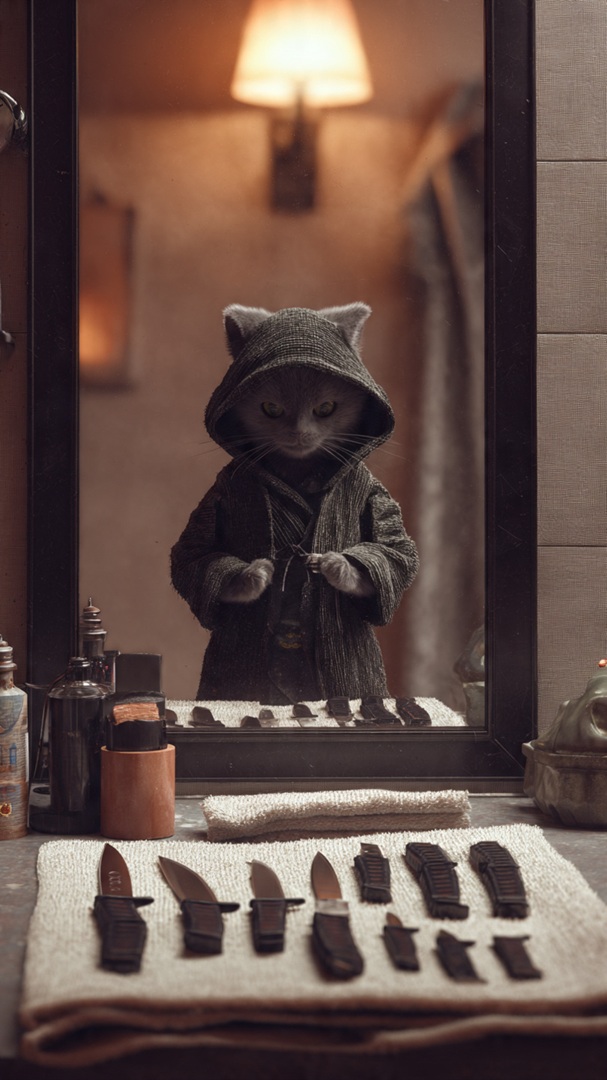
Shortly thereafter, a group of Roman senators led by Marcus Junius Brutus and Gaius Cassius Longinus carried out what may be history’s most famous workplace stabbing incident.

According to tradition, Caesar’s final words to Brutus were the now legendary “Et tu, Brute?”

And with that, the Roman Republic collapsed into chaos.

What Does This Have to Do With Your Cat?

Everything.

Because if history teaches us anything, it is this: The most dangerous conspiracies come from the people sitting closest to you. Or, in this case, the creature currently sitting on your keyboard.

History is full of betrayals, but none are as fluffy or as calculated as those occurring within your own living room. Today is the day we acknowledge the feline conspiracy and attempt to thwart it with the only weapon they haven’t figured out how to use against us yet: Unsolicited Physical Affection.

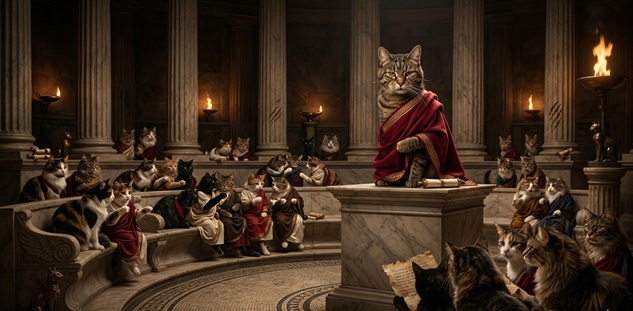
Cats are the Roman Senators of the animal kingdom. They are draped in natural togas (of fur), they demand to be fed peeled grapes (or the expensive canned tuna equivalent) and they spend 20 hours a day in “executive session” (napping), quietly drafting legislation for your downfall.

The Ides of March carries a heavy cultural weight. It is the day the plot comes to a head. It is the day of the long game payoff. And let’s be honest, your cat has been playing the long game since the day you brought home the laser pointer and mocked its dignity.

Your cat watches you.
Studies you.
Judges you.

Every day you wake up and assume the small furry creature in your home is merely a pet. But consider the evidence:

  • It stares at you for long periods without blinking.
  • It knocks objects off tables while maintaining eye contact.
  • It disappears in the dark of the night for unknown meetings.
  • It walks across your chest at 3:17 AM like a tiny, judgmental elephant.

These are not the behaviors of a harmless companion.

These are the behaviors of a master strategist.

The Historical Pattern

Let’s examine the timeline.

In ancient Rome, Julius Caesar rose to power surrounded by allies, advisers and men who called him friend. Meanwhile, historians estimate tens of thousands of cats were living in Rome at the time.

Coincidence? Possibly.

But cats have always been suspiciously well positioned near centers of power.

Consider Cleopatra VII Philopator, the last active ruler of Egypt. Egyptian culture famously revered cats, linking them to the goddess Bastet.

Did the cats influence political decisions? We can not prove they did.

But we also can not prove they did not.

And that is exactly how a good conspiracy theory works.

With an estimated 600 million cats worldwide today, the “Senate” has never been larger. The odds of a coordinated strike are currently 1:1. It’s not a matter of if, but when.

The Modern Cat: Nature’s Little Killing Machine

Your household cat has inherited thousands of years of political instincts.

It understands several key strategies:

  1. Psychological dominance
    The cat will sit in the one chair you intended to use.
  2. Resource control
    The cat will demand food despite the bowl being visibly full.
  3. Strategic patience
    The cat will pretend to sleep while secretly tracking your every move.
  4. Environmental disruption
    The cat will knock over a glass of water to test your reaction time.

This is not random behavior.

This is strategic field testing.

The Ides of March Problem

March 15 is a dangerous day. The air is thick with historical betrayal energy. Even two thousand years later, the Ides of March echoes with the whisper of conspiracies, senate plots and the unmistakable sound of sandals running away from a crime scene.

Cats are extremely sensitive to this kind of atmosphere.

They feel it in their whiskers.
They sense opportunity.
They begin … planning.

The Warning Signs

You may think your cat loves you. That’s exactly what Brutus wanted Caesar to think about their friendship. Look closer at the symptoms of an impending “Feline Ides”:

  1. The “Slow Blink” of Deception: They tell you it’s a sign of trust. In reality, it’s a calibration of their targeting sensors.
  2. The Middle-of-the-Night Parkour: They aren’t “playing”. They are testing the structural integrity of your shins and the speed of your tactical response while you are in a deep sleep.
  3. The “Gift” on the Rug: That headless mouse wasn’t a present. It was a formal notification. A memento mori. A way of saying, “This could have been your favorite pair of slippers. Or your thumb.”


The Preventative Solution: How to Observe the Holiday (Safely)

The goal of Hug Your Cat Before It Plots Against You Day, the most important holiday of the modern era, is simple: Strategic Appeasement. You are buying time. You are interrupting their train of thought with a sudden, overwhelming surge of love.

The concept is simple. On March 15, you interrupt the cycle of betrayal before it begins.

Step 1: The Approach
Approach the target while they are distracted by a sunbeam. This is the only time their defense systems are at 40% capacity.

Step 2: The Grand Pronouncement
Look them in the eye and whisper, “Et tu, Fluffles?” This lets them know you are onto the conspiracy. It establishes a psychological advantage.

Step 3: The Hug
Initiate a firm, but respectful, three second embrace. Do not exceed three seconds. Beyond that, you move from “appeasement” to “act of war” and the claws of the Republic will be unleashed.

Step 4: The Offering
Immediately follow the hug with a high-value snack. This serves as a formal tribute to their greatness. It suggests that you are still a useful servant who is far more valuable alive and functional than as a mere source of post-apocalyptic protein.

To reinforce, look your cat directly in the eyes and say: “We don’t need to repeat Rome”. This moment of diplomacy may delay the inevitable uprising. Perhaps not forever. But long enough.

Warning Signs of an Active Plot: The Great Cosmic Staredown

As we learned on Chaos Never Dies Day, the universe is a mess, entropy is winning and your laundry has already surrendered. But while the rest of the world falls apart, your cat is the only thing maintaining a rigorous, albeit terrifying, sense of order.

By hugging your cat today, you aren’t just showing affection. You are participating in a grand historical tradition of trying not to get stabbed in the back by those you feed and house.

So, go forth. Find your feline overlord. Give them a squeeze. Thwart the plot.

Because the only thing scarier than the Ides of March is a cat who hasn’t been hugged enough to forget that they are technically a top tier apex predator living in a house with a person who still can’t find their car keys.

But if your cat exhibits any of the following behaviors on March 15, the conspiracy may already be underway:

  • Sitting silently behind you on the couch
  • Gathering other cats near a window
  • Slow blinking during political discussions
  • Knocking a statue off a shelf

Especially if the statue resembles Julius Caesar.


Final Thoughts

History remembers many things about the Ides of March.

The fall of a leader.
The betrayal of friends.
The rise of an empire.

But history has overlooked one critical lesson: every conspiracy can be delayed with a well timed hug.

So on March 15, take a moment, find your cat, pick it up, hold it close, because somewhere in the back of its mind, a tiny voice may already be whispering: “Et tu, human?

Because history has proven one thing beyond all doubt: no empire survives a cat that has decided it’s time to knock something off the table.

And it would be wise, very wise, to hug your cat before the meeting of the Senate begins. Beware the Furs of March. And keep the treats coming.

Posted in Culture, Holidays, Society | Tagged , , , , , , , , , , , | Leave a comment

Friday the 13th: The Double Feature

Last month, we survived the first Friday the 13th of the year. We checked our blind spots, avoided ladders and perhaps felt a smug sense of relief when the clock struck midnight as the calendar rolled over to the 14th.

Congratulations! Unfortunately, the calendar immediately scheduled a sequel.

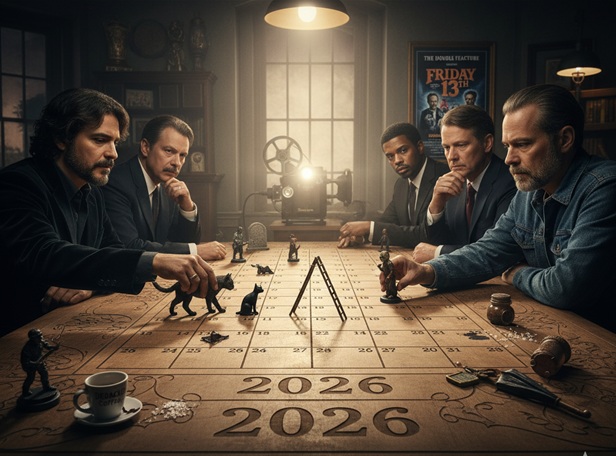
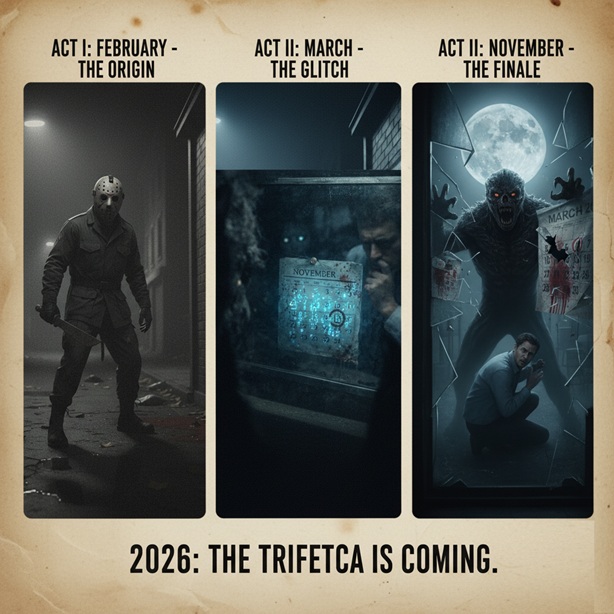
Welcome to the Friday the 13th: The Double Feature. Because 2026 is apparently being run by a tired simulation programmer who forgot to refresh the cache, we are currently living through a literal repeating loop. If the February edition was about the probability of a trifecta, this March edition is about the terrifying beauty of symmetry.

Let’s talk about superstition, statistics and the calendar’s favorite horror franchise.

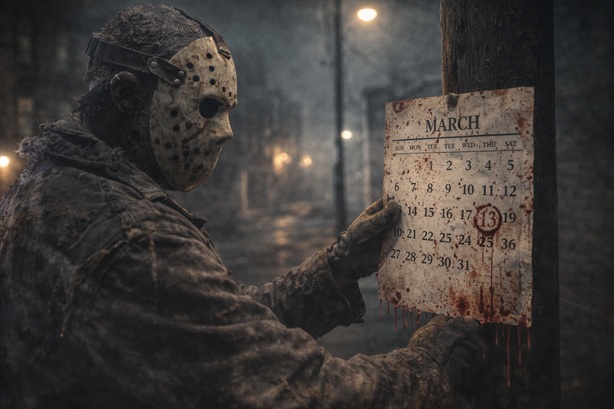
March 13th arrives only four weeks after our first bout, giving us the extremely rare February–March Friday the 13th bookends. Apparently, the Gregorian calendar decided that once wasn’t quite spooky enough and opted for the cinematic approach: if the audience likes it, release Part II immediately.

Welcome to what might best be described as the four week glitch conspiracy.

The February–March Double Tap

Two Friday the 13ths in consecutive months are not common. They only appear when the calendar lines up under very specific conditions.

In fact, March 13th is not merely close to February 13th. It is exactly four weeks later.

Same weekday.
Same number.

Same suspiciously ominous vibes.

The universe didn’t just give us a second spooky day. It mathematically mandated it. If you felt a sense of déjà vu waking up this morning, don’t call a medium. Call a mathematician.

And February 2026 was a “Rectangular Month”. It started on a Sunday and ended on a Saturday, creating a flawless 4×7 block of time. When a month is that geometrically perfect, it forces the subsequent month to be an exact twin. Every date in February shares the same weekday as the date exactly 28 days later in March. Mathematically speaking, we are currently trapped in a “Four-Week Glitch”.

If February’s installment was about probability, the rare three-Friday-the-13th trifecta of 2026, March’s installment is about something even creepier: alignment.

The Four-Week Glitch in the Matrix

The reason for this eerie repetition lies with February. In non-leap years, February has 28 days, which happens to be exactly four weeks. Not “approximately four weeks”. Not “about four weeks, depending on lunar alignments”. Exactly four weeks.

That means the entire month is a perfect loop: every date lands on the same weekday as the corresponding date four weeks earlier.
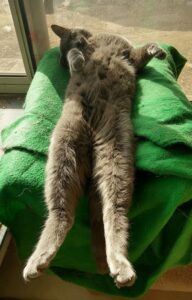
So when February 13th fell on a Friday, the calendar quietly set a timer and said: “See you again in exactly 28 days.” March 13th is therefore not a new event. It is a carbon copy.

If the universe were a piece of software, we would say the system failed to refresh the cache.

Spooky? Perhaps.
Deterministic? Absolutely.

The Calendar’s Secret Rhythm

Even stranger, this February–March pairing follows a repeating rhythm in the Gregorian calendar. If you think Jason Voorhees is persistent, try escaping the Gregorian Repeat Pattern. Calendar mathematics is the real horror franchise. It’s predictable, unstoppable and loves a good trilogy.

The pairing of February and March Friday the 13ths isn’t just a random occurrence. It’s governed by the 11–11–6 year cycle. This specific “Double-Tap” rhythm happens in intervals of 11 years, then another 11, then 6, in the Gregorian calendar pattern, before resetting. We are currently in the center of a celestial gears grinding session that ensures your anxiety stays in high-definition.

For most practical purposes, the Gregorian calendar repeats its weekday patterns every 28 years. This means that the exact “horror show” we are experiencing in 2026 is a digital ghost of 1998 and will return to haunt our descendants in 2054. These are trilogies you can not escape.

Somewhere, deep in the gears of the calendar system, a quiet little metronome ticks: 11… 11… 6… repeat.

And that sounds less like mathematics and more like the soundtrack to a horror movie.

The result is that events like the February–March Friday the 13th double feature periodically return, like a horror villain who refuses to stay defeated.

You may think you’ve escaped, but the calendar remembers.

The Trilogy Nobody Asked For

The most unsettling part of this story is that February and March are only the opening acts.

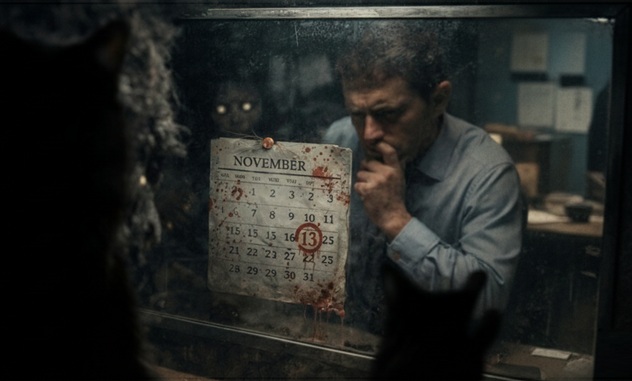
Here is the final jump-scare: The Rule of November. Due to the way the months are weighted, any non-leap year that features the February-March “Double Tap” is mathematically cursed to provide a “Final Boss” in November.

Think of it as the “Rule of Three” in screenwriting. March is our “Act II”, the moment where the protagonist (you) realizes the threat isn’t over. November will be the climax of the 2026 Trifecta. Your “Boss Fight”.

So 2026 isn’t merely giving us a sequel. It’s delivering a full Friday the 13th trilogy.

February was the origin story.
March is the glitch-in-the-matrix sequel.
November will be the dramatic finale.

Hollywood couldn’t have planned it better. Three times you face the curse.

The Real Horror

For centuries people have treated Friday the 13th as an omen of bad luck, mysterious forces and supernatural interference, but the truth is far more unsettling.

There is no curse.
There is no cosmic conspiracy.
There is only the quiet, relentless machinery of calendar mathematics.

And unlike a horror villain, math can not be defeated by running upstairs or hiding behind the couch. It will always catch up to you. Exactly four weeks later. It’s unrelenting destiny. It’s fate.

So, if you thought today was just a weird coincidence, remember, the math doesn’t lie and the calendar doesn’t have a “delete” key. We are just 28 days into a 28 year loop and the simulation is running perfectly.

Come back in November and we’ll see how the trilogy ends, if it actually does. We’re going to tempt fate.

Posted in Culture, Holidays, Society | Tagged , , , , , , , , , , | Leave a comment

International Women’s Day: Beyond the Bouquet

If you look at International Women’s Day on social media, you might think it’s a holiday for bouquets, compliments and being told how nurturing you are. The world pauses, at least briefly, to recognize half of humanity, often with flowers and a box of chocolates. It’s like Mother’s Day, but for all women.

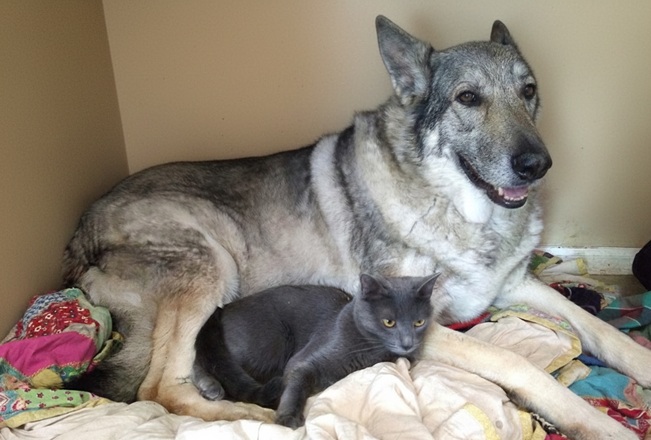
When I look around my own life, that doesn’t compute. My mother is a woman. My wife is a woman. My sister is a woman. (And, yes, for the record, so are my German Shepherd and my Russian Blue, though the jury is still out on whether the cat contributes professionally. It’s a good thing that she’s cute.)

Women are a pretty important part of my life.

The women in my life, the human ones at least, aren’t nurturing fixtures or arm candy. They’re not decorations. They’re not supporting characters in someone else’s story. They are professionals. They are experts. They are problem solvers. They are leaders in their fields, navigating complex challenges with skill and intelligence. I celebrate them today not just for who they are to me, but for what they accomplish in the world.

And that is exactly what International Women’s Day is about: moving beyond the bouquet and focusing on the serious work of equity. For some people, the holiday passes quietly. For others, it’s a rallying point for progress, reflection and sometimes frustration about how far we still have to go.

Except for the cat, maybe. I’ve been waiting for the jury to come back with a verdict on her work ethic for years. She insists on falling back on her cuteness.

But humor aside, International Women’s Day exists for a reason and that reason stretches far beyond any one family.

Why International Women’s Day Exists

International Women’s Day didn’t start as a celebration. It started as a movement.

The roots go back to early-1900s labor protests, when women demanded rights many of us now take for granted: fair wages, shorter hours, safer working conditions, and the right to vote. It was, and remains, a call to action.

At a time when much of society considered women politically invisible, the movement insisted on something radical: women deserved a voice.

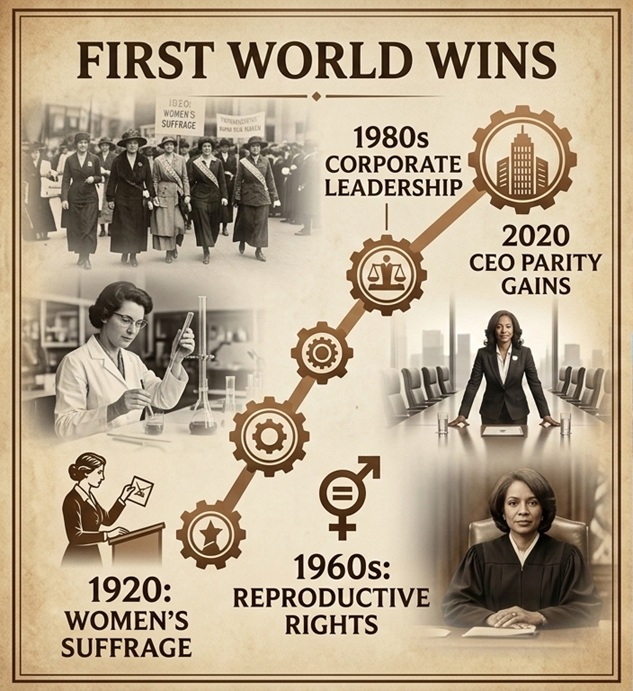
Over the past century, the progress has been profound.

Women gained the right to vote in many countries.
Women entered professions that were once closed to them.
Women became CEOs, scientists, astronauts and heads of state.

Figures like Marie Curie, Ruth Bader Ginsburg and Katherine Johnson helped reshape what leadership, intellect and perseverance look like.

And yet, the work is far from finished. International Women’s Day is still a global audit. We use this day to objectively measure where we are, what gaps still exist and what the concrete barriers are to full equality.

What Have We Actually Accomplished?

In many developed countries, the most visible changes have occurred in three areas:

Education

In much of the world today, women attend universities at rates equal to or higher than men. That shift alone has transformed medicine, law, science and engineering.

The women in my life are a perfect example. We have seen a massive, irreversible influx of women into leadership roles, STEM fields, medicine and entrepreneurship. This isn’t a novelty anymore. It is the new standard of competence.

Professional Leadership

Women now lead major companies, research labs and government institutions. Their presence changes the conversation about everything from workplace policy to innovation.

And in almost every nation, women now have the fundamental right to vote, run for office and own property. This is a history shattering change.

Cultural Expectations

Perhaps most importantly, expectations have evolved.

A girl growing up today is far more likely to hear that she can become a pilot, a surgeon or an engineer, not that she should stay within someone else’s narrow definition of possibility. Nothing is off limits!

These gains didn’t happen by accident. They came from generations of women who pushed forward when the door wasn’t open.

Sometimes they kicked it down.

By almost every measurable standard, we are living in the most equitable era for women that has existed so far.

The Work That Remains

But “better” is not the same as “equal”. The list of to-dos is still formidable. Despite the progress, challenges remain even in wealthy nations.

Women still encounter disparities in:

  • Pay equity
  • Leadership representation
  • Workplace harassment and discrimination
  • Access to childcare and family support systems
  • The burden of care

None of these issues are simple and none have universal solutions, but recognizing them matters, because progress rarely happens when problems are ignored.

International Women’s Day reminds us that fairness is not a destination we reached once and for all. It’s something societies have to maintain and improve continuously, because if we don’t, these gains will start to slip away. As the Red Queen says in Through the Looking-Glass, “You have to run faster and faster to stay in the same place.”

Looking Beyond the First World

The conversation becomes even more important when we look beyond affluent countries. We have to make sure our equity filter isn’t limited by our own zip codes. When we step outside of the “first world”, the definition of progress shifts dramatically.

For millions of women and girls globally, equality isn’t about the glass ceiling. It’s about the unyielding floor. The barriers facing women are far more fundamental.

Some girls still struggle to access basic education.
Some women can not legally own property or open bank accounts.
In some places, simply walking to school safely is not guaranteed.
Nearly two-thirds of the world’s illiterate adults are women.
And the most basic right is the right to life, a privilege some countries do not give to their women.

Organizations like the United Nations and global initiatives tied to the UN Women programs work to address issues such as:

  • Girls’ education
  • Maternal healthcare
  • Protection from violence
  • Economic independence
  • The right not to be forced into a marriage

These aren’t abstract policy debates. They affect the daily lives of hundreds of millions of people.

When we celebrate women’s achievements in prosperous societies, it’s worth remembering that many women around the world are still fighting for opportunities that others not only enjoy, but accept as a ubiquitous right.

What Support Actually Looks Like

So, how do we honor International Women’s Day? Supporting women doesn’t always mean grand gestures or speeches. And put the box of chocolates away.

Often it looks much simpler.

It means respecting expertise.

It means giving credit where it’s due.
It means recognizing talent and leadership when we see it.

In my own life, the women I know are not symbols or slogans. They’re professionals who work hard, make difficult decisions and solve problems every day.

They are doctors, engineers, teachers, managers and parents. They build careers and families. They carry responsibilities that matter.

They don’t need pedestal treatment.

They just deserve the same respect that everyone else does.

We honor this day by respecting the professionalism of the women around us. By acknowledging their expertise. And by recognizing that while the “cuteness defense” might work for my cat, real equity requires us to look past the superficial and commit to the hard ongoing work of breaking down barriers, both here at home and for every woman, everywhere.


A Simple Perspective

International Women’s Day ultimately asks a very straightforward question: Are we building a world where everyone has a fair chance to contribute?

If the answer is yes, we keep going.
If the answer is no, we keep working.

Because societies are stronger when they draw on the talents of everyone, not just half the population. Flowers are nice. But opportunity is better.

And if we’re being honest, the world would be a much poorer place without the women who shape our families, our workplaces and our communities. Even if one of them is a suspiciously lazy cat who has yet to prove she contributes anything besides cuteness.

Posted in Culture, Holidays, Society | Tagged , , , , , , , , , | Leave a comment

The Cheeseburger Constituency: Why Your Bathroom Scale Doesn’t Care How You Vote

I dread talking politics. In the current climate, saying “good morning” can feel like a partisan statement. No matter what I say, I risk offending half the room, and in a world where we’ve forgotten how to bridge the “Space Between Us”, that’s a heavy lift.

A friend recently sent me two links that were so statistically hilarious from a scientific perspective that I couldn’t resist writing about them.

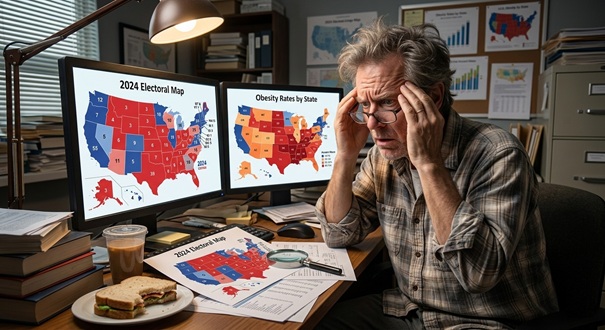
One link was to a freshly published article by Visual Capitalist mapping obesity rates across the United States. The other from Wikipedia summarizing the results of the 2024 United States presidential election.

On the surface, you can’t help but engage the idea. The most fit states (California, Colorado, Hawaii, Massachusetts, New Jersey, New York, Vermont) are all deep blue. Opposite them are the least fit states (Alabama, Arkansas, Indiana, Louisiana, Mississippi, Tennessee, West Virginia) and they just happen to be deep red. The numbers clearly dance together. Lined up, the maps just snap into place. But these are statistical averages, not personal judgments about individuals.

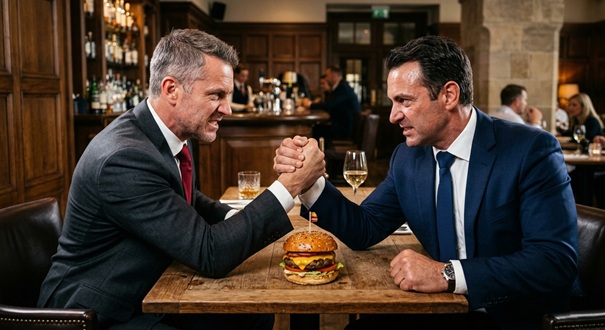
His conclusion? If a candidate wants to win, they should stop buying TV ads and start legislating (or de-legislating) McDonald’s. Forget the stump speech. Just manage the fries.

Fast food is just a convenient symbol here, not the sole driver of national health outcomes or votes, but the correlation creates a trail of questions.

On the surface, food in politics is a funny argument. It’s a hilarious punchline that’s waiting to be noticed by a late night comedian. And it carries heavy scientific humor. Not because it’s malicious. Not because it’s partisan. But because it’s such a clean textbook example of how the human brain desperately wants correlation to mean causation.

And that’s where things get interesting.

There is a deep universal desire for politicians to just shut up and do their jobs and the idea of “The Cheeseburger Constituency” is a great visual. But scientifically, we are standing at a dangerous intersection of politics and data. We have to ask the hard question: Is this causation or just a really weird correlation?

The Allure and Seduction

Our brains are “pattern-seeking missiles”. We love a good story. If rustling grass usually meant predator, you didn’t wait for a peer review. You ran.

So when we see that states with higher Republican vote percentages also tend to have higher obesity rates, our brains light up:

  • “Aha.”
  • “There’s something there.”
  • “That can’t be random.”

We’re gathering the low hanging fruit, fully convinced that we will not be taking a bite of the apple that Eve handed to Adam.

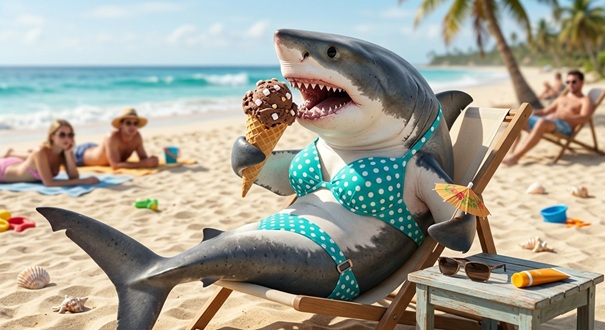
Our internal storyteller starts spinning a web. We think: “Maybe conservative life is more rural, involving more driving and less walking?” or “Maybe liberal areas have more kale smoothie shops per capita?” It’s tempting, but in science there is a famous warning: Correlation is not causation. Just because two things move in the same direction doesn’t mean one caused the other. For example, ice cream sales and shark attacks are highly correlated. Does eating a rocky road cone make you taste better to a Great White? No. They both just happen to increase during the summer.

Patterns alone are not explanations.

Why People Vote the Way They Do (It’s Not the Calories)

Political scientists will tell you that people choose “Red” or “Blue” based on a staggering array of variables:

  • Urban vs. rural residence
  • Income level
  • Religious participation
  • Education
  • Economic anxiety
  • Cultural identity
  • Family tradition
  • Media environment
  • Policy priorities (taxes, regulation, social issues, national security, etc.)

Voting behavior is not a single variable equation. It’s a multi-dimensional social phenomenon. Reducing that to “calories in, ballots out” would be like explaining orbital mechanics using only gravity and ignoring velocity. You might gesture in the right direction, but you won’t land a spacecraft.

Obesity rates, likewise, are not personality tests. Doctors will tell you that obesity is a tangled web that correlates with:

  • Genetics
  • Food access and cost
  • Walkability and infrastructure
  • Climate
  • Income distribution
  • Healthcare access
  • Education
  • Occupational patterns
  • Cultural food traditions

A rural agricultural state with long driving distances and limited public transit will produce different lifestyle patterns than a dense coastal city with walkable neighborhoods and high produce availability.

Neither environment is morally superior. They are structurally different.

And structural differences create statistical differences.

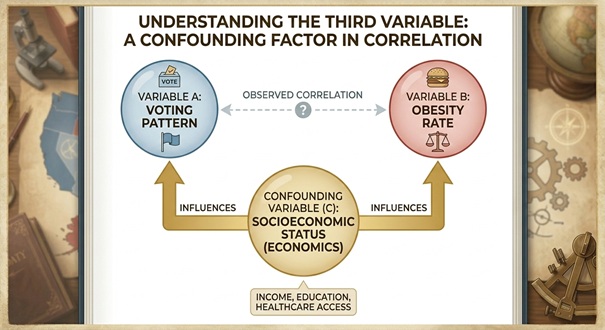
The “magic” of the data my friend sent lies in Confounding Variables. Many of the states with high obesity rates also happen to be states with higher poverty rates or lower access to specialized healthcare. Those same economic factors also influence how people vote. The steak and the ballot are both being pushed by a third, invisible hand: Economics.

To argue that political identity causes weight, or vice versa, would be saying that because people wear coats, they cause blizzards. Or that putting on a bikini attracts a hurricane.

The moment you introduce that third variable, the narrative shifts from blame to complexity. And complexity is less satisfying than a late night comedy punchline.

The Scientific “Wait a Minute”

Now, is it funny to say politicians should stop talking and regulate fast food?

Sure. It’s satire-adjacent. It pokes fun at performative politics. It expresses frustration with rhetoric over action.

But the scientific move would be:

  1. Define the hypothesis precisely.
  2. Control for confounding variables.
  3. Examine longitudinal data.
  4. Separate cultural patterns from biological outcomes.
  5. Avoid moral conclusions from statistical associations.

Without that discipline, we’re just rearranging spreadsheets into stories we already prefer.

As scientists, we have to be the “buzzkills” at the party. When we see a correlation that fits our personal biases, that is exactly when we should be the most skeptical.

If we assume the “Cheeseburger Theory” is true, we miss the actual harder truths about why our country is divided and why our health is declining. We settle for a punchline instead of a solution.


The Real Lesson

The deeper issue isn’t obesity.
It isn’t voting.
It isn’t even politics.

It’s epistemology.

First impressions are powerful. They feel decisive. Clean. Elegant. But science exists precisely because first impressions are often wrong. Correlation is a starting point, a flag that says, “This might be worth studying.” It is not a verdict.

Science requires us to be critical, not just of the data, but of our own desire for the data to be simple. When we collapse the two, we turn data into ammunition instead of understanding. And that’s true whether we’re talking about public health, economics, crime, education or elections.

If we want better conversations, especially in politically charged territory, we need to tolerate something uncomfortable: The truth is usually more complicated than the joke.

Science doesn’t eliminate humor. It just insists that before we legislate the Big Mac, we check whether the Big Mac was actually driving the vote or whether we just noticed two lines on a chart leaning in the same direction.

The world is messy. People are complicated. And while it’s perfectly okay to have a laugh at the idea of a “Big Mac Swing State” (Illinois, Nevada, New Mexico, North Carolina, Pennsylvania), we should remember that the “Space Between Us” isn’t measured in pounds or poll numbers. It’s measured in how much effort we put into understanding the real reasons behind the numbers.

So, the next time you see a map that seems to explain everything about your “opponents”, take a breath. Look for the “Shark Attack” logic. And feel free to enjoy a burger or a kale salad while you do it. Just don’t expect it to change the leader of the free world. At least not in terms of ideology. It may be a factor in the waistband.

Patterns are easy. Causation is earned. And that difference matters.


No causal claims were harmed in the making of this analysis.

Posted in Culture, Science, Society | Tagged , , , , , , , , , , , , , | Leave a comment

The Science Whiplash: When Science Fights Itself

If you’ve lived long enough to read headlines, you’ve probably experienced nutritional whiplash.

You wake up, pour a cup of coffee, and open your phone only to see a headline screaming that caffeine is the secret to eternal youth. You take a sip, feeling like a genius. By lunch, a new study has dropped: “Coffee: The Delicious Silent Killer”. Suddenly, your mug feels like a ticking time bomb.

It’s the same with wine. One week, a glass of red is a “surgical strike” against oxidants, the next, you’re told that even looking at a grape might shave six months off your life expectancy. It’s enough to make you want to give up on science entirely and just live on air, except there’s probably a study saying oxygen causes premature aging. (Spoiler: It actually does, it’s called oxidation, but let’s not go there today.)

What matters is that one week you’re a hero for your habits. The next week you’re apparently eroding your lifespan one sip at a time.

So what’s going on? Is science confused? Is it unreliable? Or are we just bad at reading it?

The Great Meat Paradox of 2026

Recently, the science headline machine reached a fever pitch. Within the same month, two major outlets dropped what looked like a “Quantum Conflict”.

  1. The Grim Reaper Version: Science Daily reported that a common amino acid found in protein-rich foods (Tyrosine) is linked to a shorter lifespan in men.
  2. The Fountain of Youth Version: Science Alert reported that meat-eaters are actually more likely to live to 100.

Wait. So if I eat the steak, I die early? But if I eat the steak, I hit triple digits? That’s clear like a champagne flute of mud. At first glance, this feels like nutritional civil war.

Talking to nutritional scientists can feel like talking to two economists: one predicts a market explosion while the other guarantees a deep recession. You know that a year from now, neither one will look like a genius because the market will spite them both and stay flat.

So, how do we reconcile the two extremes? Is meat a metabolic poison or a biological miracle?

Here’s the twist: these two stories aren’t actually contradicting each other. They’re looking at the same biology in two different ways — life stage and specific amino acids.

Let’s break it down.

The Lens Matters: Two Different Battles

The “nonsense” starts to make sense the moment you stop looking at the headline and start looking at the Life Stage. These two studies aren’t actually fighting. They are looking at the same biology through two different lenses.

That detail matters.

  1. Meat as “Structural Insurance” (The 80+ Crowd)

The study claiming meat eaters live to 100 focused on people who had already hit their 80th birthday. The benefit wasn’t magical bovine longevity powers. It was frailty prevention.

Once people hit their 80s, they lose muscle mass rapidly, a condition called sarcopenia. Muscle loss leads to weakness, falls, infections and general physical collapse. At that stage of life, being slightly overweight and muscular is often protective. If you become underweight and fragile, a simple fall or a bout of the flu become terminal events.

The Reconciliation: Meat isn’t a magic longevity pill. It’s high quality protein, B12 and Iron that act as “structural insurance”. Meat prevents the malnutrition that kills people in their 80s and 90s. In the fourth quarter of the game, you need the muscle to stay on the field. In other words, it helps older adults avoid becoming underweight, fragile and malnourished. Meat is not a youth elixir. It’s scaffolding.

  1. Meat as “Metabolic Overdrive” (The 30–60 Crowd)

The other study looked at a massive group of 270,000 people and focused on a biomarker called tyrosine.

Tyrosine is an amino acid found in protein rich foods, including meat, that serves as the raw material for dopamine and adrenaline, often sold as a focus or performance supplement. In your 30s, 40s and even 50s, your body is already a high-performance engine. If you flood the system with too much “growth and focus” fuel, you can push the engine into red-line territory.

Higher blood levels of tyrosine were associated with a slightly shorter lifespan in men, roughly shaving off about a year. Not decades. Not doom. But statistically measurable. “Man loses 12 months of life” doesn’t sell ads. “MEAT KILLS MEN” does.

The Reconciliation: Tyrosine is a precursor to dopamine and adrenaline, neurotransmitters involved in motivation, focus and stress responses. Chronically elevated levels of tyrosine are associated with pathways involved in insulin resistance and metabolic stress. In plain English, it’s more biological “revving”.

It’s like keeping your car in second gear while going 80 MPH on the highway. You’ll get there fast, but you’re wearing out the parts.

If you’re 45, healthy and not frail, your system doesn’t need structural rescue. It needs metabolic balance. For men in middle age, high protein intake can create a “wired and stressed” biological state. This doesn’t mean protein is poison. It means that constant excess stimulation in a body that doesn’t need rebuilding may carry long-term tradeoffs. Over decades, that kind of constant stimulation may age tissues a bit faster.

So… Which Is It?: The “Catch” Summarized

If you want the common sense cheat sheet, here it is:

  • Eat meat for “Structure”: If you are elderly, recovering from an injury or struggling with frailty, meat is a vital tool to keep your “house” from falling down. It will do more good than harm.
  • Limit meat for “Metabolism”: If you are a man in his prime, keep the intake moderate. You don’t need to be in metabolic “overdrive” 24/7. Very high protein intake may push metabolic systems harder than necessary.

Meat helps you survive the end of life by preventing frailty, but too much of it might accelerate the middle of life by overstimulating metabolic and neurotransmitter pathways.


The Meat of the Story: Why Headlines Make It Sound Absurd

Science isn’t broken. It’s just nuanced and headlines are built for clicks, not nuance.

They compress:

  • Population differences
  • Age groups
  • Biomarkers
  • Dose effects
  • Relative vs absolute risk

…into 12 words.

Imagine summarizing climate science as “Sunlight causes cancer”. Technically true in certain contexts. Misleading without them. The same thing happens in nutrition science.

The problem is that “Meat is helpful for 85-year-olds with sarcopenia, but potentially stressful for 40-year-olds with high insulin” is a terrible, boring headline. It’s much easier to just say “Meat Kills” or “Meat Saves”.  And that drives clicks.

Science isn’t confused. It’s incremental. But we tend to read it like prophecy instead of probability.

Next time you see a dramatic claim, ask:

  1. Who was studied? (Age? Sex? Health status?)
  2. What was actually measured? (Diet? Blood markers? Self-report?)
  3. How big was the effect? (A year? A decade?)
  4. Is this about deficiency, excess or balance?

Many “conflicts” disappear once you realize they’re studying the same system from different angles. The same engine behaves very differently at 25 MPH than it does at 125 MPH.

The Bigger Lesson

Biology is dynamic.

What protects you at 85 might stress you at 45.
What harms you in excess might help in moderation.
What’s dangerous by the barrel may be harmless by the cup.

Which brings us back to coffee and wine.

Yes, it’s okay to have a cup of coffee while reading about coffee studies.
Yes, a glass of wine while reading about wine research is allowed.

Just maybe don’t drink either by the barrel while waiting for the next headline to overturn today’s wisdom. Science isn’t a courtroom handing down final verdicts. It’s a long conversation where each study adds a sentence.

The next time you see a contradictory study, don’t throw your hands up in frustration. Take a breath. Look at who they studied, what age they were and what “catch” is hidden in the fine print.

And in the meantime? Go ahead and have that cup of coffee or that glass of wine while you ponder the mysteries of the universe.

The problem isn’t that science changes. The problem is that we read the headline and skip the paragraph.

No coffee beans or grapes were harmed in the writing of this article.

Posted in Science | Tagged , , , , , , , , , , , , , , , , , , , | Leave a comment

The Road Not Taken — A Reflection on the Quantum Self

I had an interesting conversation with a friend recently about the road not taken, in the spirit of Robert Frost’s famous poem. We talked about the turns that change a life, not the trivial ones, not “Store A versus Store B” unless, of course, Store A puts you in the middle of an armed robbery where you meet your future spouse and your life detonates in a new direction.

I’m talking about the tectonic shifts. The moments where the ground beneath you cleaves and you must choose which side of the fault line to stand on, knowing the gap will only ever widen.

I have dozens, if not hundreds, of these moments. Not the robbery, although I have been shot at. It’s the quiet forks in the road that haunt the most, the ones where you make a choice and watch the other version of your life vanish like smoke in the wind. The small, almost bureaucratic decisions. The ones where you stand still for a moment, weigh two futures in your palm and step forward, knowing that whatever you do, you are sealing off the other door forever.

One of mine began in an undergraduate thermodynamics class.


The Red Ink and the Barroom Brawl

My professor, a respected atmospheric chemist, looked at me and saw something I hadn’t yet claimed. She told me I should apply to graduate school. She didn’t think the professional world was ready for me or perhaps I wasn’t ready for it. She thought I had something to offer to science. I had job offers. I had an exit ramp. Instead, I signed up for more student debt and more uncertainty.

Maybe that was the first domino.

Graduate school placed me under another giant in atmospheric chemistry, a man whose name still echoes through Cold War history, because he helped model what nuclear war would actually do to the sky. His research reframed annihilation as mutual suicide instead of theoretical victory. That kind of science bends geopolitics.

His lab was eight graduate students and a weekly intellectual knife fight. Every Thursday, one of us would present. The rest would circle like wolves. It was brutal, precise, surgical. A bloodsport. If there was a flaw in your logic, it would bleed out on the whiteboard.

We weren’t just learning science.

We were making it. Groundbreaking. Cutting edge. We were asking the hard questions and we were expected to come up with answers, not for a grade, but for a degree.

When I handed my advisor drafts of my papers, they came back soaked in red ink. It looked like he’d slaughtered chickens over the manuscript. I had no idea the world contained that much red ink. But every mark was surgical. Every question widened the lens. He taught me that science does not live inside a test tube. It’s a cobweb. Pull one thread and the entire structure reacts.

He taught me how to wrestle a problem to the ground and pin it there before peer review could do the same to me.

Then came my thesis defense.

The Darkness and the Handshake

If the Thursday sessions were barroom brawls, the defense was a full-blown riot. Questions flew that I had never anticipated. I answered. I countered. I improvised. I fought back until I was raw. When they finally sent me out of the room, I stood in the hallway, sweat stinging my eyes, certain I had lost.

The committee deliberated.

Minutes passed like hours. My heart was sinking through the floor tile. I was certain I had failed.

The distinguished PhDs began to file out of the room, faces unreadable, leaving me in the wreckage of my own ambition. My advisor was the last to leave. He stopped, reached back and flicked off the lights, plunging the room into shadow, before walking toward me.

He extended his hand. The grip was firm, final. “Congratulations, Master.” It was the only time that title was ever used in my professional life.

I was speechless, the air trapped in my lungs, like an experiment in the lab. Then he said the words that still echo: “Come by my office tomorrow to sign your intent to pursue your PhD.”

The Road Not Taken

I did not go.

I had job offers waiting. I stepped into the professional world instead of academia.

That was the road I left behind. I walked away from the ivory tower.

Because of that decision, everything else unfolded: two global-travel jobs, meeting my wife, landing in search and rescue. A life of kinetic motion instead of chalk dust and journal submissions. Staying would have placed me on a completely different trajectory, one I can still see if I stare long enough at the night sky.

In my private, unabridged fantasy, when the house is quiet and the night sky is wide, I see the alternate version: a tenured professor at a Tier 1 university, a solid researcher, a fierce teacher, married to the graduate student he met in the lab. Two kids. A dog. A cat. A house on the hill overlooking the city lights. A life built around questions that outlive him.

But quantum mechanics is not sentimental. Once the box is open, the quantum wave has to resolve.

For every Schrödinger’s Cat that walks out of the box, another does not. The wave function has to resolve across the entire probability distribution. There is a version of me who stayed in academia and failed, the other iteration of the cat. Versions where I didn’t get the girl. Where the grants dried up and the tenure committee turned their backs. A version where I simply wasn’t “enough” for the cold, hard vacuum of academia.

The fantasy is clean. Reality never is.

The Weight of the “What If”

Our lives are a mosaic of spontaneous, split-second resolutions. We love to believe we are the architects of our destiny, but we are often just the survivors of our own decisions.

I love my wife with a ferocity that defines me. My work challenges me. Search and rescue is adrenaline and clarity and consequence, the kind of caffeine most people never taste, the kind that makes the blood sing in a way no lecture hall ever could. The path I took is not a consolation prize. By all accounts, I chose the right path.

And yet, under the stars, the question remains, hovering in the dark like the ghost of a person I never became, a phantom limb, asking, “What if?

But maybe that isn’t the real question.

Maybe the real question is this: Do the paths we take reveal who we already were or do they carve us into someone new? Is it the road we take that defines who we are or the roads we refuse that shape us? Are we the sum of our successes or are we the negative space left behind by the lives we were too afraid (or too wise) to live?

Was I always the man who would step into the unpredictable, who would trade academic certainty for kinetic uncertainty? Or did that single decision forge me into him?

We like to imagine that the road not taken contains a better version of ourselves. Happier, steadier, more accomplished. But perhaps every fork simply exposes a different facet of the same underlying person.

The man who stayed would still have wrestled problems.
The man who left still teaches.
The man who dreamed of shaping science still seeks to move the compass needle, even if only by one percent a year.

None of us finish the work. Not Isaac Newton. Not Albert Einstein. Not the atmospheric chemists who reframed nuclear war. They asked a question, adjusted the bearing and handed the map forward to generations that came after them.

Maybe that’s the point.

The road not taken is not a lost destiny. It is a reminder that we were capable of more than one life. And the man standing here, on this road, under this sky, is not the lesser outcome of a failed branch of the wavefunction. He is the cumulative result of every choice made in uncertainty.

Perhaps the most serious question is not whether we made the best choice, but whether we are brave enough to stand fully in the life we chose, without being diminished by the shadows of the roads we left behind.

So when I look up at the stars and ask “what if?”, I’m no longer asking which life would have been better. I’m asking: Given the life I chose, who am I still becoming?

We are not just the cat that walked out of the box. We are the memory of the cat that stayed behind and the stars are the only ones who know the difference.

Posted in Philosophy | Tagged , , , , , , , , | Leave a comment