
This Earth Day, while we celebrate the only home we’ve ever known, it might seem strange to talk about leaving it, but after my recent post on the Artemis II mission, a reader asked a question that stopped me in my tracks: “Why do we even have to leave Earth?”
It’s a fair question and an important one. At first glance, it can feel like space exploration is a luxury. Rockets are expensive, missions are complex, it’s dangerous and we have no shortage of problems to fix right here on the ground. So, why are we looking up when there is so much to do down here? Why spend time, energy and money going somewhere so far away?
Let’s break that down.
The Cost: A Drop in the Bucket
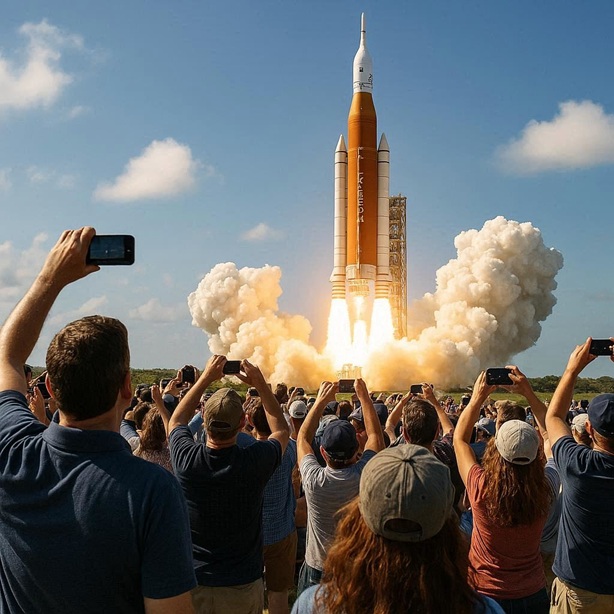
First, let’s address the “expensive” part. Many people imagine NASA’s budget is a massive chunk of our national spending, a frivolous massive drain on limited resources. In reality, for 2026, NASA’s budget is approximately $24.4 billion.
While that sounds like a lot of jerky and brew, it represents only about 0.35% of the total federal budget. To put that in perspective: if the U.S. budget was a $100 bill, NASA’s share is about 35 cents. Of that 35 cents, roughly half goes toward human spaceflight (like Artemis and the International Space Station). The rest funds Earth science, telescopes, robotics, aeronautics and technology development.
Compare that to the $70 billion allocated to the intelligence community, $800 billion for the military and over $1.3 trillion (yes, that’s trillion with a “t”) for Social Security. All of a sudden, NASA is a rounding error.
What makes space exploration feel exorbitantly grand and flashy is the rarity and the media coverage. Today you have better odds of being a runway model or playing in the NFL than going into space. That’s huge. Astronauts aren’t just explorers. They’re modern day elite rock stars.
In the grand scheme of things, the cost is relatively trivial, but cost alone doesn’t explain the purpose. Why are we doing this at all?
One Planet is a Single Point of Failure
Earth is extraordinary, but it’s also vulnerable.
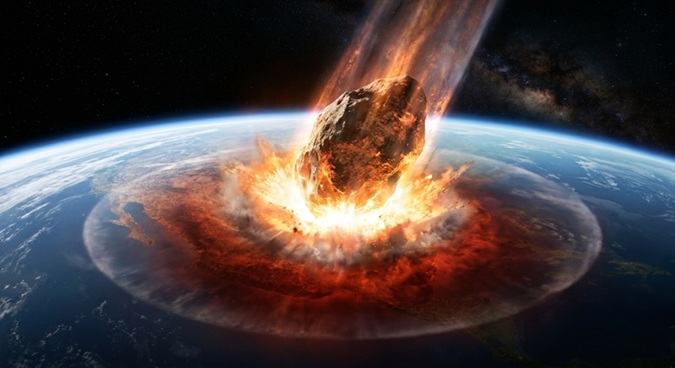
Asteroid impacts. Supervolcanoes. Solar events. Even distant cosmic phenomena. These are low probability risks, but they carry high consequences.
Putting all of humanity on a single world is, in engineering terms, a single point of failure.
Exploration, and eventually expansion, creates redundancy. Not tomorrow. Not easily. But over time, it increases the long-term survival of our species. Having a self-sustaining presence elsewhere, planetary redundancy, ensures that the human story doesn’t have a weak link.
Space Exploration Drives Innovation
Space is unforgiving. To survive there, we have to invent things that are lighter, stronger, smarter and more efficient.
And then we bring those innovations home.
From satellite navigation and weather forecasting to advanced materials and medical technologies, the ripple effects of space exploration show up in everyday life. Even the CMOS sensor in your smartphone camera traces its lineage to space research.
We don’t just explore space.
We import the future from it.
There are Resources Beyond Earth
Earth’s resources are finite. Space, by comparison, is not.
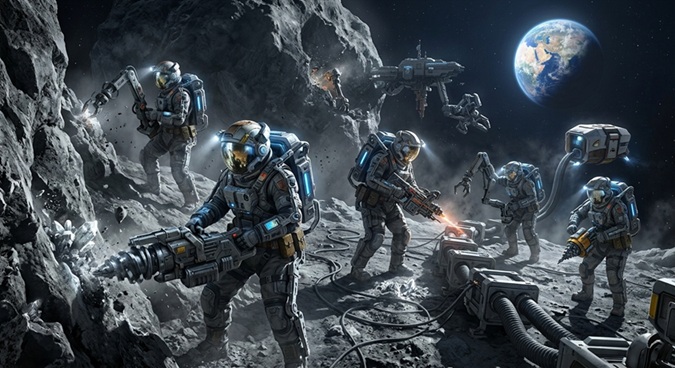
The energy and materials available off world exist in staggering quantities. Mining asteroids or harvesting solar power in space could eventually offload the ecological burden we place on Earth’s crust. Furthermore, we push the envelope of physics, chemistry and biology in ways that are impossible under the heavy thumb of Earth’s gravity.
From solar energy to rare materials, the potential beyond our planet is vast, far beyond anything we can sustainably extract here. While we’re still early in tapping into that potential, the long term implications are enormous.
Exploration is the first step toward access.
Space Activity is Climate Action
It sounds counterintuitive, but leaving Earth is one of the best ways to save it. The vast majority of what we know about climate change, deforestation and ocean health comes from satellites. We have to “leave” to look back and truly understand our own environment.
And having to build colonies in space – the International Space Station, the Moon, Mars and beyond – will create sustainable technologies that will enable us to manage resources on Earth better. Systems designed for the ISS are now used to provide clean water in remote villages. Sustainable farming technologies developed for space may eventually inform how we manage ecosystems on Earth and beyond. Weightlessness and better understanding of our bodies can lead to medicines that we can not even begin to imagine today.
Expanding the Human Potential
Space exploration is one of the few endeavors that consistently brings nations together.
It challenges us to collaborate, to think bigger and to push beyond what we thought was possible. Not just technologically, but culturally and philosophically.
It reminds us that we’re not just citizens of countries.
We’re citizens of a planet. And it’s the only one we have, at least for now.
Through the great lens of the cosmos, we are all one species, in spite of the critical glances we cast at differences that are genetically as miniscule as NASA’s fragment of the national budget.

So Why Leave?
When someone asks “why leave Earth?”, they’re really asking two separate questions: Is Earth not enough? and What do we gain by going?
These are great questions to ponder.
Is Earth not enough? The best answer is that Earth is everything. It’s home. And that is exactly why we explore.
What do we gain by going into space? We gain perspective. We gain the technology to protect our atmosphere, our oceans, our crops. We gain “Plan B” for our grandchildren. But from a purely philosophical standpoint, we do it because staying put isn’t what humans do.
From crossing oceans in wooden boats to climbing Everest just to see the view, we have always moved toward the unknown. Not because it’s easy, but because curiosity is woven into our DNA. Gravity holds our bodies down, but curiosity pulls our spirits outward.
Loving something doesn’t mean never leaving it. It means understanding it better. Protecting it longer. And ensuring that what we value here has a future. Ultimately, we don’t have to leave Earth. We get to. And it’s that choice that defines us. That choice matters, because exploration isn’t about escaping home. It’s about refusing to sit still as a species.
And what does going into space give us? Perspective. Resilience. Knowledge. Capability. And perhaps, most importantly, a reminder that we are capable of more than staying where we started. Like the expansion of our species across our planet from a single continent, we are looking towards new opportunities in space.
We Don’t Have to Leave Earth
From crossing oceans to climbing mountains, humans have always moved toward the unknown, because curiosity is a part of who we are.
Exploration isn’t about escaping home. It’s about learning what exists outside our front door. This Earth Day, let’s appreciate the ground beneath our boots and the infinite possibilities waiting just above our heads.
Gravity holds us down.
But curiosity pulls us outward.
And isn’t that worth 35 cents?
Discover more from Tales of Many Things
Subscribe to get the latest posts sent to your email.