
Every Memorial Day the mountains fill with hikers, campers and road-trippers eager to escape the city and start summer outside. And every Memorial Day search and rescue teams quietly brace for impact, because the patterns of who gets into trouble are remarkably predictable.
Despite the stereotypes, search and rescue is not just rescuing reckless thrill-seekers dangling from cliffs. A large percentage of missions are remarkably ordinary people who made ordinary mistakes in an extraordinary environment.
Many of those calls involve visitors from out of state. Not because tourists are careless, but because the mountains operate by rules they’ve never encountered before. The Rockies are brutally effective at exposing environmental ignorance.
A hiker from sea level may have no concept of what 12,000 or 14,000 feet actually feels like. Dry mountain air dehydrates people long before they realize they are in trouble. Afternoon thunderstorms can evolve from blue skies to lightning and hail in under an hour.
And perhaps most dangerous of all is the psychological trap: “I flew all this way. I have to finish.”
Search and rescue teams see this constantly. When we analyze who we rescue, a clear divide emerges: out-of-state visitors are usually rescued due to environmental unfamiliarity. Locals are usually rescued due to environmental complacency.
A visitor starts a 14er well after sunrise instead of before dawn. They ignore the building clouds because the summit is “so close”. They push through dizziness because they paid for the trip months ago and it was expensive. They continue upward despite nausea, dehydration or altitude sickness because turning around feels like failure.
The mountain does not care how expensive your plane ticket was. It doesn’t care if you reach the summit. In fact, the mountain is completely indifferent to the outcome.
If you are heading into the mountains this weekend, whether you just hopped off a plane or you’ve lived in the foothills for twenty years, here is a tactical breakdown of how your background changes your risk profile and how to #TakeTheExtraMinute to avoid a rescue.
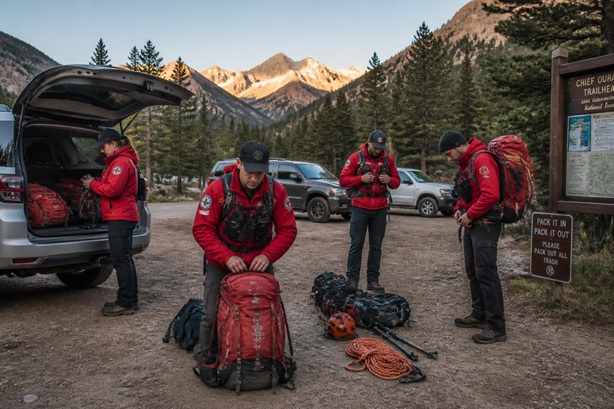
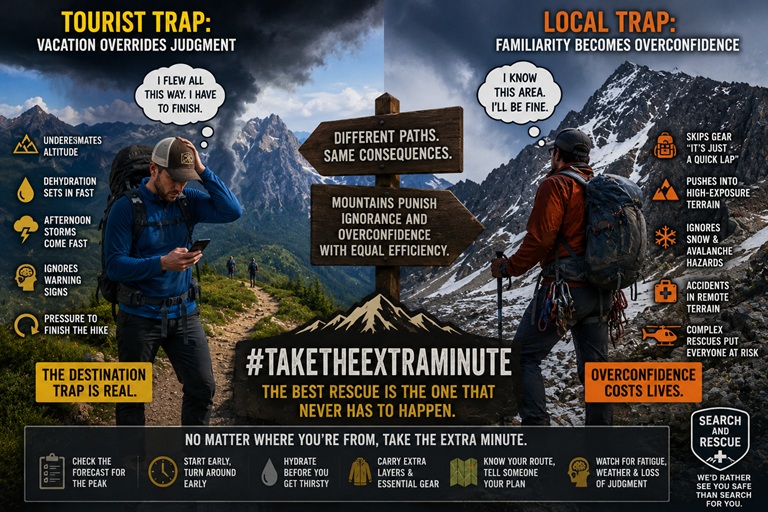
The Tourist Trap: When Vacation Overrides Judgment
Colorado’s fourteeners are particularly good at humbling people.
For tourists, the biggest threat isn’t a lack of athletic ability. It’s a lack of geographic humility. When you fly across the country to bag a 14er, you bring a hidden psychological baggage with you: The Destination Trap. Because you spent money on flights, lodging and gear, you feel immense pressure to summit, often ignoring glaring red flags that a local would use as an immediate cue to turn around.
One of the most dangerous misconceptions tourists bring to Colorado is believing physical fitness protects them from altitude. It doesn’t. Elite athletes still get altitude sickness. At sea level, a fit person may hike ten miles without issue. At 14,000 feet, that same person can suddenly experience:
- The Invisible Thief (Altitude Sickness): Flatlanders frequently underestimate what starting a hike at 9,000 feet and ascending to 14,000 feet does to the human body. Altitude sickness isn’t just a headache. It impairs judgment, destroys coordination and can rapidly progress to debilitating conditions like AMS (Acute Mountain Sickness) and HAPE (High Altitude Pulmonary Edema).
- The Flash Dehydration: The air at high elevation is incredibly dry, meaning your sweat evaporates instantly. You don’t realize how much fluid you are losing until you are already dizzy, cramping and experiencing cognitive decline.
- The Afternoon Lightning Rule: Tourists often assume storms behave the way they do back home, but in the Rocky Mountains, summer storms are a daily clockwork event. Tourists look at a clear blue sky at 9:00 AM and assume they have all day. By noon they are trapped above treeline on exposed rock as a lightning-producing cell forms directly overhead. Mountain weather is violent and fast.
And the problem compounds because visitors often mistake altitude sickness for simple fatigue. They think, “I just need a break.” What they actually need is to descend immediately.
Every year, hikers are caught above treeline because they started too late, stayed too long or believed they could “beat the storm”. Lightning does not care about optimism.
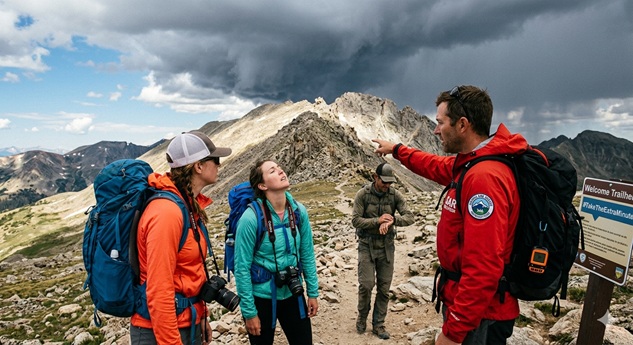
The Local Trap: Familiarity Becomes Overconfidence
Locals, meanwhile, tend to get rescued for entirely different reasons. They like to shake their heads at tourists hiking in flip-flops, but local complacency is often far more dangerous and significantly more expensive to resolve.
People who recreate in the mountains every weekend slowly normalize risk. The terrain loses its novelty and, consequently, its perceived threat. Trails become routine. Exposure becomes familiar. Terrain that would terrify a visitor becomes “just another Saturday”.
Locals don’t get rescued because they ran out of water on a casual trail. They get rescued because they pushed deep into technical remote backcountry terrain, underestimated a route or assumed “I know this area well enough to skip the extra gear.”
That confidence often pushes locals farther into:
- The “I Know This Trail” Illusion: Locals often leave the heavy layers, the first-aid kits and the satellite messengers at home for a “quick afternoon lap” on familiar peaks. But a broken ankle on a remote boulder field doesn’t care that you’ve hiked the trail ten times before.
- High-Exposure Thresholds: Because locals are comfortable with scrambling, they are more likely to push into Class 3 or Class 4 terrain without protection, leaving zero margin for error if a handhold breaks or loose scree gives way.
- The “Spring is a Lie” Avalanche Risk: Memorial Day looks like summer in the city, but at elevation, the snowpack is undergoing massive thermal stress. Locals pushing deep into couloirs or high-alpine basins are highly susceptible to wet slab avalanches or breaking through fragile snow bridges over rushing snowmelt streams.
When a local gets into trouble, it rarely looks like a simple walk-out. It usually involves a complex, multi-agency technical rescue.
They are broken femurs three miles into a scree field. Avalanche burials deep in winter terrain. Technical rope evacuations after a climbing fall. Mountain bikers injured far beyond vehicle access.
The irony is that locals often know exactly how dangerous the environment is. They just believe experience will protect them from it.
Sometimes it does.
Sometimes it doesn’t.
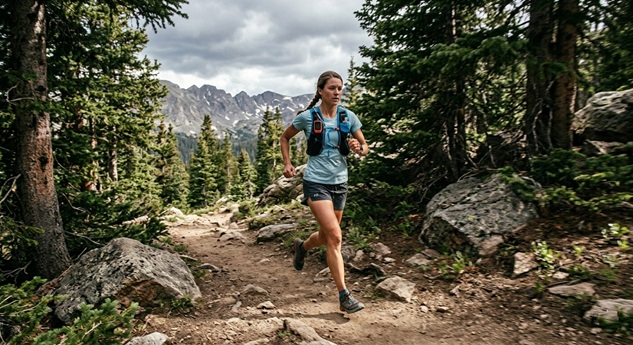
The Common Thread: Human Nature
Tourists and locals make different mistakes, but they usually fail for the same reason: they stop objectively evaluating risk.
Tourists become emotionally committed to the destination. Locals become emotionally committed to their confidence. Both ignore warning signs telling them it’s time to turn around.
And search and rescue exists in the space between those decisions and the consequences that follow.
The #TakeTheExtraMinute Safety Briefing
Whether you’re visiting the mountains for the first time or recreating in them every weekend, there are some rules you should keep in mind.
The Tourist Safety Mandates:
- The 12:00 PM Hard Turnaround: If you are not off the summit and heading back toward treeline by noon, turn around. No exceptions. The mountain will be there tomorrow. Your cardiac rhythm might not be if lightning hits the peak.
- Acclimatize for 48 Hours: Do not land at the airport and attempt a 14er the next morning. Give your body two full days at moderate elevation to adjust its oxygen transport.
- The Hydration Scale: Drink double what you think you need and carry electrolyte replacement. If you aren’t urinating frequently, you are losing the battle against dehydration.
The Local Safety Mandates:
- Ditch the “Fast and Light” Obsession: Never let your familiarity with a route dictate your emergency kit. Always carry a headlamp, an extra thermal layer and a space blanket, even on your backyard trails.
- The Satellite Baseline: If you are stepping off a well maintained trail into a boulder field, talus slope or technical ridge, a dedicated satellite messenger (like a Garmin inReach) should be active on your pack.
- Expect the Complex Rescue: Understand that if you break a leg in a technical couloir, you are asking 20 to 30 volunteers to risk their lives rigging rope systems to haul you out. Your safety choices directly impact our safety margins. And that rescue won’t be fast. You may be packaged like a burrito for two days.
For everyone, the basics are the same:
- Tell someone your route and expected return time.
- Carry offline navigation, extra layers, a headlamp and a first-aid kit.
- Watch for dehydration, lightning, fatigue and loss of judgment.
- Turn around early if conditions change or you are behind schedule.
- Match the trail to the least experienced person in your group.
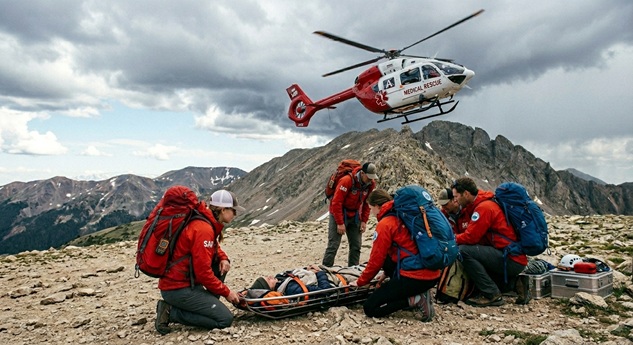
The Ultimate #TakeTheExtraMinute Message
The mountains don’t care where your driver’s license came from.
They don’t care if you trained all winter or booked the trip six months ago.
They don’t care if you’ve climbed the route twenty times before.
The mountains punish ignorance and overconfidence with the same indifference.
That’s why the best search and rescue mission is the one that never happens.
So this summer, whether you’re a tourist chasing a bucket list summit or a local heading into familiar terrain, #TakeTheExtraMinute to reassess conditions, check your gear, hydrate and ask yourself one simple question: “Am I making decisions based on reality or commitment?” And remember that your extra minute looks different depending on your zip code:
- If you’re visiting: Take the extra minute to check the weather forecast for the peak, not the town, and give yourself permission to turn around if your body is struggling with the air.
- If you’re a local: Take the extra minute to pack the layers you think you won’t need, double-check your communication gear and respect the high-alpine terrain like it’s your first time seeing it.
Because the mountain only cares about the difference once it’s too late.
Friction in the backcountry is inevitable, but catastrophe is preventable. Prepare for the mountain you are actually standing on, not the one you wish was there, because whether you flew a thousand miles or drove twenty minutes to get to the trailhead, the best rescue is the one that never has to happen.
Discover more from Tales of Many Things
Subscribe to get the latest posts sent to your email.