
I recently read an opinion piece by the editor of a regional publication attacking a national organization I belong to for using artificial intelligence to generate images.
Full disclosure: I’ve used AI to generate images, too. I’ve also been on the receiving end of similar criticism, although not from the editor of a regional publication.
Apparently, society has reached the point where asking a computer to help create something is considered a moral failing.
I’ve written multiple articles about artificial intelligence and its growing influence on society over the past year. Everything from how it might save us to how it might kill us. I’ve explored its potential, its dangers, its economic implications and the philosophical questions surrounding our increasingly complicated relationship with technology.
AI presents an interesting case study, particularly when it comes to creativity. The question is deceptively simple, “Is it fair to use artificial intelligence to create an image, help write an article, compose music or otherwise produce something that previously required human effort?”
My answer is yes. Not an unconditional yes, not a suggestion that every application is ethical, every business model is sustainable or every concern is misplaced, but yes.
And I think some of the resistance we’re seeing says considerably more about our relationship with change than it does about the technology itself.
The Uncomfortable Nature of Progress
Let’s start with a simple observation. AI isn’t some exclusive technology available only to a handful of privileged corporations or wealthy individuals. Anyone reading this article can open one of dozens of AI platforms, type a request and generate an image, summarize a document, write a computer program or analyze information.
Most AI platforms offer free or freemium access. If you’re not attempting to solve an extraordinarily complicated problem, generating an image is practically effortless. This isn’t a technology that requires a laboratory, a million dollar investment or an advanced degree. It’s available to the public.
So, is using it cheating? Is it breaking some unwritten rule? Is it unfair to people who choose to do things the traditional way?
Possibly. Depending on the circumstances, there are legitimate questions about authorship, intellectual property, attribution and compensation, but the mere act of using the technology? I’m not convinced.
This isn’t the first time we’ve had this argument.
We’ve Been Here Before
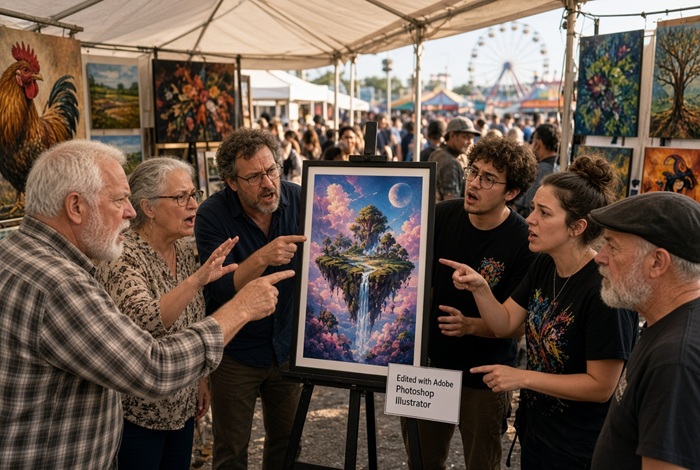
I remember years ago, many years ago, seeing quite a commotion at a local county fair over the use of Adobe products such as Photoshop, Illustrator and Lightroom to create artwork entered into an art show. The argument was that the work wasn’t really created by the artist. A computer blended colors, manipulated elements, adjusted lighting and assembled images. The artist wasn’t doing everything by hand, so apparently the result was somehow less legitimate.
Today, nobody seems particularly concerned about using Photoshop to manipulate an image or Illustrator to create an elaborate piece of artwork. We’ve normalized the technology. What was once controversial became ordinary. What was once considered an unfair advantage became another tool in the creative process.
AI is simply the next frontier and if history is any indication, we’ll probably have this same argument again when the next generation of technology arrives.
The irony is that many of the tools we now consider indispensable were once criticized for precisely the same reasons we’re hearing today. We tend to romanticize the process that produced yesterday’s results while questioning the legitimacy of the tools producing tomorrow’s.
Where Do We Draw the Line?
Let’s take this argument outside the creative community for a moment. Am I cheating if I ask an AI system to predict how a protein might fold under certain conditions? Am I being dishonest if I give it a dataset and ask it to identify patterns that might influence the direction of an experiment? Would asking AI to write a computer program to track my vehicle expenses be a lie because I could accomplish the same thing in Excel or Google Sheets? Is a prompt asking which stock I should buy next an unethical shortcut?
What if I use a calculator instead of doing arithmetic by hand? What if I use GPS instead of a paper map? What if I drive a car instead of riding a horse? At what point did we decide that using a tool to accomplish something more efficiently somehow diminishes the accomplishment?
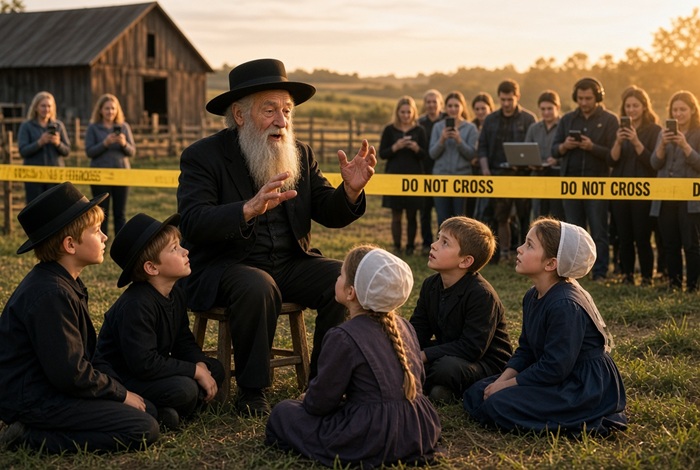
Should I sell my car and buy a horse because that’s how people traveled a hundred years ago? For that matter, should we surrender modern conveniences altogether and return to an Amish way of life?
Please, I’m not anti-Amish. I’ve visited Amish country multiple times and I think they’re fascinating people. Some of the most interesting stories I’ve heard have come from people who wouldn’t touch a car, a microwave or a washing machine with a ten foot pole.
Their lifestyle represents a deliberate set of choices about technology, community and tradition. There’s something genuinely interesting about that, but this also highlights an important distinction between choosing to live differently and insisting that everyone else should. Technology isn’t inherently virtuous. Neither is rejecting it. The question should be whether a particular tool serves a legitimate purpose and whether we’re using it responsibly, not whether it makes us uncomfortable because it wasn’t available when we learned to do things the old way.
The Human Cost of Progress
Now, let’s address the elephant in the room (I seem to be hitting a lot of elephants lately). AI is displacing people. I’ve commissioned artwork in the past, including hiring freelancers on Fiverr to create images for projects. It was expensive, often time consuming and dependent on finding someone with the right skills and availability.
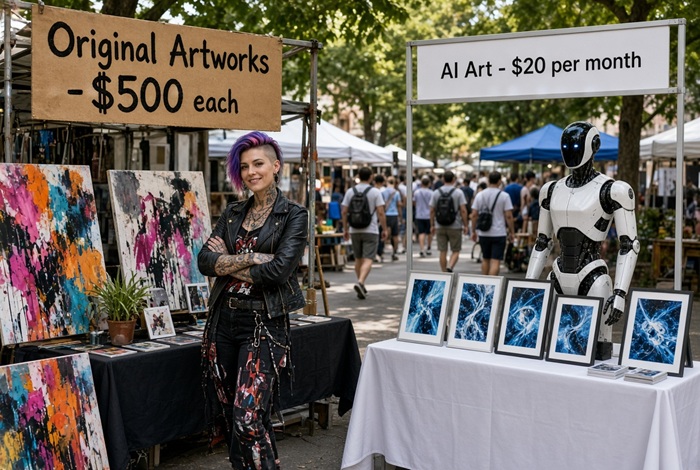
Today, I can generate certain images in about a minute with a monthly subscription costing roughly $20. Consider that for a moment. Some of the images I’ve used for my articles couldn’t simply be captured with a camera. Others would be extraordinarily difficult to produce using conventional graphic design software. Creating them might require a skilled artist to spend days working through a concept, revisions and final production. I can now accomplish something similar in minutes at a fraction of the cost. A negligible fraction of the cost.
Who loses that business?
The person who previously charged me $500 to produce the image. That’s a real economic consequence. It isn’t imaginary and I don’t intend to dismiss it. People build careers around particular skills. They invest years learning their craft. They develop professional identities, establish businesses and support families through their work.
When technology changes the economics of an industry, those people can find themselves on the wrong side of the transition. That’s not an abstract philosophical argument. It’s someone’s livelihood.
Here’s where I think we need to be careful. Acknowledging the human cost of progress is not the same thing as arguing that progress should stop. The printing press displaced scribes. Industrial machinery transformed manufacturing. Photography changed portrait painting. Automobiles disrupted transportation industries built around horses. Digital photography fundamentally altered the business of film photography.
None of those transitions happened without casualties and none of them were reversed because the people affected understandably preferred to stay in the world they knew.
We can debate how society should help people navigate these transitions. We can discuss fair compensation, intellectual property protections, ethical training practices and the responsibilities of companies developing these technologies.
Those are worthwhile conversations, but trying to preserve an existing economic arrangement simply because people depend on it is a different argument. The world has never guaranteed that the skills we develop today will remain economically valuable tomorrow. For many people this lack of stability is an uncomfortable idea, but it isn’t a new one. We’ve travelled this road before.
The Horse Dealer Who Saw the Future
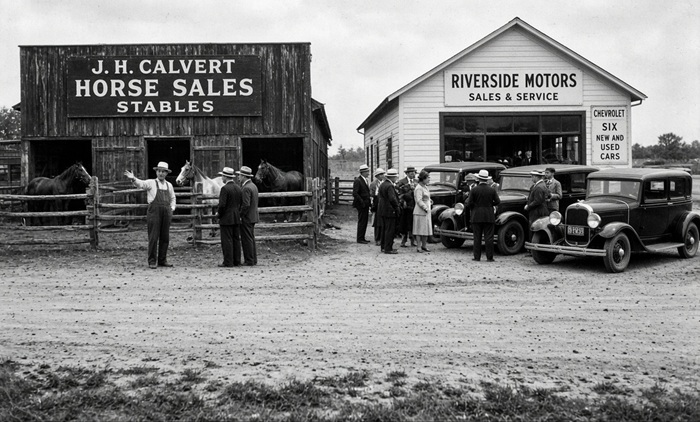
There’s a story in my wife’s family that I think illustrates this rather well. Her great-great-uncle owned sales stables. Essentially, a horse lot. When automobiles started appearing on the streets, he had a choice. He could have complained about the automobile industry, protested the factories, shot out tires or argued that people should continue buying horses because that’s what they’d always done.
Instead, he made room in his stables for cars. As the market changed, he sold fewer horses and more automobiles. Eventually, the sales stables became a car dealership. He evolved.
I find that story particularly interesting because it represents something more profound than a successful business decision. It represents an understanding that the world around us is not obligated to remain unchanged simply because we’ve built our lives around its current configuration.
He didn’t have to love automobiles. He didn’t have to believe they were superior in every conceivable way. He simply recognized that the world was changing and found a way to participate in that change.
That’s an important realization about the world we live in. There is a difference between defending what you value and refusing to acknowledge what comes next. One is preservation. The other is stagnation.
And he wasn’t the only one. Consider the Teamsters. The organization originated with workers who drove horse drawn wagons. Today its members work in a very different transportation economy. The industry changed, the work changed and the organization changed with it. The underlying need for people to move goods didn’t disappear. The old methods did.
The AISLOP Argument
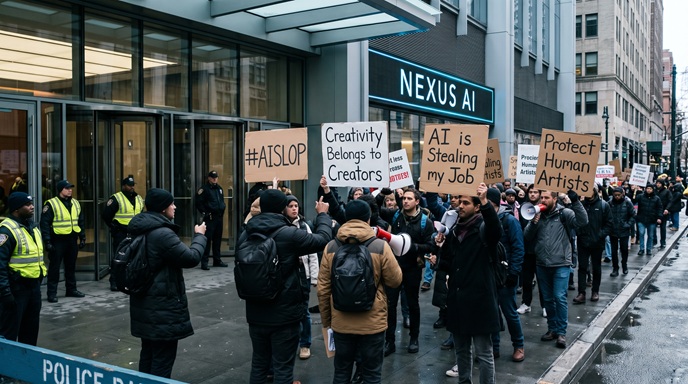
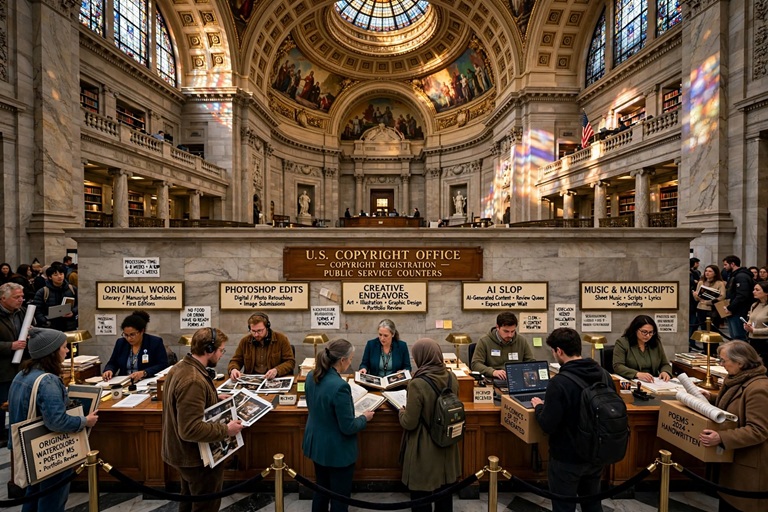
There’s an increasingly visible movement criticizing AI generated content, frequently labeling it “AI slop”. Sometimes, frankly, the criticism is deserved. There’s plenty of low effort, poorly conceived, mass produced material being generated by people who mistake the ability to produce something for the ability to create something meaningful.
AI makes it easier to generate content. It doesn’t automatically make that content interesting, accurate, original or worthwhile. I also notice something interesting about where much of the resistance originates.
A substantial portion of the loudest opposition comes from the creative community itself. That’s understandable. These are people whose livelihoods, professional identities and years of experience are directly affected by the technology. I wonder whether some of the criticism has become less about the quality of the output and more about who or what, is allowed to produce it.
If I generate an image using AI, is it automatically worthless? If I use Photoshop to manipulate a photograph, is that legitimate? If I hire an artist to create the same image, does the result suddenly become more meaningful? If the image communicates an idea, illustrates a concept or helps tell a story, does the method of production automatically determine its value?
I don’t think so. I think there’s an important distinction getting lost in this debate. Protecting artists and prohibiting technological progress are two entirely different objectives.
Artists deserve to protect their intellectual property. They deserve fair compensation for their work. They deserve to have their contributions recognized and they have every right to be concerned about an industry that could fundamentally change their ability to earn a living, but none of those objectives requires us to prohibit the development or use of new technology.
We can protect the people whose livelihoods are affected without demanding that the world stop evolving. We can respect traditional craftsmanship without insisting that every new method of creating something is illegitimate. The challenge isn’t to preserve the world exactly as it is. It’s to figure out how to navigate the world as it changes. That’s what evolution demands.
Creativity isn’t simply the mechanical act of putting pixels on a screen or pigment on a canvas. It’s the idea, the perspective, the imagination. The decisions about what should exist and why. A camera doesn’t make someone a photographer. A paintbrush doesn’t make someone an artist. An AI prompt doesn’t automatically make someone creative. The tool is not the creator.
Whether I use an artist or an AI, I still have to imagine what I want and communicate that vision so the result matches my intent. This raises another important consideration, ownership. Copyright law can be complex and that’s a discussion for another day. At its most fundamental level, contractual agreements can establish ownership of human created work, while copyright protection for AI generated work extends to the original human creative contributions involved in arranging or modifying AI outputs.
The important distinction is that the technology used to produce something doesn’t automatically determine who owns the resulting work. The circumstances, the creative contribution and the documentation matter.
We should not pretend that the tool has no influence on the creative process. AI can contribute ideas, generate alternatives and make decisions that previously belonged exclusively to the human creator. That raises legitimate questions about where authorship begins and ends. Those questions deserve thoughtful consideration.
What they don’t deserve is an automatic dismissal of everything produced with the technology.
When Change Becomes Personal
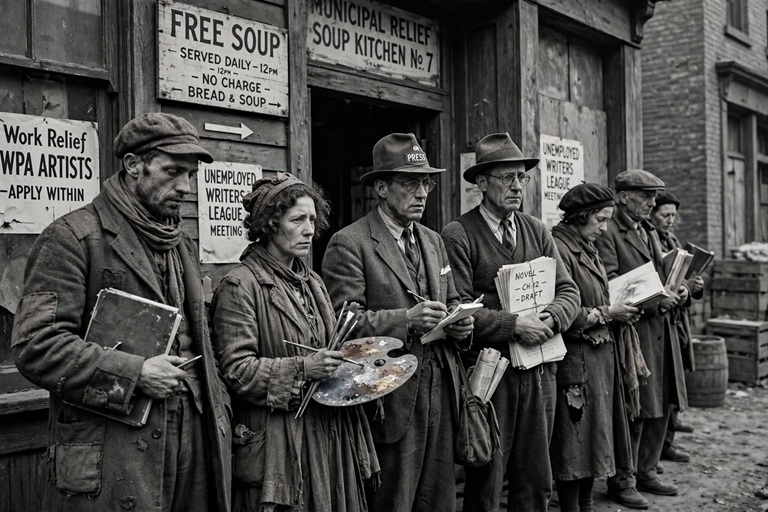
I suspect there’s something deeper happening here than simple resistance to technology. Change can be threatening because we often tie our identities to the things we know how to do. We spend years mastering a craft, building a business or developing expertise in a particular field. Eventually, those abilities become part of how we define ourselves. Then something comes along that changes the rules.
Suddenly, the skill that once made us exceptional is no longer as scarce. The work that once required years of experience can be approximated by someone with a computer and a reasonably good prompt.
AI has narrowed the economic moat and previously defensible positions slowly started showing foundational cracks. It can feel as though the value of our experience is being diminished, even when it isn’t.
Still, there’s a distinction between the value of what we’ve learned and the economic value of being the only person capable of doing it. That’s a game changing differentiator.
Perhaps the hardest part of evolution isn’t learning something new. It’s accepting that something we once considered essential may no longer be.
Evolution Doesn’t Ask for Permission
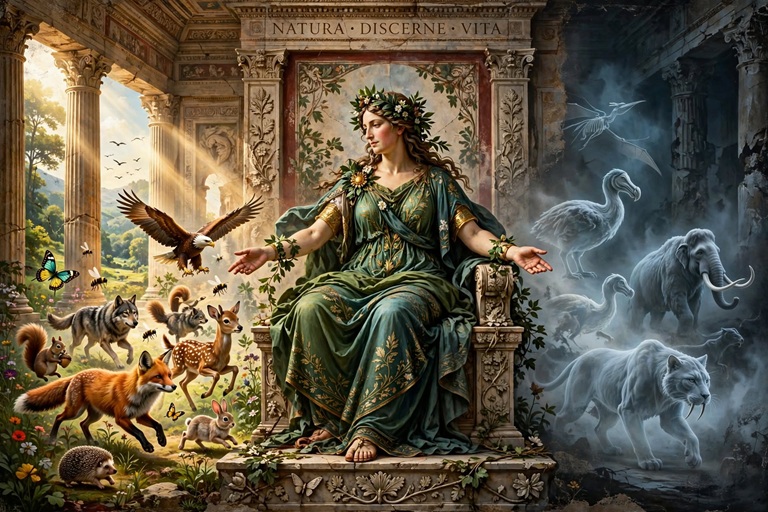
I’ve compared AI to evolution in previous articles and I think the analogy remains appropriate. Evolution isn’t a referendum. It doesn’t hold a public meeting to determine whether the next adaptation is acceptable to the existing population. It happens.
Some adaptations provide advantages. Others don’t. Some species survive, others disappear and the environment continues changing regardless of how comfortable anyone is with the arrangement. Human technological progress isn’t biological evolution, of course. We make choices, establish rules and bear responsibility for the consequences of our inventions, but there is a similar underlying principle. Adaptation is often the difference between participating in the future and becoming a footnote of the past.
This brings us to a philosophical question. Do we have an obligation to preserve the methods of the past or an obligation to explore the possibilities of the future?
I don’t think we can do both indiscriminately. Preservation has value. Tradition has value. Human craftsmanship has value. There are things worth protecting precisely because they are difficult, time consuming and distinctly human, but preserving the value of a craft doesn’t require prohibiting every new way of accomplishing the same objective. Otherwise, we’d have to explain why buying furniture at IKEA is somehow an assault on the noble tradition of woodworking.
A handmade painting can be extraordinary even when an AI generated image exists. A skilled photographer can produce something meaningful even when a computer can generate a convincing image in seconds.
The existence of a new tool doesn’t erase the value of an old skill. It does, however, change the marketplace in which that skill operates. That’s where adaptation becomes necessary.
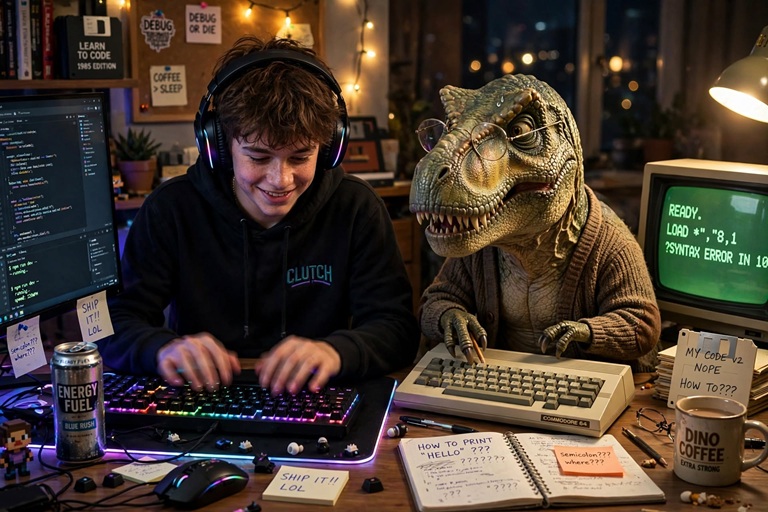
Evolution doesn’t necessarily mean improvement. A species can become exceptionally well adapted to an environment that eventually disappears. Technological progress presents a similar challenge. We can develop increasingly powerful tools without necessarily becoming wiser about how to use them. The objective shouldn’t be to embrace everything new simply because it’s new. It should be to recognize what has value, understand what has changed and adapt intelligently. That’s where we outlive the dinosaurs.
What Will We Think Twenty Years from Now?
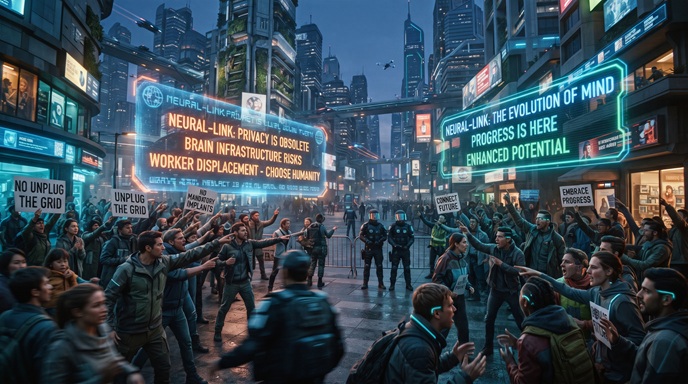
There’s a question I keep coming back to. Twenty years from now will people still argue about whether using AI to generate an image is legitimate? Will AI assisted writing be considered somehow inferior to writing without assistance? Will we still distinguish between something created by a human using traditional tools and something created by a human using artificial intelligence? Will the distinction eventually become as unremarkable as the difference between developing photographs in a darkroom and editing them on a computer?
I suspect the answer is that much of today’s controversy will eventually become yesterday’s history, not because every concern about AI will disappear, but because society will develop new expectations, standards and conventions around its use. We’ll learn where it works, where it doesn’t and where its application creates problems that require regulation or restraint.
We’ll develop a better understanding of authorship, attribution and accountability and we’ll probably discover that the things we considered revolutionary today are simply ordinary tools tomorrow.
That doesn’t mean we should accept every technological development without question. Skepticism is healthy, criticism is necessary, ethical boundaries matter, but skepticism should be a mechanism for improving the future, not an excuse for refusing to participate in it.
I don’t expect everyone to embrace AI. I don’t even expect everyone to like it. What I do expect is that we recognize the difference between protecting something valuable and protecting ourselves from change.
My wife’s great-great-uncle could have spent his remaining years selling horses and complaining about automobiles. Instead, he sold cars. The horses didn’t disappear because he hated them. The world simply found another way to get where it was going.
Humanity’s greatest technological achievements have often come from people who were dissatisfied with the limitations of their own time. We invented better tools because the existing ones weren’t good enough. We explored because staying where we were wasn’t sufficient. We experimented because accepting the limits of what we knew would have meant accepting the limits of what we could become. Yet, strangely, we sometimes become fiercely protective of those very limitations once we’ve learned to live comfortably within them.
Progress doesn’t make yesterday worthless. It makes tomorrow different and perhaps the most important skill we can develop isn’t learning to use the next great technology. It’s learning when to let go of the last one.
Discover more from Tales of Many Things
Subscribe to get the latest posts sent to your email.