Low Moon, Big Drama

Every June the full moon rises over fields and forests and the world collectively swoons over the “Strawberry Moon”, a name that dates back to Algonquin tribes, who marked the ripening of wild strawberries with this particular lunar cycle. Normally, this moon is simply another bright sphere in the night sky, but in June 2025, it’s not just sweet. It’s cosmically rare.

It’s participating in one of the Moon’s rarest and most dramatic acts: a Major Lunar Standstill. Yes, that’s a real astronomical thing and not just a yoga pose or a 70s rock band. So, what’s really going on in the sky this June and why is this Strawberry Moon more than just your average fruit-flavored lunar treat?

The last time it happened was back in 2006. Miss it in 2025, and your next chance won’t come around until 2043. So grab your camera, clear your schedule and maybe practice saying “wow” dramatically, because the Moon is about to put on a serious show.

First, let’s start with the basics. Every June we get a “Strawberry Moon”, named not for its color, but for its timing, when wild strawberries ripen. But in 2025, this full Moon is also aligned with a cosmic event that’s about as rare as a unicorn moonwalking across the sky: a Major Lunar Standstill.

So what exactly is a Major Lunar Standstill? Let’s get a bit nerdy. The Moon’s orbit is tilted by about 5.1 degrees compared to Earth’s orbit around the Sun. That tilt, plus Earth’s own 23.5 degree lean, means the Moon doesn’t rise and set in the exact same spot every day. Over time, its path across the sky wobbles like a slowly tipping spinning top. From this you get a lunar drift that makes the Moon’s position in the sky vary across the month and year. Sometimes it rises farther north, sometimes farther south. Sometimes it takes a high arc across the sky and sometimes it drags its heels just above the horizon, like a teenager being asked to mow the lawn.

Now here’s where it gets interesting: over an 18.6-year cycle, the extremes of the Moon’s rising and setting points shift back and forth. The biggest swing, the major lunar standstill, is when the Moon reaches its furthest north and south positions on the horizon. In practical terms, it rises and sets in the most extreme parts of the sky and in June 2025, it will be at its lowest point in that cycle when the full moon rises.

When the Moon sits low on the horizon, our brains play a neat little trick called the Moon Illusion. Compared to objects like trees, houses or mountains on the horizon, the Moon appears enormous. It’s not actually bigger, just optically pumped up.

Combine that with the Strawberry Moon’s already gorgeous golden glow as it rises in June twilight and you’ve got yourself a celestial spectacle worth cancelling your Netflix night over.

And the next one? You’ll be older. Possibly wiser. This kind of extreme Moon won’t come back until 2043. By then, who knows where you’ll be? Maybe retired. Maybe with grandkids. Maybe living on the Moon (okay, maybe not). But one thing’s for sure: you won’t get another chance like this for almost two decades.

So this June, as the Moon rises low and large, take a moment to just stare. Share it with a friend. Snap a picture. Say something poetic. Or just whisper, “Good heavens, that’s a big Moon.”

Because it really, truly will be.

So, on June 10th (or whenever it’s peaking in your local time zone), find a spot with an unobstructed view of the horizon. Pack a picnic and prepare to witness a truly exceptional Strawberry Moon, a rare celestial ballet that’s putting on its lowest, largest performance in nearly twenty years. Don’t miss the Moon’s big “limbo” moment!


The Ballad of the Strawberry Moon

Oh, rise up slow, sweet lunar tune,
You berry-blushed and bashful Moon,
A low-hung lamp on twilight’s thread,
With cheeks of pink and dreams of red.

You skim the hills with glowing grace,
A ribbon tied ‘round evening’s face.
The fireflies hum, the crickets swoon,
It’s story time beneath the Moon.

No strawberry fields up in the sky,
Yet there you hang, so round and shy.
The farmers smile, the berries bloom,
For June has brought the Strawberry Moon.

The owls all hoot, the coyotes croon,
To welcome back their crescent boon.
But oh! this year, you’re extra sly,
You barely even scrape the sky!

A lunar standstill, so they say,
You crouch and creep and flirt with hay.
And through this rare, celestial tune,
You wink at Earth, a flirty Moon.

No spaceship ride, no high balloon,
Could bring us closer than this June.
So grab a quilt, go sit out soon,
And raise a toast to the Strawberry Moon.

Posted in Science | Tagged , , , , | Leave a comment

Posterior Pride: A Deep Dive in the Crack in the System

Let’s be honest, folks. When that persistent “drip… drip… drip…” starts emanating from under your kitchen sink, a primal fear grips the soul. One minute you’re rinsing out your coffee mug, the next you’re knee-deep in an under-the-cabinet puddle, wondering what lurking creatures are about to exit your plumbing system. It’s the harbinger of watery doom, a tiny leak threatening to escalate into a full-blown indoor swimming pool. And who do we call in our hour of need? The noble plumber, the tried-and-true, battle-hardened, wrench-wielding wizard of the waterworks, that steadfast warrior against the relentless march of moisture.

These heroes of the home arrive with a toolbox that looks like it’s survived three apocalyptic world wars and an encyclopedic knowledge of joints and fittings. There’s a certain comfort in their expertise, isn’t there? The way they confidently saunter in, diagnose the issue, the practiced twist of their wrench, the almost magical way they can coax stubborn pipes into submission. You breathe a sigh of relief, knowing your aquatic anxieties are in capable hands.

But then… there it is. The phenomenon. The legend. The unmistakable flash of the cringeworthy plumber’s crack. Yes, the plumber’s crack. That iconic half-moon salute to chaos and craftsmanship. Part folklore, part fashion faux pas, 100% unavoidable. Some say it’s accidental. Others claim it’s a rite of passage. Many believe it’s a badge of honor. And their timing is always perfect. It’s like they have a sixth sense for precisely how much of their “plumbing expertise” they can reveal while working under the sink.

Is it a rite of passage? A bold declaration of “I’m a plumber, hear me roar”, although that’s not the common sound emanating from that end. Are they daring you to find out if they put on underwear that particular morning? Or is it just a side effect of years spent working in cramped, poorly lit spaces, where the only thing more abundant than pipe joints is questionable fashion sense?

Think about it, when was the last time you saw an electrician or a carpenter sporting a similar “look”? Never, right? But plumbers? It’s like they’re trying out for a role in a buddy cop movie: “Plumber in the Hood”.

Now, I’m not here to shame anyone’s anatomy. We’re all built differently and gravity is a relentless mistress. Let’s be honest, bending over a sink cabinet that was obviously designed for hobbits requires a level of contortion that rivals Olympic gymnasts. Something’s gotta give. And usually, it’s the waistband. But what is it with this seemingly ingrained aspect of the plumbing profession? Is it some sort of unspoken uniform? A secret handshake of the wrench-wielding elite? A subtle form of rebellion against the tyranny of belt loops?

You see it everywhere. Bending over to tighten a valve? Crack. Reaching deep into the abyss of your under-sink cabinet? Crack. Even just standing there, contemplating the labyrinth of pipes, there’s a distinct possibility of a rogue glimpse.

Is there a Plumbers’ Union meeting where they discuss optimal crack exposure? Do they get extra points for achieving maximum visibility? Is there a “Crack of the Month” award? I have so many questions and yet, I’m simultaneously terrified of the answers.

Let’s face it, there are belts. There are suspenders. Heck, there are entire overalls built to combat the crack epidemic. But ask any seasoned plumber and they’ll tell you, once you’re elbow-deep in rusted pipes and mystery gunk, dignity takes a backseat.

Perhaps it’s a purely practical matter. Belts can get in the way, restrict movement when contorting into those pretzel-like positions plumbers often find themselves in. Maybe it’s a subconscious way of aerating the lower back after hours spent in damp, confined spaces. Or perhaps, just perhaps, it’s a subtle reminder that even in the most serious of situations (like your kitchen slowly becoming a bog), there’s always room for a little… cheeky humor.

It’s clearly a cultural phenomenon. The plumber’s crack has been referenced in movies, cartoons and sitcoms. It’s even inspired Halloween costumes. Somewhere out there, someone probably has a bumper sticker that says “Respect the Crack”.

I’ve tried to understand. I’ve pondered the physics, the ergonomics, the very sociological implications of this ubiquitous sight. And you know what I’ve concluded? I have absolutely no idea. I simply can’t crack it.

But here’s the thing: despite the occasional unintentional peek at the plumber’s personal landscape, I’m still incredibly grateful for their skills. They brave the murky depths of our plumbing systems, wrestling with leaky faucets and clogged drains so we don’t have to. They are the unsung heroes of household maintenance.

So, to all the wonderful, experienced plumbers out there who have saved my sanity (and my flooring): thank you. Thank you for your expertise, your dedication and your ability to stop that infernal drip. And while we’re at it, maybe consider a slightly higher rise in those trousers? Just a thought. For the sake of personal plumbing aesthetics. And my slightly traumatized retinas.

And if all else fails and your gaze is drawn to that familiar flash, don’t recoil. Salute it. It means help has arrived, because let’s face it, all wisecracks aside, getting the grizzled veteran plumber to cover up might just be a pipedream.

Stay dry, folks! And maybe, just maybe, offer a belt as a tip.

Posted in Humor | Tagged , , | Leave a comment

The Joy, the Sweat and the Suffering: A Cyclist’s Story

There’s a unique kind of magic in the hum of tires on asphalt, the wind in your face and the rhythmic push and pull of pedals. For me, the bicycle has been a lifelong companion, a constant source of joy and challenge since my parents gifted me my very first fat-wheeled, training-wheeled equipped steed at the tender age of three. It handled more like a Tonka truck than a precision machine, but that early fascination, upgraded to a dirt bike-esque machine by age seven or eight, give me some serious neighborhood range. Eventually, when I could make my own decisions, I upgraded to a proper road bike. Sleek, fast and unforgiving, a bike that hums when you’re in the zone and tattles on you when you’re not.

I’m an avid bicyclist, not in the leisurely “let’s cruise through the park” kind of way, but in the “let’s spend a weekend riding 100 miles and call that fun” kind of way. In a good year, I am easily pushing past the 5,000-mile mark. That’s enough to pedal from New York to Los Angeles and still have the legs to swing back through Vegas for a snack. This commitment isn’t just about numbers. It’s about the sheer love of cycling, the feeling of freedom, the physical exertion and the mental clarity that only comes from hours spent on two wheels. It’s a connection to the environment, a rolling meditation and a constant test of endurance.

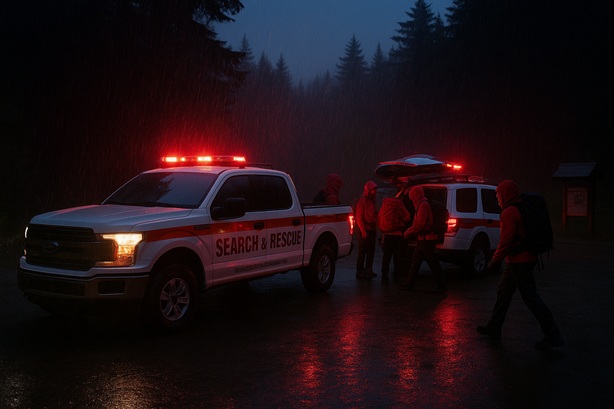
This year, however, has been a tougher ride than most, even before factoring in the miles. Between the relentless demands of work, the unpredictable call of search and rescue duties and the beautiful chaos of family life, time has been a precious commodity. And when I have found a sliver of free time, the weather hasn’t always been cooperative. Wind, rain and cold temperatures have conspired to keep the bike indoors when I wanted to be out.

But then, yesterday happened. It was a gran fondo opportunity and the call of the road was simply too strong to ignore. “Gran fondo” is a French-Italian blend that loosely translates to “big ride” and these events live up to their name. They are not your average Sunday loops around the neighborhood. They are endurance tests for the bicycling community. The smallest ones push riders to complete a metric century, 100 kilometers or 62 miles. But many fondi stretch far beyond that, challenging cyclists with distances of up to 150 miles, or more, enough to question your sanity, hydration and life choices all at once. The beauty of a fondo is that it’s rarely a race. The primary goal isn’t to beat others, but simply to finish the ride, to conquer the distance and the elements and to prove your own resilience, mostly to yourself. My personal best season was a few years back when I completed a dozen fondi in a single year, each one a testament to personal grit and the camaraderie of the road with its own flavors of suffering, triumph and scenic glory. They’re the Tour de Personal Growth.

Yesterday’s fondo started out idyllic. The morning air was crisp, temperatures hovering comfortably in the 60s, with barely a whisper of wind. It was the kind of perfect start that makes you fall in love with cycling all over again. But as the day wore on, Mother Nature decided to turn up the dial. The winds picked up and with them, the temperatures soared. My trusty bicycle computer, a silent witness to the ordeal, logged an average temperature of 91 degrees, with a brutal peak of 109 degrees Fahrenheit. That’s not “warm”. That’s “bake a lasagna on your handlebars” hot. Riding in that kind of heat feels less like a hobby and more like a crazy dare.

Riding in conditions like that transforms the experience entirely. It’s no longer about gliding effortlessly. It becomes a raw battle against the elements. A hot wind, blasting like a furnace, makes every pedal stroke a monumental effort, sucking the joy out of the ride and replacing it with a relentless, dehydrating assault. It’s why you start to see riders pull over, seeking shade, or simply calling it a day when they stop at aid stations. And then there’s me, stubborn as ever, grinding away under a furnace blast like a Tour de France competitor on day 19 of a desert stage. Conditions like those are profoundly unfriendly, pushing the human body to its absolute limits.

Despite the escalating discomfort, I managed to finish the ride. I crossed that invisible line of completion, but not without paying a price. I probably checked off every symptom of heat exhaustion on WebMD along the way. The aftermath was telling: I guzzled three liters of ice-cold water, like a man who’d just survived the Sahara, a desperate attempt to rehydrate and cool my core. And in a rare, departure from my usual dietary discipline, I devoured a pint of ice cream. I’m not anti-ice cream by any means, but rarely do I consume that much in one sitting. Desperate times call for creamy reinforcements. This time, it was less about indulgence and more about survival, a delicious and essential intervention to bring my core temperature down.

A good fondo, even in normal conditions, can easily burn three days’ worth of calories, if not more, so the caloric intake wasn’t the issue. In fact, any potential caloric guilt was conveniently left behind at least a dozen miles short of the finish line. Even after all that fluid and ice cream, my weight was still down 6% from the day before. That’s not “I lost a little water weight”. That is dehydration with a vengeance, pure and simple, and a stark confirmation of the heat exhaustion theory.

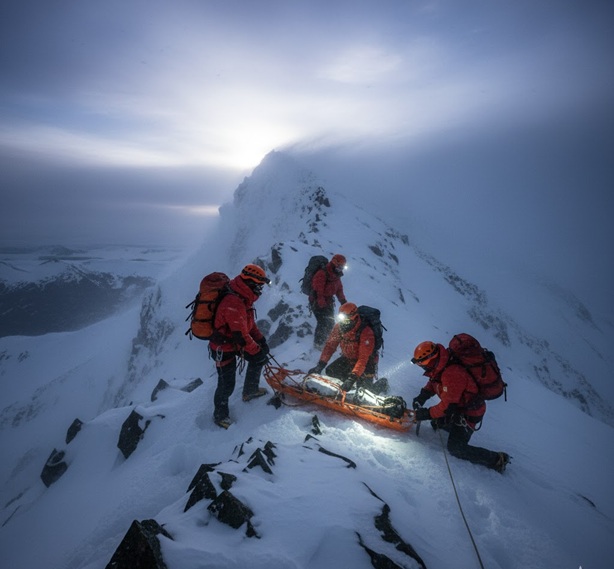
My experience yesterday underscores a critical message for anyone exercising, especially in extreme conditions: get out there and exercise, but always, always manage your body’s response to the environment. Listen to its signals. Hydrate intelligently. And whatever you do, please, don’t use me as a benchmark for anything! Especially not when it’s 109 degrees out. I do search and rescue as a hobby. I’ve pulled plenty of exhausted, dehydrated, heat stressed individuals from all sorts of environments. I can see our medical lead looking me in the eyes, saying, “you know better than that, you idiot!”

Cycling has been with me longer than most friendships and it taught me more about persistence, patience and porta-potties than I care to admit. I love it. I live it. I hurt myself for it. And somehow, I come back smiling. My dedication to the saddle might sometimes override common sense, a testament to the deep love I have for this sport, but not necessarily a wise example to follow. The open road, whether bathed in golden sunlight or blistering under a scorching sun, continues to call and as long as it does, I’ll keep answering, learning and sharing the wild, wonderful and sometimes utterly insane journey of an avid bicyclist.


Posted in Bicycling | Tagged , , | Leave a comment

Reflections on National Search and Rescue Week

In 2010, the U.S. Senate designated the week leading up to Memorial Day weekend as National Search and Rescue Week. It’s a time meant to honor and recognize the tireless, often invisible work of search and rescue professionals and volunteers across the country. From deep wilderness recoveries to urban searches, search and rescue teams quietly and skillfully step in when lives hang in the balance.

For many, the image of search and rescue might conjure dramatic helicopter footage or news reports of daring wilderness rescues. While these scenarios certainly exist, the reality is often more grounded, more arduous and relies heavily on the tireless efforts of everyday citizens who volunteer their time, skills and often their own resources.

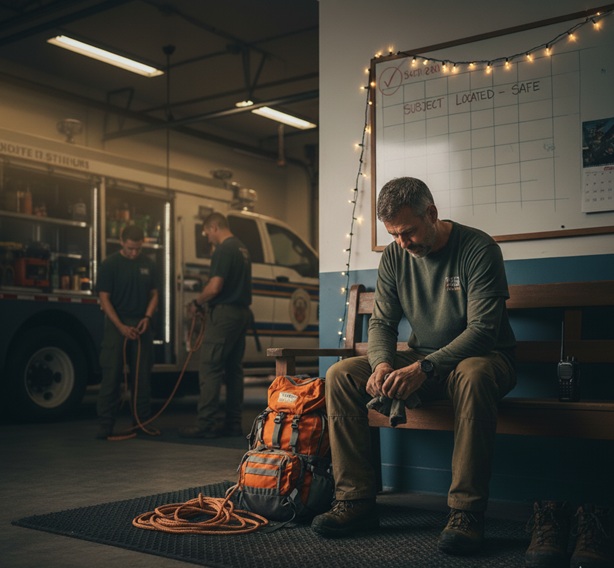
This year, National Search and Rescue Week (May 16 through May 22) hit with particular resonance for my team, because instead of slowing down to reflect, we found ourselves in the thick of back-to-back missions that reminded us exactly why we do what we do.

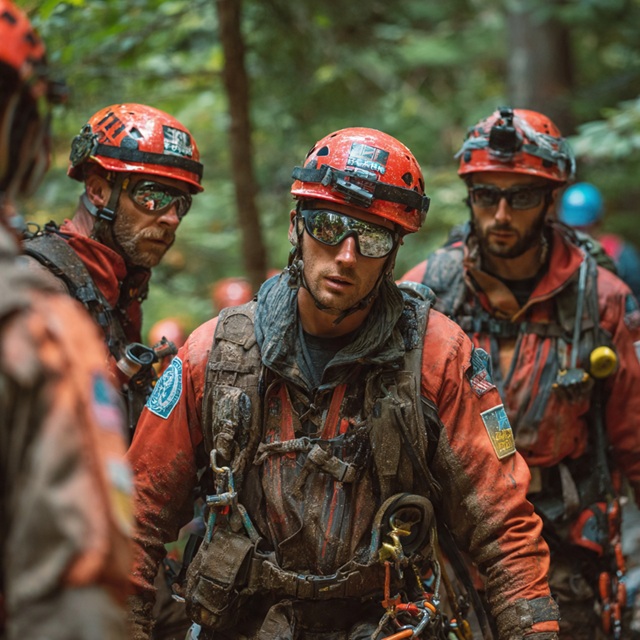
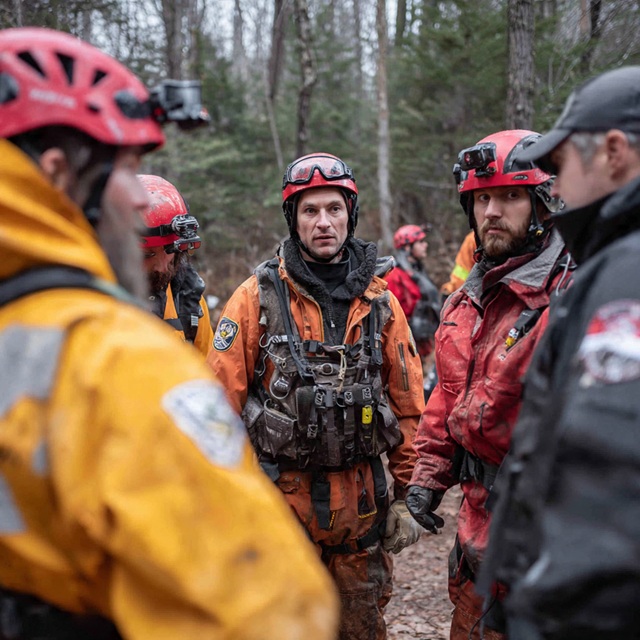
Our first callout was for a missing fourth grader who hadn’t come home from school. What began as a localized search quickly turned into an eighteen-hour, multi-agency operation spanning over a dozen square miles in the urban and urban-wilderness interface, a landscape far more challenging to navigate than one might imagine. Mutual aid came in from neighboring counties. Law enforcement coordinated logistics. Search and rescue volunteers, many of whom had just finished a full day’s work, stayed on their feet for over thirty hours straight. The end result? A successful find and one very relieved family.

After a couple hours of sleep and a fresh cup of coffee (maybe two), the second call came in: tornadoes. Three of them. Touching down in the rural reaches of our county, they tore through fields, homes and small communities. Our mission shifted from search to damage assessment. We rolled out alongside fire departments and emergency management crews, working systematically to identify hazardous areas and determine where we were needed most. This time, thanks to effective reverse-911 systems and emergency preparedness, no lives were lost. A small mercy.

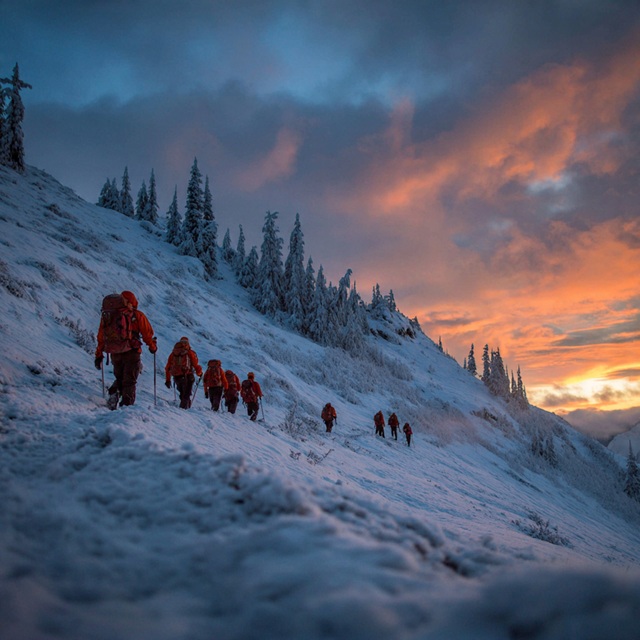
These kinds of weeks are exhausting, humbling and rewarding and why search and rescue volunteers exist. We don’t do it for recognition or accolades. We do it because someone has to. Because when the unthinkable happens, someone has to show up, whether it’s 2 AM, raining sideways or 105 degrees in the shade.

The importance of volunteer search and rescue cannot be overstated. We provide a critical lifeline in situations where time is of the essence and specialized skills are required. We augment the capabilities of paid emergency services, often possessing unique expertise in areas like wilderness navigation, tracking, technical rescue and search management. Our local knowledge and community ties are invaluable assets in understanding the terrain and the potential whereabouts of those missing.

The dedication is immense. Volunteers invest countless hours in training, maintaining equipment and responding to missions, often at personal cost. The emotional toll can be significant, bearing witness to human vulnerability and the anxieties of those in crisis. Yet, we continue to answer the call, driven by a profound sense of responsibility and the immense satisfaction of a successful rescue.

But that doesn’t mean we don’t appreciate the designation of National Search and Rescue Week. It’s a moment to pause (if we’re lucky), maybe fire up the grill and enjoy some quiet time with our families, who sacrifice along with us. It’s a chance to reflect on missions past, prepare for missions ahead and most importantly, urge others to be prepared.

If you’d like to honor search and rescue volunteers this week, here’s the best way:

  • Let someone know where you’re going when you head out.
  • Take the ten essentials on every outdoor trip.
  • Keep your phone charged, with offline maps downloaded.
  • Respect weather forecasts and trail warnings.
  • And if you ever do need help, stay put and stay calm. We’ll come find you.

Here’s to a quiet week, a restful Memorial Day and a safe summer for all. We’re here 24/7, ready to go. But we’d be happy not to see you out in the field.

Stay safe out there.


Posted in Search and Rescue | Tagged , , | Leave a comment

The Sin of Mixed Roots: When Latin and Greek Walk into a Word

Let me start by saying I don’t judge people for the choices they make in life.  Love who you want, as long as everyone’s consenting and no one’s getting hurt, but if you’re going to go all-in on a lifestyle, please don’t go halfway on the language.

Case in point: many years ago, a friend and his significant other joined the polyamory community.  More power to them, but “polyamory” — a word that tries to be sexy, inclusive and open — instead gave me mild lexical whiplash.  Poly is Greek.  Amory is Latin.  That’s linguistic bed-hopping.  If we’re going to be open, let’s be honest, you can’t just pick roots from different ancient civilizations and pretend like the word doesn’t have commitment issues.

If you want to go all Greek: Polyphilia.  Elegant.  Nerdy.  Socratic.  All Latin?  Try Multiamore.  Sounds like a perfume or a decadent Roman holiday.  Either way, at least the roots aren’t arguing about syntax behind your back.

The Dire Wolf: Even Scientists Aren’t Innocent

This root salad came bubbling back to the surface when I was writing about the de-extinction of the dire wolf.  Yes, that’s a real thing and you can read about it here.  No, they don’t look like the ones from Game of Thrones.  Those were more fantasy bear-dogs than anything else.

But here’s the kicker: the dire wolf’s scientific name is Aenocyon dirus.  Let’s unpack that:

  • Aenocyon comes from Greek ainós (dreadful) and kyōn (dog).
  • Dirus is straight-up Latin for “fearsome”.

We get it.  It’s scary.  But you’ve just created a chimera of roots — a mutt, if you will — that would make both Homer and Virgil roll over in their respective graves.  In different city-states.

Other Crimes Against Etymology

This kind of root-mixing happens all the time and somehow we’ve allowed it to slide like mismatched socks at a toga party.

  • Television = Greek tele (far) + Latin vision (seeing).
    Why not teleopsis?  Or longascope?  (Okay, maybe not that last one.  That sounds like a painful Victorian medical device.)
  • Automobile = Greek auto (self) + Latin mobilis (movable).
    You’re literally driving a linguistic contradiction every day.
  • Homosexual = Greek homo (same) + Latin sexualis (pertaining to sex).
    A classic case of a mismatched couple and one that never filed for etymological marriage counseling.
  • Sociology = French soci (social) + Greek logy (study).
    A textbook example of a Franco-Hellenic hybrid, the poster child for linguistic indecision.
  • Biotechnology = Greek bios (life) + Latin tekhne (art or craft or practical skill) + Greek logy (study).
    Because nothing says “cutting-edge science” like a Greco-Roman-Greco identity crisis, proof that mixing ancient languages can still mess with modern genetics.

But… Why Do We Do This?

Because we’re lazy.  And flexible.  And English is a Frankenstein language that long ago gave up on consistency in favor of creativity.  It’s the magpie of tongues, borrowing shiny bits from Greek, Latin, French, German and whatever else it found lying around in the linguistic yard sale.

Let’s be honest: nobody wants to say “multiamorous relationship”.  It sounds like a medieval medical condition.  And polyphilia?  That might get you flagged on a search filter.

So we shrug, say “meh”, and keep using our Greek-Latin smoothies.  Does it make purists twitch?  Yes.  Does anyone else care?  Not really.  And that’s probably okay.  Unless you’re a purist, that is.  That might be therapy that I need.

Final Thoughts from the Word Police

The next time you’re inventing a new identity, a new creature or a new tech startup (looking at you, Theranos), spare a thought for your ancient linguistic ancestors.  They conquered empires, wrote epic poems and categorized plants with surgical precision.  They deserve better than a mashup menu of etymological fast food.  Let’s be mindful of our language and respect the roots of our words.  Whether you’re a scientist, a linguist or simply a word enthusiast, we can all do our part to preserve the sanctity of language.

If you must mix roots, at least be bold about it.  Own it.  Call it Greco-Latin fusion, like tapas with a side of tzatziki.  But don’t pretend it’s pure.

Bonus hybrid

Remember, the dire wolf might be coming back, but the sanctity of classical languages?  That bus sailed when someone named their Wi-Fi “Wīrlēas Fides”.

Wi-Fi is short for Wireless Fidelity, which in itself is a horrible linguistic mess.  Old English wīr, of Germanic origin, probably from the base of Latin viere, meaning ‘plait’ or ‘weave’ + the English suffix “-less” meaning “without” or “lacking”, stemming from Old English “-lēas”, which meant “free from” + late Middle English “fidelity” from Old French fidelite or Latin fidelitas, from fidelis ‘faithful’, from fides ‘faith’.  So really, your Wi-Fi is “Plait Lacking Faith”.

Language is hard.  Please don’t make it any more difficult than it needs to be.

Posted in Humor, Language | Tagged , , | Leave a comment

Mom: The Friend You Never Knew You Needed (Until You Grew Up)

There’s something almost magical about reaching a point in life where you can sit across from your mom, coffee in hand, and just talk. Not about chores or curfews or why your laundry always smells like gym socks, but about life. Real, grown-up, beautiful, messy life.

I’m lucky enough to still have my mother around. That’s not something I take for granted, especially when I see so many friends my age who have already lost theirs. Mother’s Day brings a lot of emotions, but one that keeps bubbling to the top for me is gratitude. Deep, heartfelt gratitude. Because somewhere along the way, between scraped knees and teenage eye rolls, my mom became my friend.

Now don’t get me wrong, she’ll always be Mom. She still worries if I’ve eaten and yes, she still thinks I should bring a sweater just in case. But these days, we talk like adults. We share stories. We laugh, hard. We offer each other advice, vent frustrations and even swap book recommendations. Somehow, she’s gone from rule-enforcer to trusted confidante and honestly, she’s better at both than I ever gave her credit for.

Having your mom as your friend doesn’t mean the relationship loses its depth or sacredness. If anything, it grows stronger. It means you’ve lived enough life to finally understand hers a little better. It means you can appreciate her not just for what she did for you, but for who she is: a whole person with dreams, heartbreaks, quirks and wisdom.

So this Mother’s Day, I’m not just grateful for the woman who raised me, I’m grateful for the woman who gets me, the one who listens when I ramble, texts me memes and still manages to find the exact words I need to hear. Not everyone gets to experience that evolution, but I do. And that’s the best gift I could ever ask for.

Happy Mother’s Day, Mom. Thanks for being the first friend I ever had and somehow, still the best one.

Posted in Holidays | Tagged , | Leave a comment

The Annual Mother’s Day Panic: A Survival Guide (with a Hint of Sanity)

Mother’s Day. That glorious Sunday where we collectively try to repay a lifetime of scraped knees, questionable fashion advice (remember those neon windbreakers?) and the unwavering belief that we are, in fact, capable of emptying the dishwasher correctly. The pressure is on, folks. The floral industry is salivating. The brunch reservations are tighter than Uncle Bob’s jeans after Thanksgiving. And we, the well-meaning but often clueless offspring, are once again staring blankly at the internet prompt, muttering, “What does she even want?”

Let’s be honest, the go-to gifts can feel a little predictable. Another scented candle? Will that really convey the depth of your gratitude for the time she patiently explained the difference between “there”, “their” and “they’re” for the 87th time? (Spoiler alert: probably not.)

This year, let’s aim for something a little more thoughtful, a little less “I panicked at the mall last minute.” But also, let’s keep it real. We’re busy. We’re probably still recovering from filing our taxes. And let’s face it, sometimes a really nice candle is appreciated (as long as it doesn’t smell like “Mothball Renaissance”).

So, ditch the generic gift guide and let’s brainstorm with a touch of humor and a sprinkle of genuine affection. Here are a few categories to ponder, keeping in mind the ultimate goal: making Mom feel seen, appreciated and maybe even chuckle a little.

The “Finally, Someone Gets It” Gift:

  • The Gift of Time (and Silence): This is priceless. Offer to tackle a chore she loathes. Weed the garden. Clean the gutters. Organize the Tupperware abyss. Bonus points if you do it without complaining or needing constant supervision. The sound of blissful silence emanating from her favorite armchair might be the greatest gift of all.
  • The “Tech Support That Doesn’t End in Tears” Package: If your mom’s relationship with technology is complicated, offer your services. Patiently explain how to work the new streaming service. Set up that digital photo frame. Just promise to breathe deeply and avoid phrases like “it’s so simple!” You established your electronics dominance thirty years ago setting the time on the VCR. You can do it again.
  • The “Escape the Chaos” Voucher: If her life is a beautiful, messy whirlwind (often thanks to us), consider a gift certificate for a massage, a quiet afternoon with an infinite coffee refill at a bookstore or even just a guaranteed hour of uninterrupted reading time with a “Do Not Disturb” sign you’ve personally crafted (with glitter, if you’re feeling ambitious).

The “Remember That One Time?” Gift:

  • The Nostalgia Bomb: Dig through those old photographs and create a personalized photo album or scrapbook. Include funny captions and inside jokes. This shows you’ve put in effort and cherish those shared memories (especially the embarrassing ones).
  • The Recreated Disaster (in a Good Way): Remember that time you accidentally dyed the cat blue? Okay, maybe don’t recreate that. But perhaps you could try to recreate her favorite childhood recipe or revisit a place that holds special significance for your family. The effort and the shared memory will be the real gift.

The “Practical, but Make It Cute” Gift:

  • The Upgraded Everyday: Think about something Mom uses regularly, but could use a nicer version of. A luxurious hand cream, a beautiful reusable water bottle, a cozy throw blanket that doesn’t have mysterious stains from the dog.
  • The Subscription Box Tailored to Her Quirks: Whether she’s a tea aficionado, a gardening guru or obsessed with artisanal cheese (that’s still a thing), there’s a subscription box for that. It’s the gift that keeps on giving (and reminds her of you each month).

The “Let’s Do Something Together (But You Don’t Have to Clean Up)” Gift:

  • The Shared Experience: Plan an outing you can both enjoy. A picnic in the park (bonus points if you pack it!), a visit to a local art fair, a cooking class you take together (just promise you’ll handle the post-apocalyptic dishwashing).

Ultimately, the best Mother’s Day gift isn’t about the price tag or the trendiness. It’s about showing your mom that you know her, you appreciate her and you’ve put some genuine thought into making her feel special. So, take a deep breath, resist the urge to just grab the nearest bath bomb and consider what would truly bring a smile to her face (and maybe earn you a few extra points in the “favorite child” rankings – no judgment here). Happy Mother’s Day to all the wonderful moms out there! You deserve all the good things (and maybe just a little bit of peace and quiet).

Posted in Holidays | Tagged , | Leave a comment

May the Culture be With You: The Cultural Significance of Star Wars

For those blissfully unaware, May the Fourth is upon us. It’s the one day a year where we collectively agree to pepper our conversations with terrible puns and rewatch a saga that, let’s be honest, has more plot holes than the Death Star’s exhaust port.

But why? Why this enduring obsession? Is it the epic battles? The cool spaceships? The undeniable charisma of a smuggler who looks like he just rolled out of bed? Sure, those things are great. But the cultural significance of Star Wars runs deeper than a Wookiee’s growl.

The answer is simple. It’s the ultimate family drama, just with more explosions. Forget your Thanksgiving squabbles. Try dealing with finding out your dad is the galaxy’s most evil Sith Lord. Luke Skywalker’s journey is basically a highly dramatized version of every teenager’s angst, amplified by the power of the Force. It’s relatable. And then there’s the moral simplicity, which is frankly a relief in our overly complex world. And let’s not forget the iconic characters who are basically walking embodiments of our own inner struggles. They’re flawed and they’re relatable.

Let’s be honest: Star Wars is less of a movie franchise and more of a second religion, one with lightsabers, space wizards and far more merchandise than any world faith should legally allow. You don’t watch Star Wars. You inherit it. It’s passed down from generation to generation like Grandma’s lasagna recipe or Uncle Bob’s conspiracy theories.

Sure, George Lucas set out in 1977 to tell a simple tale of good versus evil in a galaxy far, far away, but what he accidentally did was break the time-space continuum. One moment you’re watching Luke whine about power converters, the next you’re standing in line for a sixth sequel, explaining to your confused date why “Han shot first” is an ethical hill worth dying on.

Star Wars is cultural glue. It’s the one place where boomers, millennials, Gen Z and whatever TikTok-dancing generation comes next can all gather, argue about midichlorians, and feel superior to people who only watch the movies. Yes, there’s a difference between Clone Wars and The Clone Wars.

But perhaps the most significant cultural impact is Star Wars’ ability to unite geeks of all ages and persuasions. From the hardcore lore fanatics who can debate the intricacies of the Old Republic for hours to the casual fans who just enjoy the pew-pew lasers, Star Wars provides a shared language and a common ground. It’s the intergalactic equivalent of discussing the weather, only way more intense.

Consider its impact:

  • Linguistics: Phrases like “the Force”, “dark side”, “I am your father”, “do or do not, there is no try” and “these are not the droids you’re looking for” are now part of our daily vocabulary. If someone waves their hand while saying the last one, they either love Star Wars or are trying to avoid doing their job.
  • Fashion: Jedi robes. Wookiee fur. Princess Leia buns. Darth Vader chic. Star Wars has turned Comic-Con into a runway show for nerds, and I say that with a certain level of affection, because a lot of the Star Wars nerds I know are doctors and lawyers and rocket scientists.
  • Politics: Every time a politician says “empire”, half the room hears the Imperial March in their head. Filibusters would be more tolerable if a senator had to debate Yoda-style: “To veto this bill, I must.”  Although, let’s be real, most people sound like they’re having a stroke when they try to talk like Yoda.
  • Technology: Every new gadget gets compared to Star Wars. Roombas are baby droids. Alexa is C-3PO’s cousin who just wants to sell you light bulbs. And let’s not even start on Elon Musk’s SpaceX unless you have three hours and a drink in hand.

And now, Star Wars has holidays. May the Fourth (be with you), Revenge of the Fifth, and for overachievers, Return of the Sixth. We’ve turned an entire week into a pun-based celebration of a fictional universe, which is either a testament to human creativity or a cry for help.

From cosplay to fan fiction, Star Wars has unleashed a creative force that’s hard to contain. In the end, Star Wars isn’t just entertainment. It’s a lifestyle, a bonding ritual, a pop-cultural lodestar for people who believe that laser swords are the most logical weapon in hand-to-hand combat. And while we may never agree on whether the sequels should exist, we can all unite under one simple truth: Jar Jar Binks was a mistake.

Love it or hate it, the franchise has permeated our pop culture landscape like a Wookiee’s furry coat.

The Star Wars movement.

The Star Wars movement.

Posted in Society | Tagged , , , | Leave a comment

A Scene at the Intersection: Thoughts on Free Speech in America

These days, saying anything remotely political feels like tiptoeing through a minefield while wearing clown shoes. The act of simply acknowledging a political event — any political event — seems enough to draw cheers from one side and pitchforks from the other. So, while writing this, I do so with no agenda, no endorsements, and a healthy respect for my fellow Americans, regardless of where they fall on the ideological spectrum. My aim is to focus on something that unites rather than divides.

President Donald Trump recently marked his 100th day in office. Depending on which media outlet you favor (or avoid) his approval ratings fall somewhere between 39% and 44%. Some say that’s a historic low for a modern president at this milestone, others say it’s an irrelevant number. But frankly, that’s not the story I want to tell.  The story is about the reaction.

Yesterday, while out on an errand that had nothing to do with politics, I stumbled upon a political protest in a residential neighborhood. It stretched across an entire city block, mostly centered around a busy intersection. There were over a hundred people gathered, brandishing hand-made signs and chanting messages into the open air. Some were passionate, others cheerful, and a few just seemed happy to be part of something bigger than themselves.

Rush hour traffic surged past the crowd. Some drivers honked in support, others perhaps out of frustration. (It’s often hard to tell the difference — a honk is not exactly a nuanced form of communication.) Amid the noise and motion, one car ran into another’s bumper, prompting a half-hearted exchange of insurance information while protest chants carried on in the background.

Curious, I stepped over to a police officer watching the scene and asked, “What do you think?” He barely looked away from the crowd and answered simply: “People have the right to a peaceful protest.”

And that, really, is the heart of the matter.

That right, to stand in a public place and make your voice heard, is not something everyone in the world enjoys. In some countries, a gathering like that would be broken up with tear gas or armored vehicles. In others, protesters might vanish overnight or face long prison sentences for holding up cardboard signs with words the government doesn’t like.

But here, in the United States, whether you lean left, right, center or identify as politically allergic, you have the right to speak up. You have the right to peacefully disagree. To rally. To hold signs. To honk your horn (within reason). You even have the right to ignore it all and go fishing. That’s part of what makes America, and more importantly its constitution, something truly special.

We may argue over policies, personalities and polls. We may roll our eyes at the news or shout at our TV screens. But we can do these things freely, without fear of retribution. And while that may seem like a given, it’s actually a rare and hard-earned privilege, a gift safeguarded by generations before us and preserved, ideally, through mutual respect and civic engagement.

So next time you see a protest, or better yet, participate in one, take a moment to appreciate not just the cause, but the freedom that allows it. Agree or disagree, the ability to speak, march and assemble peacefully is not just a right. It’s a cornerstone of what it means to live in a democratic society.

And as for the officer I spoke with? He didn’t seem fazed by the signs, the slogans or the sea of motion in front of him. He just stood there, a quiet sentinel, making sure that the protest remained peaceful, not because he agreed or disagreed, but because it’s his job to protect that freedom.

The officer’s words reminded me of the importance of peaceful protest. In a world where tensions can run high, it’s crucial that we prioritize dialogue, understanding and nonviolent expression. By doing so, we create a space for constructive debate, where differing opinions can be shared and respected. The ability to engage in open discourse, even when that discourse is contentious, is a cornerstone of our civic life. It is a right that should be both cherished and exercised responsibly.

And that, I think, is something we can all salute.


Posted in Society | Tagged , , | Leave a comment

May Day: An American Original and the Spirit of the Working Class

When most people hear the words “May Day”, they might picture red flags, clenched fists and parades marching through Red Square in Moscow. It’s often painted in broad strokes as a Communist holiday — an international celebration of socialism and the proletariat working class. But peel back the layers and you’ll uncover a surprising truth: May Day is as American as apple pie and its origins are deeply rooted in American history. Let’s take a step back and explore the fascinating tale of how May Day came to be and the breaking of chains forged by the robber barons of the industrial revolution.

Let’s turn the calendar back to 1886, to the smoke-filled skies of Chicago, Illinois, in the heart of the Industrial Revolution. It was an era of steam and steel, of long shifts and short paychecks. It was also the era when a brave group of men and women decided that enough was enough.

May 1st, 1886, marked the start of a nationwide strike across the United States, a unified demand for something we take for granted today, an eight-hour workday. That weekend Chicago’s Haymarket Square became ground zero for this movement. The demonstration began peacefully, a gathering of workers and their families standing in solidarity for a better life, better working conditions and a shorter workday.

But on May 4th, a tragedy unfolded. As police moved to disperse the rally, a bomb was thrown, by whom, we still don’t know, and chaos erupted. In the blast and gunfire that followed, seven police officers and at least four civilians lost their lives. Many more were injured. The tragedy became known as the Haymarket Massacre. Despite the tragic events, the Haymarket Massacre marked a turning point in the fight for workers’ rights and May Day was born.

May 1st became a rallying cry for workers’ rights not just in America, but around the globe. Other nations saw the bravery of the American labor movement and adopted the day as their own, using it to honor the working class and advocate for better conditions.

But then came geopolitics. The rallying cry for improved working conditions spread across continents, but as May Day gained traction in other countries, particularly in the newly formed Soviet Union, its association with Marxist socialism created a dilemma for capitalist America. The Cold War cast a long shadow and embracing a holiday so deeply embraced by communism felt like a betrayal of American values.

In post-WWII America, where the Red Scare had taken hold, anything associated with communism became suspect, including May Day. In 1947, the Veterans of Foreign Wars proposed Loyalty Day, a counter-celebration to honor American values and reject communist influence. The U.S. government embraced the idea and Labor Day in September became the “official” workers’ holiday.

Here’s the kicker: the United States invented May Day. It was born not from the writings of Marx, but from the grit and determination of American factory workers demanding humane hours and decent pay. The irony is rich and perhaps a little tragic. The nation that birthed the movement for the eight-hour workday became hesitant to fully embrace its symbolic date.

But maybe we’ve been looking at this all wrong.

The truth is, no matter what day we mark on the calendar, the spirit of May Day is alive and well in every American who clocks in, rolls up their sleeves and gets to work.

It’s the spirit of ingenuity, the “elbow grease and good old fashioned know-how”, that has propelled this nation to the forefront of industrialized nations. From the assembly lines of Detroit to the tech hubs of Silicon Valley, from the farms of the Midwest to the fishing fleets of the coasts, the American worker has always been the engine of our progress.

It’s in the farmers who rise before the sun. It’s in the nurses pulling double shifts. It’s in the welders, the truckers, the small business owners, the tech workers solving problems on the fly, and the first responders who tirelessly answer the call in the middle of the night.

This country was built on calloused hands and untiring dedication. The American worker is not a relic of the past. They are our engine. They are our edge. They are our heartbeat.

Whether you celebrate on May 1st, on Labor Day or every day in between, let’s take a moment to honor the enduring brilliance of American ingenuity and the everyday heroes who keep our world running.

So here’s to the common man and woman, the uncommon heroes of the American dream. They may not always get the spotlight, but without them, there is no show.

Posted in Labor | Tagged , , , | Leave a comment