
We have reached that magical point of the year in the northern hemisphere when daylight feels almost infinite. Summer solstice brings us the longest days of the year and with them, an irresistible urge to squeeze every drop of adventure out of the sun.
We stay out longer. We push farther. We attempt that extra loop or that peak on the urban edge after work because the sky stays bright well past dinnertime.
Summer has a way of making us optimistic. The sun seems to linger forever over the mountains. Trailheads are busy, campsites are full and people are squeezing every possible hour out of the outdoors.
It’s easy to believe that darkness is someone else’s problem. After all, sunset isn’t until after 9 PM. You have plenty of time.
Until you don’t.
Understanding the Problem
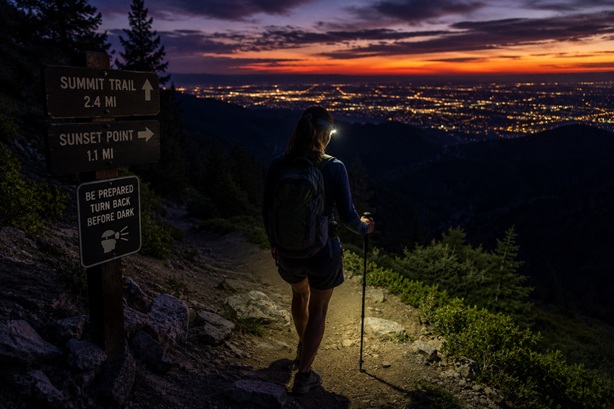
But this abundance of light introduces a dangerous psychological illusion. Because the sun stays up late, we treat the wilderness as if it has no curfew. Every year, right around the solstice, search and rescue teams quietly brace for a specific, highly predictable surge in calls.
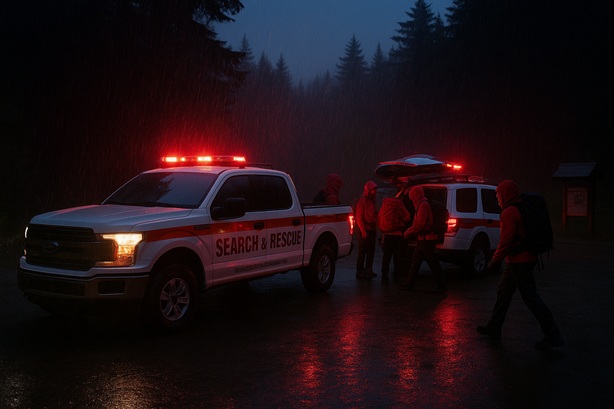
Search and rescue teams respond to hikers who underestimated how quickly daylight disappears. What began as a pleasant afternoon hike becomes a navigation problem. A missed trail junction becomes a search. A twisted ankle that would have been a minor inconvenience at noon becomes a significant emergency after dark.
The irony is that darkness itself is rarely the problem.
The problem is failing to prepare for it.
These aren’t dramatic technical rescues on high-alpine peaks. These are assists for ordinary people — trail runners, casual hikers and after-work explorers — who took advantage of the extra light, but went out completely unprepared for the eventual, inevitable darkness.
When you lose the light, you lose the mountain you thought you knew. Here is how the transition from dusk to dark changes your risk profile and how to #TakeTheExtraMinute to ensure you walk out on your own two feet.
The Wilderness Changes After Sunset
The trail you confidently followed all afternoon is not the same trail after dark. Landmarks disappear. Distances become difficult to judge. Shadows distort terrain. Familiar objects suddenly look unfamiliar.
Human beings are visual creatures. We navigate the world primarily through sight, and when visibility drops, our perception of risk changes dramatically.
A trail junction that seemed obvious in daylight can become nearly invisible under a headlamp.
A rock step that was easy to negotiate at noon can become a fall hazard at dusk.
A route that felt straightforward on the way up can become confusing on the descent.
Many search and rescue calls begin with a simple statement, “We thought we’d be back before dark.”
Unfortunately, darkness doesn’t care what your plan was.
The Urban Edge Illusion
This problem isn’t limited to remote wilderness.
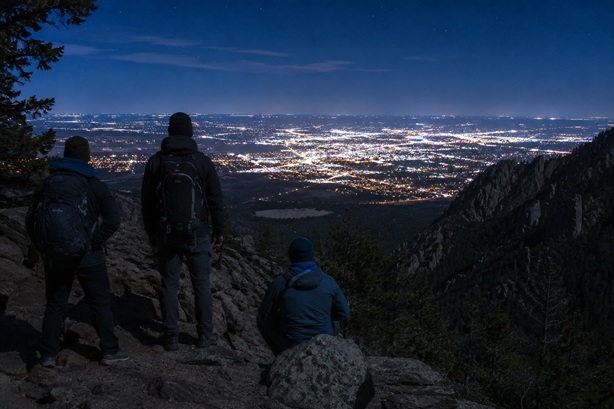
The most common setting for a night rescue isn’t a remote, deep-wilderness valley. It’s the “urban edge”. These are the popular open spaces, county parks and foothills that border our cities. Municipal parks and nearby recreation areas that feel close to civilization.
Because these trails are close to home and highly familiar, hikers treat them with a lower threshold of respect. You might head out at 6:30 PM for a quick three-mile loop. The sun is blazing. The air is warm. You don’t bring a pack, a jacket or a light because “it’s just a neighborhood trail”.
The trail is familiar. Cell service is available. The parking lot isn’t far away. But when darkness falls, those assumptions can become liabilities.
A minor friction occurs. You miss a trail junction. You twist an ankle. A steep climb takes thirty minutes longer than you anticipated.
Murphy and Darwin have a way of singling out targets. A missed turn can lead into unfamiliar drainages. A social trail can become indistinguishable from the main route. A simple slip on loose terrain can leave someone injured and unable to navigate out.
The wilderness does not become safer simply because a city is visible in the distance.
In the summer, twilight can linger deceptively, but once the sun drops behind the ridge, the transition to pitch-black is sudden and unforgiving. Suddenly, that friendly backyard trail transforms into an entirely different world.
How the Dark Rewrites the Rules of the Trail
When visibility drops to zero, your perception of reality changes entirely. The wilderness becomes a place of high friction:
- The Vanishing Junction: In the beam of a weak light, or worse, no light at all, trail signs and forks vanish into the shadows. What looked like an obvious intersection at 3:30 PM looks exactly like a game trail or a boulder field at 9:30 PM. A massive percentage of our summer calls are simply lost hikers who missed a turn they’ve walked past a hundred times in daylight.
- The Loss of Micro-Terrain: Human depth perception relies heavily on ambient light and shadows. In the dark, the ground flattens out. You can no longer easily distinguish between a solid rock, loose scree or a three-inch drop-off. This is when ankles snap, knees blow out and minor slips turn into high consequence falls down steep embankments.
- The Temperature Drop: People associate the summer with warmth, but high-desert and mountainous urban edges experience rapid thermal shifts once the sun goes down. A comfortable 75°F afternoon at the trailhead can become a 45°F evening on an exposed ridge. If you are wearing nothing but shorts and a sweat soaked t-shirt, hypothermia can set in surprisingly fast, destroying your ability to think clearly.
The Phone Flashlight Fallacy
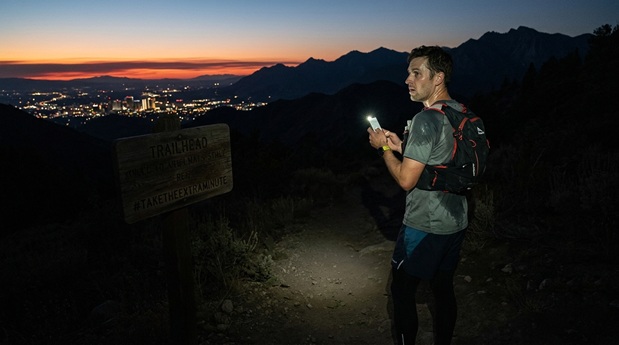
When hikers get caught in the dark, their immediate instinct is to pull out their smartphone and switch on the flashlight widget.
Do not rely on your phone flashlight. Treating your phone as your primary navigation and lighting tool is one of the most dangerous gambles you can make on a trail, for three critical reasons:
- It Destroys Your Battery: Running the high intensity LED flash on your phone drains the battery at an accelerated rate. If your phone dies, you don’t just lose your light. You lose your map, your compass, your ability to call 911 and the GPS ping that search and rescue teams use to find you.
- It Has Zero Throw: A phone flashlight casts a wide, weak, ambient flood of light that is useless for looking more than a few feet ahead. It does not project far enough down the trail to let you spot trail markers, rock cairns or upcoming hazards.
- It Requires a Hand: Holding a phone out in front of you means you only have one hand free to balance, scramble or break a fall.
The #TakeTheExtraMinute rule is simple:
- Bring a real light.
- Then bring a backup.
A quality headlamp keeps both hands free for balance and navigation. A spare flashlight or backup headlamp provides redundancy if your primary light fails.
If you expect to finish after sunset, bring lighting. If you don’t expect to finish after sunset, bring lighting anyway.
Night Hiking Isn’t the Problem
It’s important to make a distinction.
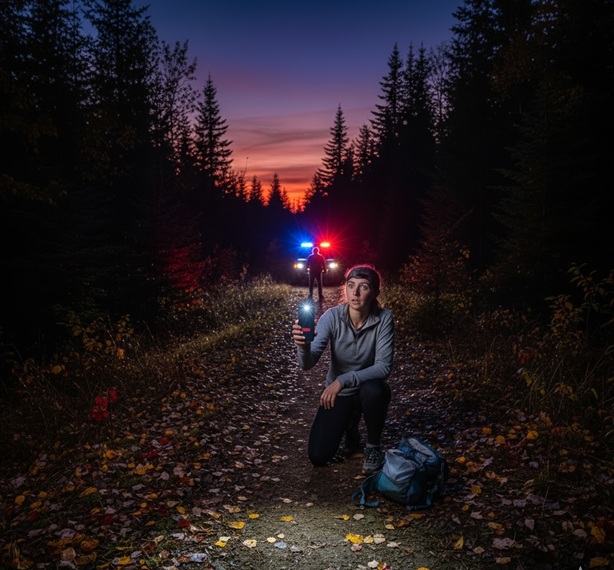
Night hiking itself is not dangerous. In fact, many experienced hikers intentionally travel after dark. Some prefer it. Others seek cooler temperatures, quieter trails or opportunities to observe wildlife and the night sky.
The difference is preparation.
People who plan to hike at night bring proper lighting. They carry extra layers. They understand navigation. They expect reduced visibility and adjust their pace accordingly.
The danger comes from accidentally becoming a night hiker.
The #TakeTheExtraMinute Darkness Briefing
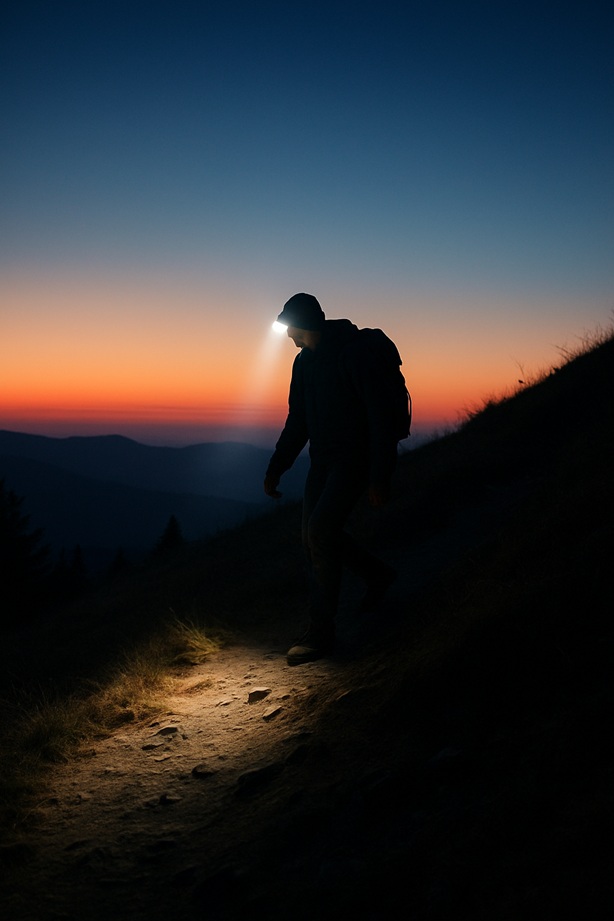
Before leaving the trailhead this summer, take one extra minute and ask yourself a simple question: “What if I am still out here after sunset?”
Not because you plan to be, but because plans change. Weather changes. Trails take longer than expected. People get tired. Photos take longer. Children move slower. And mountains have a habit of humbling schedules.
That extra minute might lead you to throw a headlamp into your pack. It might convince you to bring spare batteries. It might inspire an extra layer. It might cause you to turn around a little earlier. It could prevent a search.
As daylight reaches its annual peak, remember that every long summer day ends the same way. The sun goes down. The darkness is not your enemy, but it deserves your respect.
Extended daylight is a gift, but it is also a psychological trap. It coaxes us into lowering our guard, pushing our timelines and leaving our survival gear in the car.
The mountains, the foothills and the canyons don’t care how beautiful the sunset was. They don’t care that you only planned to be out for two hours. Once the sun drops, the environment becomes completely indifferent to your comfort.
So this summer, whether you’re heading deep into the backcountry or just exploring the urban edge after work, #TakeTheExtraMinute to prepare for the dark before it arrives, because respecting the dark is the only way to ensure you enjoy the light.
Because the best rescue is the one that never has to happen.
Discover more from Tales of Many Things
Subscribe to get the latest posts sent to your email.