
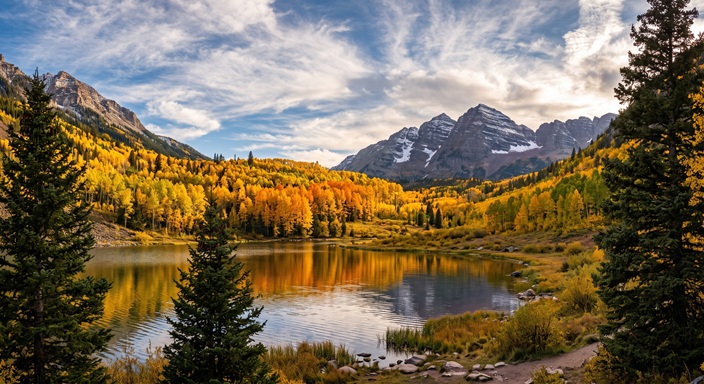
Peak leaf-peeping season is here. The aspens are turning gold, the air smells like fall and the mountains look like somebody spent the summer painting them. Naturally, thousands of people are going to do what any reasonable person would do. Get in the car wearing a t-shirt and shorts and drive up the hill. What could possibly go wrong?
Well…
Search and rescue has some ideas. In this case, we’re talking about preventative search and rescue. Preventative SAR isn’t about keeping people out of the mountains. Quite the opposite, we want you out there. We just want you to come home afterwards without us having to give you a ride.
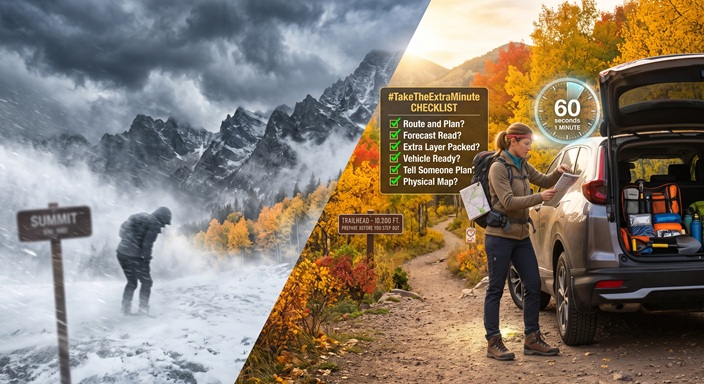
Sometimes, the difference between a spectacular day in the mountains and a spectacularly bad night in the mountains is about sixty seconds of preparation before you leave the house.
Today, we’re going to #TakeTheExtraMinute to talk about something incredibly sophisticated, checking the weather. There’s no crystal ball required. You just need your phone.
The Weather Doesn’t Care About Your Plans
Mountain weather is weird. You can leave the house in sunshine, drive through sunshine, arrive at the trailhead in sunshine and spend the next few hours discovering that the mountain has been quietly plotting against you.
At elevation, the high country can produce dramatically different conditions from the valleys below. Expect it to drop three degrees per thousand feet of elevation gain if nothing else changes. Go up five thousand feet and it feels different. But it’s not just the temperature that changes with elevation. Storms can build quickly, wind can turn a pleasant afternoon into something considerably painful, rain can become snow. Wet clothing becomes a serious problem when temperatures fall.
Autumn adds another complication. The days are getting shorter and that matters more than people think. A hike that runs an hour late in July is an inconvenience. The same hike running an hour late in September can mean finishing in the dark, with falling temperatures, deteriorating weather and a trail that suddenly looks nothing like the one you remember taking up.
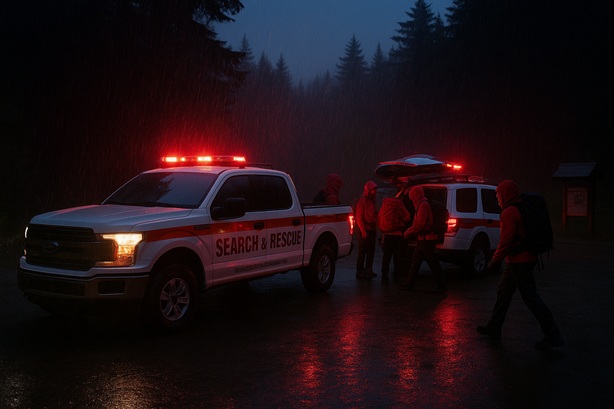
This is the point where search and rescue occasionally gets introduced to people who were previously having a spectacular afternoon. Don’t be offended, but when it comes to driving up the highway with lights and sirens and running up a dark, steep trail, we’d rather just remain strangers.
The best rescue is the one that didn’t have to happen.
Check the Forecast
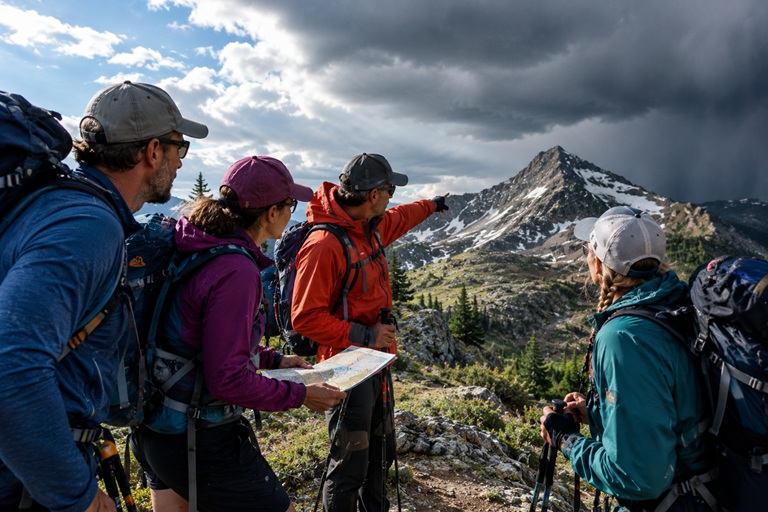
Before you leave, check the weather. Not the weather where you live, not the weather in the closest big town. Check the weather where you’re going and if you’re gaining elevation, pay attention to the difference that it makes.
Look for:
- Temperature
- Precipitation
- Snow
- Wind
- Thunderstorms
- Freezing conditions
- Weather advisories and warnings
- The timing of the weather
- Sunrise and sunset
Don’t just look at the little picture of a sun with a cloud next to it. Read the forecast, because “70°F and partly cloudy” sounds pretty good. The fine print proclaiming “40% chance of thunderstorms after 2 PM with winds increasing to 30 MPH and snow possible above 11,000 feet” sounds considerably less good if your plan involves being above 11,000 feet at 3 PM.
The mountain isn’t being unfair. The mountain is hard rock. It doesn’t care about the weather. It’s been standing up to storms for millennia. The problem surfaces when you don’t read the fine print.
Dress for the Weather You Might Get
Here’s a useful rule that search and rescue lives by. Don’t dress for the weather you’re standing in. Dress for the weather you might be standing in later.
Be ready with multiple layers, a moisture wicking base layer, insulation, a waterproof and windproof shell. Bring a hat. The one that keeps the sun off your face is not the same one that keeps the weather out. Carry gloves, extra clothing and, if you’re heading somewhere where conditions warrant it, bring traction.
Nothing says “I have made an excellent decision today” quite like discovering that the trail has turned into a skating rink while you’re wearing running shoes.
And please remember, cotton is not evil. It just becomes considerably less impressive when it’s wet and you’re cold. You don’t need to spend $2,000 on expedition clothing to go for a hike. You do need enough clothing to deal with conditions that are worse than the ones you had when you left the car.
Your Phone Is Not a Survival Plan
Your phone is fantastic. It has GPS, maps, weather, a flashlight, a camera. There are also twenty-three apps that you haven’t opened in six months and one is carrying an urgent note from your boss.
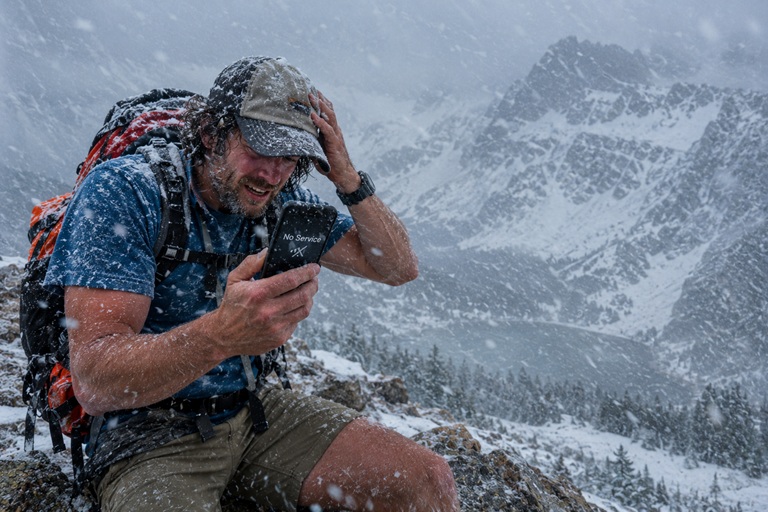
Use your phone, but don’t make it your only plan. Download your maps before you leave, but carry a backup means of navigation anyway. A physical map and compass don’t need batteries and neither does knowing where you are. Remember that mountain terrain has a particularly effective way of making your phone less useful. The “no service” message comes up when you need service most. This is one of those moments when staring at the screen harder does not improve cellular coverage.
Tell Someone Where You’re Going
This is one of the easiest things that you can do. Tell them where you’re going, who you’re with, what route you’re taking, when you expect to return and most importantly when they should start worrying.
Don’t say, “I’ll probably be back around dinner.” Say, “I’m going to Trail X. We’re taking Route Y. We expect to be back by 5:00. If you haven’t heard from us by 7:00, call 911.”
That’s useful information, because after dark with weather already having moved in and the snow blowing horizontally, we can’t put a helicopter up and we’re going to think really hard about sending up a team of twelve to look for you somewhere on the mountain. We may not even make it up with the trail a sheet of ice.
If something goes wrong the information you provide gives rescuers somewhere to start, because “somewhere in the mountains” is not a particularly useful location and neither is, “I think they went above the trees.”
There is a significant difference between having to search eighty square miles of treacherous wilderness versus having five miles of trail to cover.
Don’t Forget the Car
Your hike doesn’t start when you step onto the trail. It starts when you leave the house and sometimes the first emergency is getting to the trailhead. Mountain roads can change quickly with weather. Roads that were perfectly fine in the morning may be icy, snowy or otherwise unpleasant later in the day.
Check road conditions, make sure your vehicle is ready for the conditions you’re expecting, carry appropriate emergency supplies. Food, water, warm clothing or blankets, whatever equipment makes sense for your destination and conditions.
There is a special kind of bad day that begins with, “the hike went great”, followed immediately by, “unfortunately, the car is now stuck.”
The Most Important Gear You Carry is Your Ego
This is the part nobody likes. Sometimes you have to turn around. The summit doesn’t care, the waterfall doesn’t care, the aspens will still be there tomorrow, your Instagram followers will survive. Nobody in search and rescue is going to award you bonus points for reaching the top after conditions turned ugly.
The objective isn’t the summit. The objective is going home after your trip. If the weather deteriorates, if daylight is disappearing, if the skies open up, if you’re running out of supplies, if someone in your group is struggling, if the trail becomes unsafe or your gut tells you something isn’t right, turn around.
You don’t need to justify it, you don’t need a dramatic reason, you don’t need to prove anything. You just need to recognize that the plan has changed. That’s not failure, that’s judgment and good judgment is one of the most valuable pieces of outdoor equipment you can own. The problem is that it comes with a label that reads, “not available in stores”.
Somebody Has to Come Looking
The truth about search and rescue is that when you get into trouble, someone will come looking for you. They’re your neighbors, they’re volunteers, they’re dispatchers, they’re law enforcement officers, they’re firefighters, they’re medics, they’re software engineers, construction workers, store owners. They are people who leave dinner, family, work, sleep and often their own warm beds because somebody else needs help.
They will come, that’s what they do, in spite of fatigue, in spite of other commitments, in spite of risk, because their moral compass always points to saving people in distress, but every preventable emergency consumes resources that could be needed somewhere else and sometimes the consequences aren’t limited to the person who made the bad decision.
Someone has to drive on the bad roads, someone has to hike on the slippery trail, someone has to coordinate the search in pouring rain, someone has to make the call about whether conditions are safe enough for rescuers to enter, because our worst nightmare is making one incident into two. And most of the time the weather that got you into trouble is still there when rescuers arrive.
That’s why preventative SAR matters. We’re not trying to prevent you from having an adventure. We’re trying to prevent your adventure from becoming an emergency.
When you see us at the trailhead, handing out brochures and asking you brought the Ten Essentials, know that preventative search and rescue isn’t glamorous. Neither is fighting a storm for three thousand feet elevation gain to reach an injured hiker. We do preventative SAR to prevent your injury and reduce our own risk.
In real life there’s no dramatic music, no cinematic poster, no red carpet. Nobody is going to make a documentary about you checking the forecast in your driveway. That’s exactly the point. Preventative SAR is the boring stuff. It’s designed to reduce the risk of injury or death.
Check the weather. Check the route. Check your gear. Check your vehicle. Tell someone where you’re going. Know when the sun goes down. Have a second plan if things don’t go according to the first one. Ask yourself one very simple question, “What happens if I’m wrong?”
What if the weather gets worse? What if the trail is icy? What if you’re slower than you expected? What if the GPS stops working? What if somebody gets hurt? What if you have to spend the night out there?
You don’t have to be a survival expert. You just have to spend sixty seconds thinking about it, before you’re standing in the middle of it. That’s what good planning is all about, because if you fail to plan, if you fail to #TakeTheExtraMinute, the greatest danger may not be the thing you expected. It may be the thing you didn’t see coming.
The best search is the one that never happens. The best rescue is the one that never becomes necessary. The best hike is the one you get to tell your buddies about over beer the following weekend. The difference is nothing more than being prepared.
So check the weather, pack the jacket, download the map, tell somebody where you’re going and if the mountain tells you it’s a bad day to be there, listen.
The mountain will still be there tomorrow. So will we, but we would really prefer that you are a total stranger, someone who smiles and accepts the brochure and tells us, “Yeah, I’ve got my Ten. I’m ready to crush this.”
Discover more from Tales of Many Things
Subscribe to get the latest posts sent to your email.