
A while back, I wrote about the daughter of a friend who reached an extraordinary milestone in her musical education. It was a story about talent, hard work, risk and the terrifying decision to pursue something difficult when there is absolutely no guarantee that the universe will reward you with fame, fortune or a Grammy.
As I reflected on her journey, a reader posed a provocative question about careers, “Does our culture focus too much on the average salary, missing the true fulfillment of reaching the top of a difficult field?”
It’s a fair inquiry, but it exposes a fundamental flaw in how we measure human success. Since the article touched on the tension between pursuing a “safe” career and chasing a dream, do we misinterpret true success?
My short answer is yes.
My longer answer is that I think we may be asking the wrong question entirely.
Our culture has developed a peculiar binary view of success. You are either a virtuoso or a failure, a Supreme Court litigator or a paper-pusher, a platinum-selling rockstar or a burnout. We build monuments to the winners, suffering from a reverse “Tall Poppy Syndrome” where we celebrate only the blossom and treat the root system supporting it as invisible infrastructure. We advertise glory, we aim for glory and we kneel before glory.
Somewhere along the way we developed a peculiar national obsession with deciding whether every educational choice can be justified by a spreadsheet.
We ask:
- What is the average starting salary?
- What is the return on investment?
- How many jobs are available?
- What percentage of graduates are employed?
- Can you make enough money to afford a house before the Sun expands into a red giant?
These are reasonable questions. Unfortunately, they are not the only questions. Sometimes they quietly transform education from the process of developing a human being into a very expensive audition for the labor market.
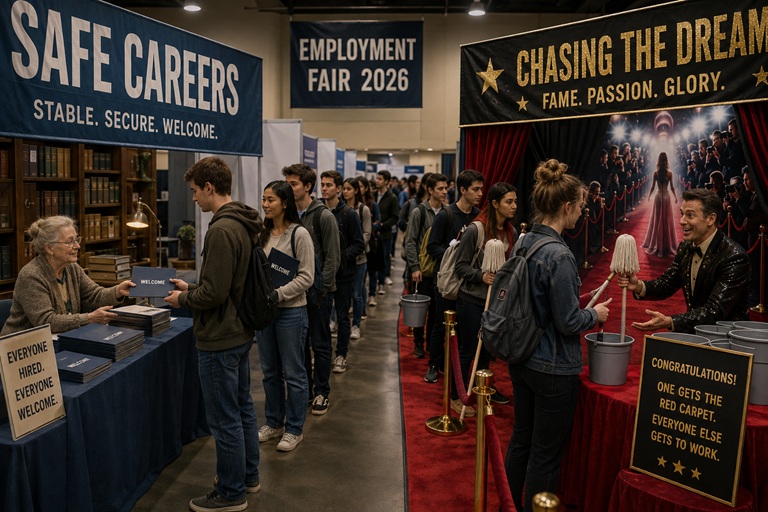
The Cult of the Extraordinary
We love to teach history as if it were a sequence of dramatic “Eureka!” moments performed by solitary geniuses. Our culture loves extraordinary people. We love the NFL quarterback. We love the rockstar. We love the actor walking down the red carpet. We love the lawyer arguing before the Supreme Court. We love the entrepreneur who starts a company in a garage and becomes a billionaire before turning thirty-five. We especially love the scientist who stands in front of a whiteboard, has a sudden flash of inspiration and apparently discovers an entirely new branch of physics before lunch.
We celebrate the people standing on top of the mountain.
Then we look down the mountain and become strangely disappointed in everyone else. That is the problem. We have built a culture that advertises glory as if it were the expected destination.
Every child is told to dream big, which is wonderful, until “dream big” quietly becomes, “if you don’t become extraordinary, perhaps you didn’t dream hard enough.”
That is a terrible way to measure a human life and it is an even worse way to build a civilization. Maybe we’re educating children as contestants in a tournament when we should be educating them as contributors to a civilization.
Most Progress Does Not Come with a Nobel Prize
I wrote my master’s thesis years ago. The work was original, but it was not created in a vacuum. It was built on the work of people who came before me. They developed theories, conducted experiments, collected data, made mistakes, corrected mistakes and left behind a body of knowledge that allowed me to begin somewhere other than the Stone Age.
Then I added something of my own.
I did not discover a new fundamental force of physics. I did not create Nobel Prize level science. I did not emerge from the laboratory, rip off my safety goggles and announce to the world that I had solved everything.
What I did was smaller. I refined knowledge. I added decimal points. I explored a pathway that had not previously been examined. In the grand scientific vernacular, I extended the map of the known world and planted a little flag at the edge, where the pavement stops.
Then someone else can come along and keep laying asphalt. Someone did. My work is cited by others, those who came after me, refining science, just like I did.
That’s how science actually works. Not always through one magnificent leap. Often through thousands of people taking small steps. The breakthrough paper depends on the previous paper. The previous paper depends on another experiment. That experiment depends on a better instrument. The instrument depends on an engineer. The engineer depends on a technician. The technician depends on someone who figured out how to manufacture a component one percent more accurately than it was manufactured before. Eventually, someone gets the Nobel Prize.
But the Nobel Prize is standing on a mountain made of other people’s incremental work. We build monuments to the person at the summit. We often forget the people who built the mountain.

The One Percent Civilization
I increasingly believe that one of the greatest things we could teach young people is that you do not have to change the entire world. You can push your corner of it a little farther than you found it.
Imagine a civilization in which millions of people did exactly that. The teacher improved the way students understand a difficult concept. The nurse noticed a better way to communicate with frightened patients. The machinist improved precision by one percent. The programmer made a system slightly more reliable. The researcher reduced an error margin. The musician developed a technique that influenced the next generation of performers. The middle manager, yes, even the middle manager, figured out how to stop twelve people from attending a meeting that could have been an email.
Civilization advances.
Not because everyone became a superstar, but because everyone pushed. There is something profoundly powerful about that idea. We tend to think of human progress as a series of giant leaps. The printing press. Electricity. Antibiotics. The computer. The Internet. Artificial intelligence. But between every one of those headlines are millions of smaller improvements that made the giant leap possible.
Human progress is not simply innovation. It is compound innovation. A small improvement makes the next small improvement possible. And then another. And another. Over time, the world becomes unrecognizable.
The person who improves something by one percent may never become famous, but they may help create the conditions that allow someone else to make a ten thousand percent improvement fifty years later. That is not failure. That is civilization.
We Have a Survivorship Bias Problem
Our culture suffers from a severe case of survivorship bias.
We see the successful musician. We do not see the thousands of excellent musicians who never become household names. We see the billionaire entrepreneur. We do not see the engineers, accountants, technicians, designers and managers who built the company. We see the Supreme Court lawyer. We do not see the thousands of lawyers quietly helping ordinary people navigate the legal system. We see the Nobel Prize winner. We do not see the generations of researchers whose work made the discovery possible.
The problem is not that we celebrate extraordinary achievement. We absolutely should. Human beings accomplish astonishing things and those accomplishments deserve celebration. The problem comes when we treat extraordinary achievement as the only achievement worth celebrating.
That creates an impossible standard.
If the goal of becoming a musician is becoming Taylor Swift, virtually everyone will fail. If the goal of studying physics is becoming Albert Einstein, virtually everyone will fail. If the goal is becoming a lawyer like Gerry Spence, virtually everyone will fail. If the goal is becoming a double Nobel Laureate like Marie Curie, virtually everyone will fail.
Perhaps those aren’t the right goals. Perhaps the better question is not “Will you become the most famous person in your field?” Perhaps it is “Can you become good enough to move your field forward?”
That is a radically different definition of success and I think it may be a healthier one.

What Do You Want to Be?
We ask children this question constantly. “What do you want to be when you grow up?”
It sounds innocent, but it is a strange question when you think about it. It asks a child to select an identity before they have had the opportunity to discover the world or themselves in it.
Doctor.
Lawyer.
Engineer.
Musician.
Teacher.
Astronaut.
Superhero.
Professional dinosaur.
Children are flexible on the details, but the question also suggests that the purpose of education is to arrive at a title. You study so that eventually you can become something.
I wonder if we should occasionally ask a different question.
Where do you want to push?
Where is the frontier that interests you?
Where do you see something that could be better?
What problem do you want to spend your life trying to understand?
What craft do you want to master?
What corner of the world would you like to leave slightly improved?
That question does not require a child to become a superstar, but it does require them to become engaged and engagement may be more important.

The Safety Net of Competence
There is another reason I worry about our obsession with extraordinary success. A civilization can not survive on superstars alone. We need exceptionally competent people everywhere.
We need competent engineers designing bridges, competent nurses caring for patients, competent teachers educating children, competent electricians wiring buildings, competent scientists checking each other’s work, competent technicians maintaining the systems we barely notice until they stop working, competent musicians, writers, plumbers, accountants, farmers, programmers, mechanics and yes, even competent bureaucrats.
Especially competent bureaucrats. Nothing reminds you of the importance of competence quite like trying to renew a driver’s license.
There is enormous social value in raising the floor. We spend enormous energy asking how to produce the next genius. That is a worthwhile question, but perhaps we should spend just as much energy asking, “How do we create a society in which millions of people are exceptionally capable?”
A world filled with competent people who are constantly trying to improve what they do may be more resilient than a world that produces a handful of geniuses while everyone else is told they didn’t quite make the cut.
The future depends on brilliance. It also depends on the person who notices that the machine is making a strange noise and fixes it before the entire factory explodes. Both deserve our respect.
So What is Education For?
This brings me back to education.
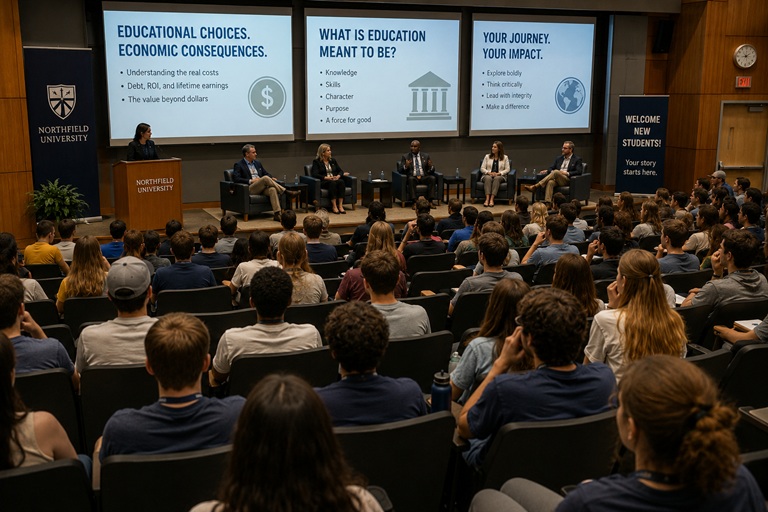
I have written before about the value of higher education and the ways it can not be reduced to a simple salary calculation. That does not mean money doesn’t matter. Of course it matters. People have mortgages. People have children. People occasionally enjoy eating.
Telling an eighteen year old to ignore the economic consequences of their educational choices would be irresponsible, but reducing education to economic consequences is also irresponsible.
Education can be preparation for a career. It can also be preparation for citizenship, for curiosity, for community, for understanding the world, for discovering what you are actually capable of doing, for discovering what you are terrible at. That last one can save an enormous amount of time and, potentially, millions of unnecessary explosions.
My own education did not simply provide me with a credential. It gave me experiences, relationships, challenges and opportunities that helped shape the person I eventually became. Some of those experiences had very little to do with the jobs I ultimately held. That does not mean they were wasted.
We have become so obsessed with optimization that we sometimes forget that human beings are not investment portfolios. The goal is not necessarily to maximize every measurable outcome. The goal might be to build a meaningful life while contributing something useful to the people around us.
That is harder to put into a spreadsheet, which is probably why spreadsheets keep trying to avoid the subject.
The Dangerous All-or-Nothing Game
This is where I think our education system may have a genuine problem.
We increasingly measure everything. Test scores, class rankings, acceptance rates, graduation rates, employment rates, starting salaries, institutional rankings, individual rankings, national rankings, probably rankings of the people who rank the rankings.
Measurement is useful, but measurement can also distort behavior.
When every educational institution is competing to demonstrate that it produces winners, there is a powerful temptation to define success narrowly.
The student who attends an elite university and earns an enormous salary becomes evidence of success. The student who becomes a famous artist becomes evidence of success. The student who wins a prestigious award becomes evidence of success.
But what about the student who becomes an excellent teacher? What about the graduate who spends thirty years improving manufacturing processes? What about the musician who never becomes famous, but inspires thousands of students? What about the scientist who never wins a major award, but produces careful, reliable research that helps other people make discoveries? What about the person who discovers the career they originally wanted is wrong for them and changes direction?
Our systems are often uncomfortable with those stories because they do not fit neatly into a promotional brochure, but those stories are the majority of human progress.
Perhaps the problem is not that schools measure outcomes. Perhaps the problem is that we have become too dependent on measuring only the outcomes that are easy to photograph. We can photograph the red carpet. It is much harder to photograph a lab technician spending twenty years perfecting a diagnostic procedure that eventually helps save millions of lives. I know which photograph may matter more.
The Beautiful Risk of Trying
This brings me back to my friend’s daughter and her musical journey.
I do not think the value of her achievement depends entirely on whether she someday becomes famous.
Of course, I hope she achieves everything she dreams of achieving, but the deeper achievement is that she has earned the opportunity to push the boundary of her craft. She has chosen something difficult. She has worked to become better. She has entered a world in which excellence requires enormous discipline and where the odds of becoming a household name are extraordinarily small. And she did it anyway.
There is something beautiful about that.
The safe career versus dream career debate often assumes that there are only two possible outcomes. You pursue the safe path and succeed. Or you pursue the difficult dream and either become a superstar or end up playing violin for spare change outside a grocery store.
Real life is considerably messier. A person can pursue a difficult field and build a meaningful career without becoming famous. A person can study something they love and eventually use those skills in an entirely unexpected profession. A person can pursue a dream, discover it is not what they expected and change direction.
None of those outcomes necessarily represent failure.
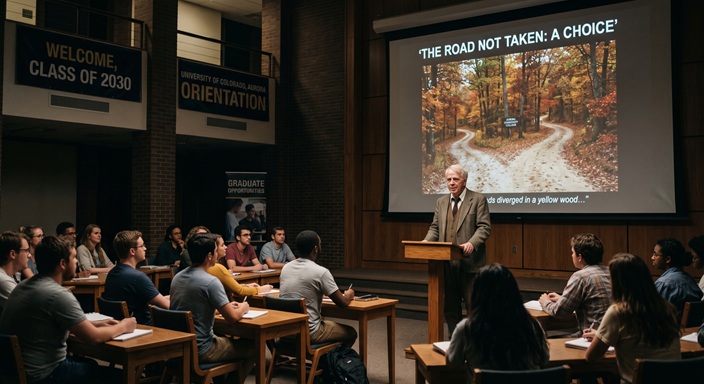
I have written about the roads not taken before. Every life contains alternate versions of ourselves. The musician we might have become. The scientist. The entrepreneur. The teacher. The person who took the job in another city. The person who said yes. The person who said no.
We can not live all of those lives, but that does not mean the life we chose must be judged solely by whether it produced the maximum possible income or the greatest possible fame.
Sometimes the road is valuable because of where it takes us along the way.
From Individual Glory to Collective Progress
I think the deepest shift I would like to see in our culture is that we need to move the goalpost from individual glory to collective incrementalism. That does not mean abandoning ambition. It does not mean telling children not to dream big.
Please dream big. We need this! Try to become the greatest musician in the world. Try to discover something extraordinary. Try to argue before the Supreme Court. Try to win the Nobel Prize. Aim for the stars.
Just don’t assume that missing the stars means you failed to achieve lift-off. There is enormous value in becoming one of the thousands of people who move humanity forward. The researcher who adds another decimal point. The engineer who improves a process. The teacher who inspires a future scientist. The thespian who develops the next generation of performers. The technician who makes an experiment possible. The programmer who makes a system work a little better. The student who asks one good question nobody else thought to ask.
Progress does not require everyone to be extraordinary. It requires millions of people refusing to stand still.
Maybe That Should be the Lesson
So, is our education system capable of making this shift? I honestly don’t know. We are deeply invested in rankings. We compare schools. We compare students. We compare salaries. We compare test scores. We compare acceptance letters as if college admissions were the Olympic Games.
Competition has a role, measurement has a role, achievement has a role, but perhaps we need to become more comfortable with a broader definition of success.
Maybe education should not simply ask, “How high can you climb?” That’s the wrong question. Maybe it should ask, “How far can you push the boundary?” Because not everyone will stand on the podium. Not everyone will become famous. Not everyone will win the prize.
Thank goodness. Imagine how exhausting Thanksgiving dinner would be if every relative were a Nobel Prize winner.
Someone still needs to carve the turkey.
The future will be built by extraordinary people, but it will also be built by millions of ordinary people doing extraordinary things in very small increments. Perhaps that is what we should teach our children. You do not have to become a legend. You do not have to become the best person who ever lived. You do not have to discover everything. You do not even have to know exactly where you are going. You need to find something worth caring about.
Learn everything you can. Become exceptionally capable. Then push. Push the boundary one percent farther than it was before you arrived. Leave a flag at the edge of the pavement. Someone else will come along and maybe they will keep laying the asphalt, building on what you built, on what the people before you built.
That is how we got here and, if we’re lucky, that is how we’ll get somewhere even better.

Discover more from Tales of Many Things
Subscribe to get the latest posts sent to your email.