
A friend of mine recently asked me a question. “You’ve been writing a lot about longevity, immortality and life expectancy lately. Is there a hidden subtext?”
I stopped for a moment. I had to think about that. I didn’t think there was. At least not consciously.
I’ve written about longevity. I’ve written about immortality or, more accurately, our increasingly ambitious attempts to understand why we age and whether we can interfere with the process. I’ve written about life expectancy, the biology of aging, genetic engineering, cellular reprogramming and the strange possibility that some of the things we currently consider fundamental limitations of the human body may actually be engineering problems.
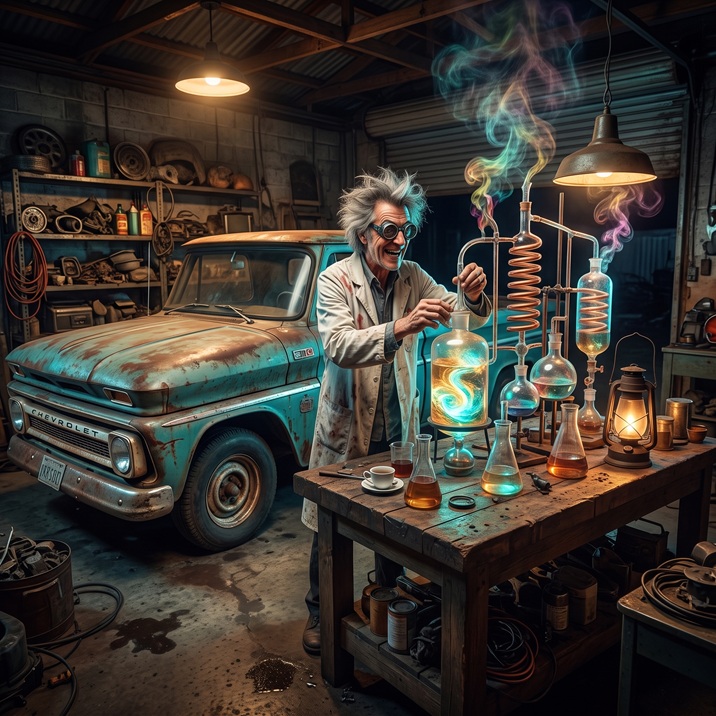
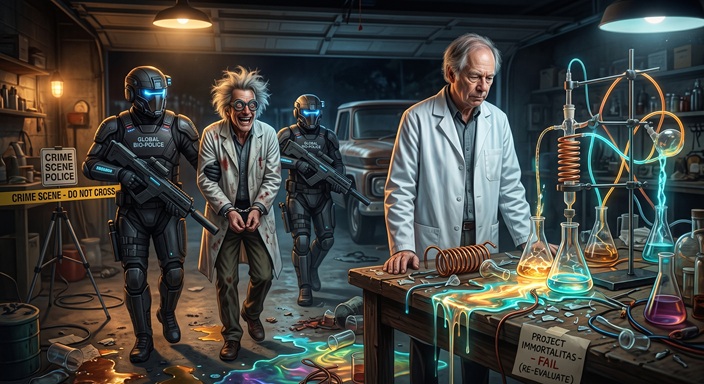
There is a lot of material there, but a secret desire to live forever? I don’t think so. It’s not like I perfected a serum in my garage and am sucking on it every night.
The more honest answer is much simpler. This stuff is fascinating and we are living through an extraordinary moment in the history of medicine’s evolution. We’ve come a long way from chiseling holes in the heads of sick people to let the evil spirits out.
How Did I Get Here?
It actually started somewhere else.
I wrote about the health consequences of things we have introduced into the environment, including microplastics. The thought that naturally followed was fairly straightforward. We are breaking a lot of things. Are we doing anything to fix them? That question led me toward the emerging technologies being developed to repair, replace or re-engineer biological systems.
That thought led straight into exploring how modern science is attempting to rewrite the fundamental limits of human life. It is a field moving at a staggering pace. Breakthroughs entering clinical practice or laboratory trials today were little more than speculative science fiction just a decade ago.
We can edit DNA. We can manufacture RNA. We can instruct cells to make specific proteins. We can manipulate immune responses. We can engineer viruses. We can reprogram cells. We can build increasingly sophisticated synthetic biological systems. And we are beginning to understand aging not simply as something that happens to us, but as a collection of biological processes that might, at least in principle, be modified.
That last phrase is important, in principle. Science is exceptionally good at demonstrating that something can happen. It is considerably harder to demonstrate that we can make it happen safely, reliably, cheaply, at scale and without causing three completely different problems somewhere else.
That distinction gets lost remarkably easily in newsprint and in social media.

The Man Who Changed How We Think About RNA
One of the people who helped change our understanding of what biological molecules are capable of doing is Thomas Cech. I met Cech years ago and I have always been impressed not only by his scientific work, but also by his personality.
Cech shared the 1989 Nobel Prize in Chemistry with Sidney Altman for discovering that RNA can act as a catalyst. That sounds like an extremely marginal discovery, but it wasn’t.
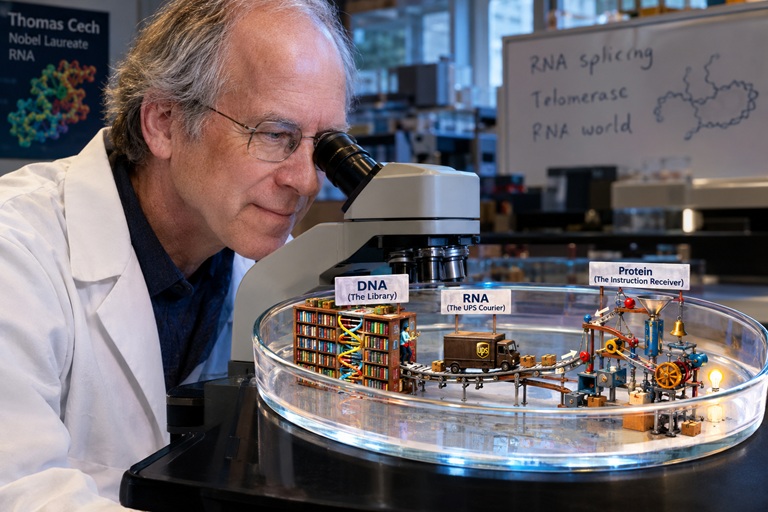
For a long time, the simplified picture of molecular biology was wonderfully tidy. DNA stored the instructions. RNA carried the instructions. Proteins did the work. RNA was essentially the molecular equivalent of a courier service. Pick up the message from DNA, deliver it to the protein making machinery, then disappear.
In reality, biology turned out to be considerably stranger than that.
Cech and Altman’s work demonstrated that RNA itself could catalyze chemical reactions. RNA wasn’t merely a passive messenger. It could have structure. It could perform chemistry. It could, in effect, do important things. It was an active engine.
That discovery also helped invigorate the idea of an ancient “RNA world” in which RNA may have played both informational and catalytic roles in the earliest stages of life. That discovery alone could potentially rewrite the origins of life.
Cech has described how his work helped overturn the idea that RNA was simply a disposable copy of DNA’s instructions. I find that astonishing, not because RNA is magical, because it is a reminder of something scientists repeatedly discover. Nature is usually more interesting than our first model could ever account for.
This is where my fascination with modern biotechnology begins to intersect with the notion of longevity.
From RNA to the Age of Biological Engineering
It would be wrong to draw a straight line from Cech’s ribozymes to today’s mRNA vaccines. The path is much longer and involves an enormous amount of research by thousands of scientists, those incremental 1% steps that build a mountain.
Cech’s work was part of a much larger revolution in our understanding of RNA. Today, we can put specially designed mRNA into cells and use the cell’s own machinery to manufacture a protein we specify. That is an astonishing concept when you stop and think about it. We aren’t necessarily replacing the cell. We aren’t necessarily changing its DNA. We’re giving it temporary instructions. The cell reads them and makes something. And then the instructions can disappear.
That basic idea has already changed medicine. The COVID-19 pandemic provided the most dramatic demonstration. mRNA vaccines went from a technology familiar mainly to specialists to something administered to hundreds of millions of people with successful results. Instead of having your DNA provide instructions to the proteins, we simply wrote the letter ourselves and had it delivered. DNA is the permanent library. mRNA is a temporary note handed to the production manager on the factory floor.
But the really interesting part is what happened next. This technology did not simply become “the vaccine technology”. Researchers began exploring mRNA as a platform for a much broader range of applications: infectious disease vaccines, cancer vaccines, protein replacement, immune modulation and other therapeutic approaches. Current research is increasingly looking at mRNA as one component of a larger toolkit that overlaps with gene and cell therapies.
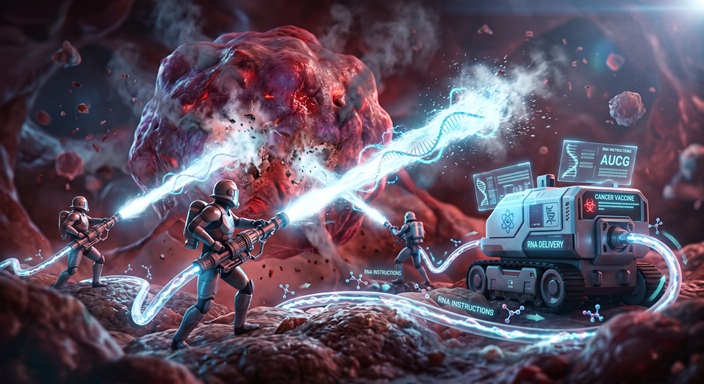
Personalized cancer vaccines are one particularly fascinating example. Instead of thinking about a vaccine only as something that prevents an infection, imagine using a patient’s tumor to identify targets and then constructing an individualized molecular instruction set designed to teach the immune system what to attack. It’s personalized medicine at its finest.
We can already program cells to manufacture specific therapeutic proteins on demand, turning our own ribosomes into local pharmacies to neutralize disease or combat inherited genetic flaws or external biological influence.
That’s not immortality, but it is something arguably more important. It changes the boundaries of what medicine can attempt.
And That’s Where Things Get Weird
Once we learn how to manipulate biology, our expectations change.
A hundred years ago, dying from an infection was simply part of life. Then came antibiotics, vaccines, modern sanitation, intensive care, organ transplantation, increasingly sophisticated surgery and an expanding understanding of genetics and molecular biology.
Medicine gradually transformed many things that were once inevitable into things that were treatable.
This creates a psychological trap.
Every successful technological revolution makes the next impossible thing seem slightly less impossible. We cure one disease and people ask whether we can cure all diseases. We sequence a genome and people ask whether we can redesign one. We edit a gene and people ask whether we can edit aging. We make cells produce therapeutic proteins and people ask whether we can make cells repair themselves. We extend life in experimental organisms and people ask whether humans could live for 150 years. Then 200. Then indefinitely.
Researchers are already investigating whether manipulating developmental pathways can persuade the body to regenerate things it normally stops producing. Today science is experimenting with the USAG1 gene to regrow lost teeth. mRNA is used to inhibit the USAG1 gene, blocking a protein that that acts as a biological off switch to stop tooth development. And a new tooth grows. This resets your body’s clock to a time when it would normally say, “I need a tooth right here”.
But what if we step it up a notch? What if we find the genes responsible for your kidneys, your lungs, your heart? There is an enormous gulf between coaxing a tooth to develop and telling the body, “build me a new liver”. The latter isn’t a technological extension of the former. It’s an entirely different engineering problem.
But if we ever cross that gulf, someone is going to have a very uncomfortable conversation with the organ transplant industry. No more hunting for a donor. No more antirejection medication. If your old organ is giving up the ghost, we’ll just tell your body to make a new one naturally.
And somewhere along the way, a scientific question quietly turns into a science fiction story. That’s where I think we need to be careful.
Living Longer Isn’t the Same as Not Dying
There is a tendency to treat longevity as though it were a single problem.
It isn’t.
“Make people live longer” sounds like one objective. Biologically, it is an enormous collection of objectives. Repair accumulated cellular damage. Prevent cancer. Preserve cardiovascular function. Maintain the brain. Prevent neurodegeneration. Preserve muscle. Maintain immune function. Keep the kidneys working. Keep the liver working. Keep the endocrine system working. Maintain the extraordinarily complicated infrastructure that allows a human being to remain a human being.
And these systems don’t operate independently. They interact. Constantly. That is one of the things I find most fascinating about biology. You can not pull one strand of the biological web without moving other strands. Make cells better at dividing and you may increase the risk of cancer. Suppress cellular division too aggressively and you may impair basic healing. Modify the immune system to make it more aggressive against cancer and you may increase the risk of autoimmune disease. Alter metabolism and you may improve one measure while damaging another. Fix one component of aging and you may simply expose the next failure mode.
Biology does not come with independent checkboxes. It comes as a system and systems have a nasty habit of producing consequences.
The Longevity Illusion
This is where I think some of the more extravagant claims about longevity go off the rails. There is a huge difference between “we may be able to improve human health and extend healthy life” and “we are going to defeat death”.
The first is already happening. The second is an extraordinary claim. Yes, the first person to live to 150 is most likely already alive today, but not because we will discover immortality. It will be because these novel technologies will solve common causes of death. Heart disease, cancer, infectious disease and other causes of death may increasingly become more treatable through technologies including mRNA, gene therapy, immunotherapy and regenerative medicine, but as we address our old enemies, new ones will start coming into play. Health conditions we’ve never faced before. Mother nature will fight to retain balance. There will be an almost endless list of ways for complex physical systems to fail.
And there is another problem.
Suppose we really could keep repairing the body indefinitely. That wouldn’t automatically mean we had solved aging. It might simply mean we had built a system capable of continually repairing itself. That is a very different proposition and it raises another question. How much intervention would be required to keep doing it?
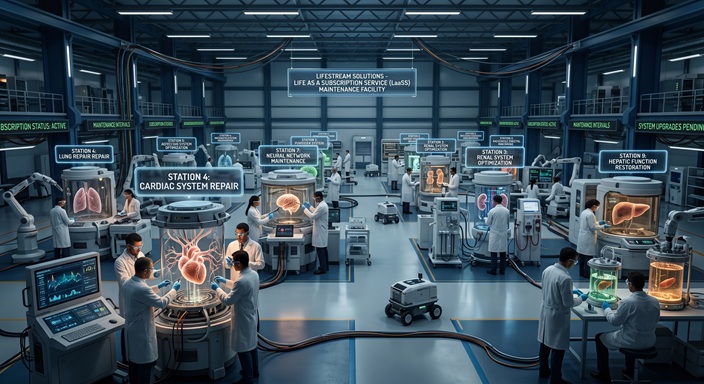
Would “living forever” mean taking a pill every morning? Periodic gene therapy? Regular cellular replacement? Organ replacement? Continuous monitoring? An army of microscopic molecular repair systems?
At some point “immortality” starts sounding less like a biological property and more like an extremely complicated maintenance contract. Life as a subscription service. Miss a payment and your telomeres expire. That alone has terrifying implications.
The Universe is a Cobweb
This is why I keep coming back to longevity. Not because I think there is going to be a magic pill. Quite the opposite, I am fascinated by the complexity of the problem.
In science you learn that the universe is a massive cobweb. Pull one strand and dozens of others move. Hundreds. Thousands. Sometimes that is wonderful. Sometimes it is catastrophic. Sometimes it is both. The better we become at manipulating biology, the more we discover how little of biology exists in isolation.
We tend to think about technological progress as a sequence of isolated victories, an agile framework. We solved this problem. Then we solved that problem. Now we’ll solve the next one. Biology doesn’t work that way. Everything is connected. A successful intervention can create a new problem. A treatment for one disease can change the prevalence of another. A technology designed to save lives can create new ecological or evolutionary pressures.
Something that is enormously beneficial in one context can be extraordinarily dangerous in another. That is why good science requires something that popular science fiction sometimes forgets. Humility, not pessimism. Humility.
The recognition that discovering how to do something is not the same as understanding everything that will happen when we do it.
Then There Is the Other Side of the Mirror
This brings me to another subject I’ve been thinking about lately. Mirror life.
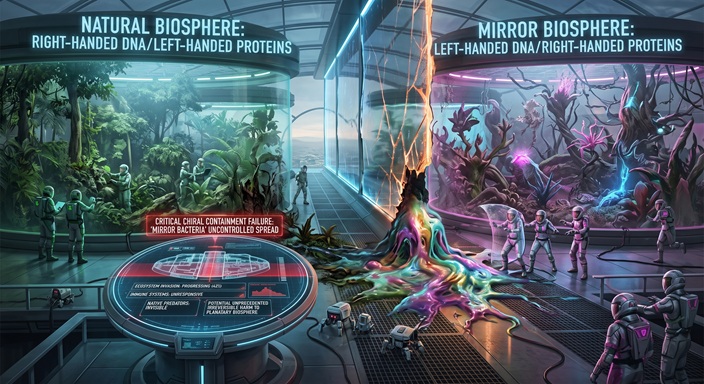
If ordinary biology wasn’t strange enough, researchers are now seriously discussing what might happen if we eventually create biological systems built from molecular components with the opposite chirality, the molecular “handedness”, used by life on Earth.
Mirror molecules could have legitimate applications in medicine and materials science because their unusual structures can make them resistant to the enzymes that normally break biological molecules down.
And a self-replicating mirror organism would be a different matter entirely. This is where the discussion becomes genuinely unsettling. The risks are uncertain. The technology is not currently capable of simply producing a fully independent mirror organism on demand. Scientists disagree about timelines, feasibility and exactly what the consequences would be.
The possibility is serious enough that governments, international organizations and scientific bodies are now discussing it before the technology exists. That is exactly how science should work. Not “this will definitely destroy the world” and not “this is impossible, so don’t worry about it”, but “we don’t know yet, so let’s understand the possibilities before we accidentally discover the answer we did not want to get”.
That attitude may be one of the most important scientific technologies we have.
So, is there a Hidden Subtext?
I suppose my friend was right about one thing. There probably is a subtext. It just isn’t “I want to live forever”. I don’t know the answer to that. I would, however, prefer not to die young. Those are very different ambitions.
For now, longevity is much less exotic than the headlines sometimes make it sound. Eat reasonably well. Exercise. Sleep. Take care of yourself. Don’t deliberately abuse the only biological machine you’ve been issued. It’s the usual stuff your doctor tells you on your annual checkup.
What happens over the next decade or two is much harder to predict. Maybe we’ll make meaningful progress against some of the diseases associated with aging. Maybe cellular reprogramming will become clinically useful. Maybe personalized cancer vaccines will become routine. Maybe some of today’s experimental therapies will turn out to be transformative. Maybe others will turn out to be expensive ways of teaching us why biology is difficult. And maybe something we haven’t even imagined yet will change the entire conversation.
That’s the part I find exciting.
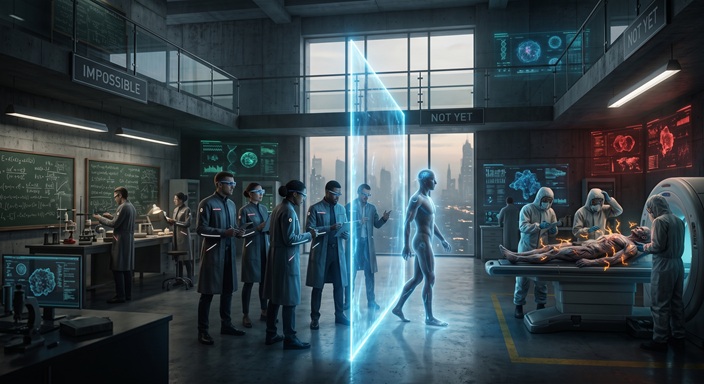
Science keeps moving the boundary between “impossible” and “not yet”. Sometimes it crosses that boundary spectacularly. Sometimes it discovers that the boundary was in the wrong place. Sometimes it falls flat on its face and discovers that the thing on the other side was a terrible idea.
That’s why I keep writing about longevity, immortality and life expectancy. People keep asking questions. Many are already thinking about the “what ifs” these transformative changes could carry with them.
But there isn’t a secret message. There is just an enormously interesting question. What happens when humanity becomes capable of changing the biological rules that we once assumed were fixed?
I don’t know the answer. Nobody does. And that’s precisely why it is worth asking. That is science at its best.
Discover more from Tales of Many Things
Subscribe to get the latest posts sent to your email.